

A single erroneous temperature signal transmission can sow the seeds of thermal runaway; an inaccurate voltage reading can trigger overcharging and over-discharging risks—these core threats to battery safety all point to an often overlooked but crucial component: the module data acquisition harness. Like the battery pack’s “neural network,” its reliability directly determines the judgment of the Battery Management System (BMS) and the safety baseline of the entire battery system. This article will delve into its core functions, reliability requirements, and the design, manufacturing processes, and testing standards that high-reliability harnesses (such as those provided by Guheng Energy) should possess.
Module Data Acquisition Harness: The “Nerve Endings” and Cornerstone of Safety for the BMS
Imagine that every subtle movement of the human body relies on a neural network to accurately transmit signals to the brain. The same applies to battery packs. The module data acquisition harness (also known as the battery sampling harness) serves as the bridge connecting each battery cell to the BMS main controller. It is responsible for collecting and transmitting real-time “sensory data,” allowing the BMS, the “brain,” to monitor every movement within the battery. Its performance is the physical prerequisite for the BMS to achieve all intelligent control and safety management.
Core Function: Accurate Voltage and Temperature Signal Acquisition
The core task of the module data acquisition harness is to ensure the accurate transmission of the following key data. Distortion of any signal can lead to fatal misjudgments by the BMS.
- Voltage Signal: Real-time monitoring of voltage changes in each cell or battery unit. This is the most direct basis for assessing the battery’s state of charge (SOC), state of health (SOH), and determining whether overcharging or over-discharging has occurred.
- Temperature Signal: Accurately capturing the temperature of key points in the cell or module to ensure safe operation. Abnormal temperature is a major precursor to battery failure and thermal runaway; accurate temperature signals are the cornerstone of developing effective thermal management strategies.
- A complete BMS also needs to be combined with independent current sensor signals to achieve accurate SOC estimation and energy management. The module’s data acquisition harness is the sole channel for this core “electrical-thermal” data flow.
Why is reliability the lifeline? The catastrophic consequences of inaccurate signals.
All intelligent decisions of the BMS are based on the “intelligence” transmitted from the data acquisition harness. Even a slight deviation in data can drastically increase safety risks. If the harness itself has design flaws, material degradation, or manufacturing defects, leading to open circuits, short circuits, signal attenuation, or interference, it will cause:
- Inaccurate temperature signals may mask localized overheating, causing the BMS to miss the optimal intervention time, ultimately leading to thermal runaway.
- Incorrect voltage information will prevent the BMS from accurately determining the battery’s true capacity, potentially leading to continuous overcharging (drastically increasing the risk of internal short circuits) or excessive over-discharging (permanently damaging the battery structure).
Therefore, the reliability of the harness is not simply a “connection” issue, but a core hardware element that directly determines the safety risk level of the battery system.
Guheng Energy’s Four Pillars of High-Reliability Wiring Harness Solutions
Faced with stringent safety requirements, Guheng Energy has built four core quality pillars—”accurate signal transmission and durable operation”—from design to final testing, providing customers with automotive-grade reliable module acquisition wiring harnesses.
Pillar One: Carefully Selected Materials and Rigorous Processes
We deeply understand that “a weak foundation leads to instability.”
- Environmentally Friendly Refractory Materials: All products use environmentally friendly materials that comply with RoHS, UL, and other standards. Connectors possess high heat resistance (typically -40℃ to 125℃) and high flame retardancy (e.g., UL94 V-0), while cable sheaths have excellent oil and abrasion resistance, enhancing long-term safety from both physical and chemical perspectives.
- Process Assurance: Under the ISO9001 quality management system, key processes such as crimping (ensuring constant pressure and profile analysis) and welding are strictly controlled to ensure the stability and ultra-low contact impedance of every connection point, reducing signal loss and heat generation risks from the source.
Pillar Two: Robust Electrical and Structural Design
Excellent BMS data acquisition cable design is an art of balancing electrical performance and mechanical layout.
- Signal Integrity Design: Cable harness layout and routing fully consider electromagnetic compatibility (EMC), employing shielding and twisted-pair cabling to effectively suppress common-mode interference and signal crosstalk, ensuring the “purity” of transmitted data.
- Physical Robustness Design: Through modular design, cable harness branches and fixing points are rationally planned to avoid cable wear caused by vehicle vibration. Various external protection solutions, such as corrugated tubing and braided mesh, are provided to meet the mechanical protection requirements of different application scenarios (e.g., IP67-rated connectors).
Pillar Three: Comprehensive Testing and Verification System
Reliable performance is achieved through testing. We introduce a comprehensive testing mechanism covering the entire process:
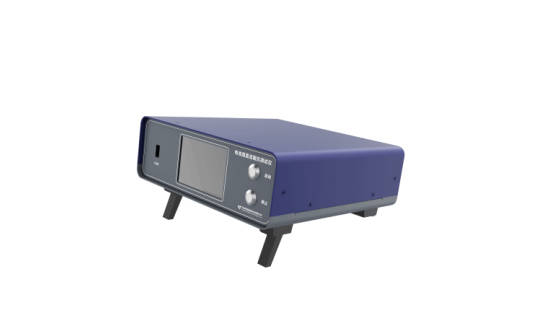
- 100% Factory Electrical Performance Testing: Using high-precision instruments such as the RDT-12A portable battery pack internal resistance tester, each cable harness undergoes continuity testing, insulation withstand voltage testing (e.g., 500VDC), and loop resistance consistency testing to ensure flawless electrical connections.
- Simulated Operating Condition Reliability Testing: Product batches must undergo vibration testing, mechanical insertion/removal life testing, high and low temperature cycling (-40℃~85℃), and damp heat aging testing to simulate harsh real-world environments and verify long-term stability.
Pillar Four: Modularization and Deep Customization Capabilities
We offer flexible services ranging from standard products to fully customized solutions.
- Standardized Interfaces: Utilizing mature automotive-grade connector systems (such as aviation plugs) for easy system integration and maintenance.
- Deep Customization: With a professional engineering team, we can provide full-process customization services, from electrical principles and 2D wiring harness drawings to sample production, based on customers’ specific battery pack structure, spatial layout, BMS interface protocols (such as CAN, DAI), and voltage platforms (covering 12V to 800V+). Flexible production is also supported.
Typical Product Parameter Examples (Customization Supported)
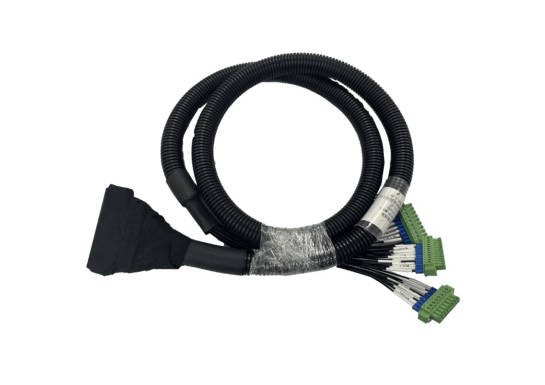
- Total Wiring Harness Length: Customizable according to module layout (e.g., 1500mm).
- Conductor Specifications: Independent or composite design for main sampling sub-lines (e.g., 0.35mm²) and equalizing power lines (e.g., 1.0mm²).
- External Protection: Corrugated tubing or braided mesh optional.
- Connectors: Customized PIN definitions to meet mainstream BMS slave board interfaces.
Multi-Scenario Applications: Stable performance from automotive to energy storage grades
- In New Energy Vehicles: Module acquisition harnesses are crucial for precise energy management, extended driving range, and overall vehicle safety. Like the vehicle’s “lifeline,” they ensure the BMS meticulously protects each battery cell, meeting stringent automotive-grade vibration, temperature, and lifespan requirements.
- In Energy Storage Systems: Facing the challenges of larger scale and longer operating cycles (over ten years), the long-term weather resistance and signal stability of the harness are paramount. Our harness solutions optimized for energy storage environments ensure long-term effective monitoring of thousands of battery cells, improving the efficiency and lifespan of the entire energy storage system.
Conclusion
Module data acquisition harnesses are far more than just simple wire assemblies; they are the signaling cornerstone of battery system safety, efficiency, and lifespan. Guheng Energy has been deeply involved in battery management and testing for over a decade, integrating harness R&D, automated production, and testing verification. We not only provide a full range of high-reliability module data acquisition harnesses that meet automotive-grade standards, but also possess strong customized design and production capabilities to precisely match your battery pack structure and BMS requirements.
FAQ
Q: How to judge the quality of a module data acquisition harness?
A: Several dimensions are mainly considered: 1. Electrical performance: loop resistance consistency, insulation strength; 2. Signal quality: long-term stability and anti-interference capability (EMC); 3. Materials and processes: connector grade, cable temperature resistance and flame retardant rating, crimping/soldering quality; 4. Verification reports: whether a complete factory test report and third-party reliability test reports (such as vibration, temperature cycling) are provided.
Q: What module data acquisition harness related products and services does Guheng Energy provide?
A: We offer a full range of products, from standard to fully customized, including equalization harnesses, module power acquisition harnesses, and low-voltage communication harnesses, compatible with various battery testing and maintenance equipment. We also provide professional equipment such as the RDT-12A battery internal resistance tester, offering customers a complete quality control solution from manufacturing to after-sales maintenance.
Q: What is the development cycle and minimum order quantity for customized harnesses?
A: The development cycle depends on the design complexity. Sample delivery typically takes 2-4 weeks. We support small-batch trial production and can provide competitive mass production pricing for mature projects. Please feel free to discuss your specific needs with our sales engineers.