
In the new energy era, from high-speed electric vehicles to massive energy storage power stations, lithium battery packs have become the core of power. However, a often overlooked “lifespan killer” lurks within—the inconsistency of individual cells within the battery pack. As a technology solution provider in the new energy field, Guheng Energy understands that to protect the long-term health of batteries, a seemingly simple yet crucial component must be given due attention: the balanced harness.

Introduction: The Overlooked Lifespan Killer—Battery Inconsistency
Looking at the Shortest Plank of a Battery Pack Through the “Barrel Effect”
Any battery pack consists of dozens or even thousands of cells connected in series. Its overall performance is like a barrel, with the total capacity depending on the “shortest plank.” Due to subtle differences in manufacturing processes, operating temperatures, etc., there are slight differences in voltage, internal resistance, and capacity between cells at the time of manufacture. Over hundreds or thousands of charge-discharge cycles, these small differences accumulate and amplify, causing some cells to age faster, ultimately dragging down the lifespan and performance of the entire battery pack.
The BMS Dilemma: A Skilled Cook Can’t Make a Meal Without Rice
The Battery Management System (BMS) is hailed as the “brain” of a battery pack, and one of its core functions is to correct inconsistencies through balancing technology. However, even the smartest “brain” needs keen “senses” to acquire information. If the voltage data of each cell cannot be accurately and in real time captured, the BMS’s balancing function will be unable to perform effectively, resulting in a “skilled cook can’t make a meal without rice” dilemma.
Unveiling the Balanced Harness: The “Neural Network” Connecting the BMS and the Cells
More Than Just Wires: The Intricate Structure of the Balanced Harness
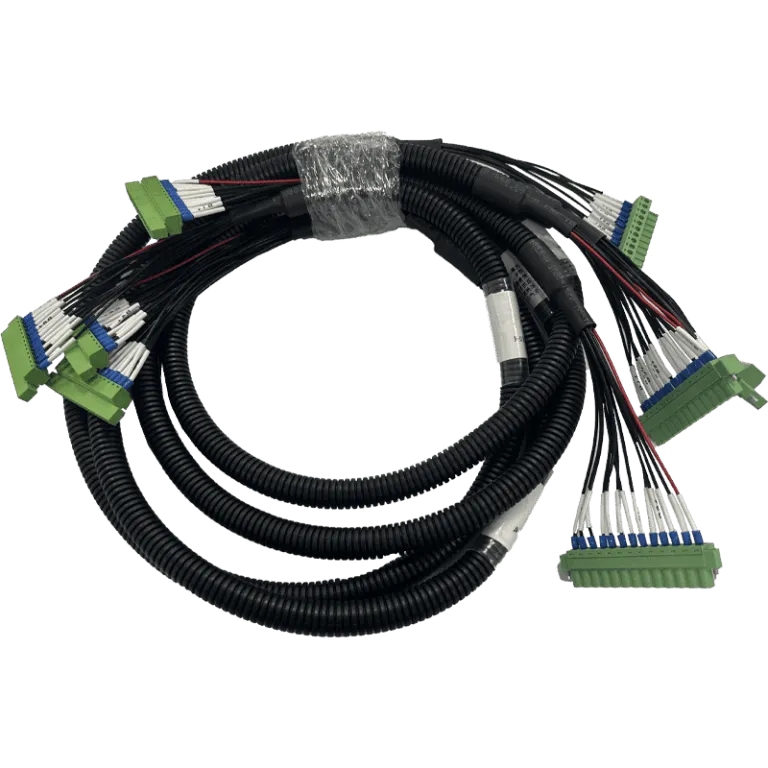
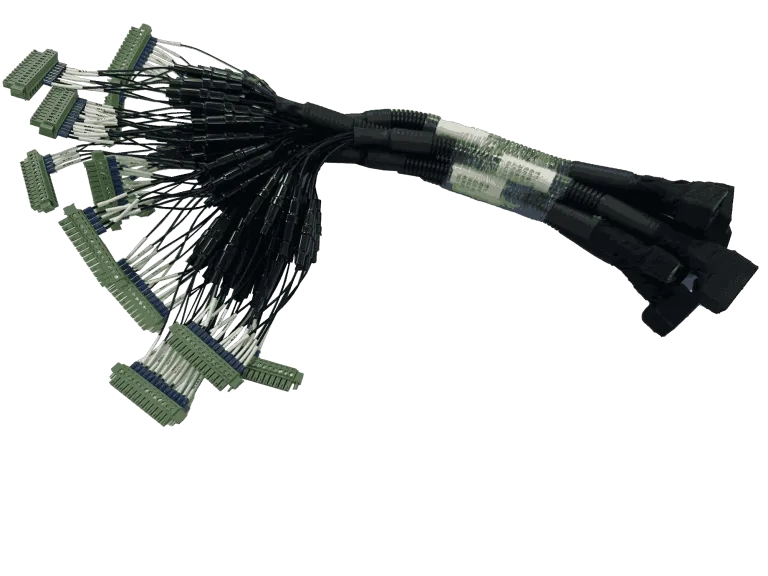
The balanced harness is far more than an ordinary collection of wires. It is a precise “neural network” connecting the BMS and each cell. The balanced harnesses produced by Guheng Energy, such as our widely used FPC flexible printed circuit board sampling harness and standard wire balanced harness in battery pack maintenance and testing scenarios, employ high-precision, ultra-low impedance conductors, combined with high-temperature resistant, flame-retardant insulation materials, ensuring stable and reliable signal transmission even in the complex and harsh electromagnetic and temperature environment inside the battery pack.
The “Capillaries” of Data: Precisely Collecting the Voltage of Each Battery Cell
This “neural network,” like the capillaries of the human body, is densely and orderly deployed among the battery cells. Its sampling points or terminals are precisely connected to the positive and negative terminals of each cell. Its mission is to transmit massive amounts of voltage data synchronously and without loss to the BMS main control unit. Guheng Energy’s wiring harness products, with their superior craftsmanship, can control voltage sampling errors within an extremely low range, providing the BMS with the “factual truth” upon which its decisions are based.
Collaborative Operation: How Balanced Harness Empower Passive Equalization Systems
From Data to Command: The Equalization Decision Process of the BMS
After Guheng Energy’s balanced harnesses report accurate voltage data, the BMS can quickly identify the “problem cells” with excessively high voltages within the group. Under the passive equalization strategy, the BMS issues commands to discharge these high-voltage cells through parallel discharge resistors, dissipating their energy as heat, thereby bringing their voltage back to the same level as their peers.
The Energy “Regulation Path”: The Essential Path for Equalization Current
In this process, the balanced harness plays a second crucial role: the energy “regulation path.” The balancing current flows through this thin harness to the discharge resistor, ultimately achieving voltage balance. Therefore, the harness’s current-carrying capacity, the connector’s contact resistance, and long-term stability directly determine the effectiveness and safety of the balancing process. Inferior harnesses can lead to balancing failure and even overheating risks.
Long-Term Value: Small Harness, Big Contribution—Why It Matters to Battery Life
Suppressing Degradation and Increasing Cycle Count
Through daily “micro-balancing,” Guheng Energy’s balanced harness assists the BMS in effectively preventing the exacerbation of internal degradation within the battery pack. It ensures that no cell is under prolonged “stress,” thus significantly slowing down the overall capacity degradation rate. Practice shows that a BMS equipped with a high-quality balanced harness can effectively increase the battery pack’s cycle life by 20% or more (the specific increase varies depending on system design, operating conditions, etc.). This is of immense value for energy storage projects and electric vehicles seeking long-term investment returns.
Prevention is Better than Cure: Enhancing Safety and Reliability
Voltage inconsistency is not only a lifespan issue, but also a safety one. Prolonged overcharging of individual cells is a common cause of thermal runaway. balanced harnesses, by assisting the BMS in maintaining voltage balance, significantly improve the safety margin of the battery pack, nipping risks in the bud.
Return on Investment: An Undervalued Key Auxiliary Material
In the cost structure of battery packs, balanced harnesses are often considered “auxiliary materials.” However, from a total lifecycle cost analysis perspective, choosing high-quality harnesses from companies like Guheng Energy is a highly rewarding investment. It extends the overall service life of the battery pack, avoiding huge economic losses caused by premature scrapping and frequent repairs.
Guheng Energy’s Commitment: Providing Reliable Connections for Every Cell
At Guheng Energy, we are not only a manufacturer of balanced harnesses, but also a partner in the full lifecycle health management of batteries. In addition to providing reliable harness products, we have also developed a series of devices for evaluating and ensuring the performance of harnesses and battery packs.
We understand that every battery pack design is unique. Therefore, Guheng Energy provides comprehensive customized solutions, matching your unique needs from the design stage to ensure optimal board layout, sampling accuracy, and long-term durability.
FAQ
Q: What is the difference between a balanced harness and ordinary wires?
A: Ordinary wires focus on power transmission, while balanced harnesses are precision signal harnesses with extremely high requirements for resistance consistency, insulation strength, temperature resistance, and anti-interference capabilities. Guheng Energy’s harnesses are specifically designed for the complex environment within battery packs, ensuring accurate data and long-term stability.
Q: What are the consequences if the balanced harness experiences an open circuit or poor contact?
A: It will cause the BMS to “blind” the cell corresponding to the fault point. This cell may be accelerated due to its inability to participate in balancing, and may even lead to serious safety issues such as overcharging and over-discharging. Therefore, the reliability of the harness connection is crucial.
Q: How can I assess the health status of the existing battery pack balanced harness?
A: You can use Guheng Energy’s battery pack comprehensive tester to perform the test. It can simulate the working state of a BMS, accurately measuring the continuity, resistance, insulation performance of each sampling line, and the normality of the communication/sampling circuit connected to the BMS, providing accurate data support for maintenance.
Q: How does Guheng Energy ensure the reliability of its balanced harness in vibration environments?
A: We ensure connection strength through automated crimping processes and use automotive-grade connectors with locking mechanisms. Simultaneously, we can perform wiring and fixing point simulation analysis based on the customer’s battery pack structure, providing professional anti-vibration solutions.
Q: Besides the balanced harness, what other battery maintenance-related products does Guheng Energy offer?
A: We offer products covering the entire battery testing and maintenance lifecycle. For example, an EOL testing system for battery pack factory testing, a battery pack internal resistance tester for routine maintenance, and a battery capacity tester that can accurately determine the health status of cells, together forming a complete battery health management ecosystem.