
In the new energy battery aftermarket service market, module reassembly and cell replacement are crucial processes for revitalizing old battery packs. However, many repair companies often encounter rapid performance degradation, increased internal resistance, and even rework in a short period after completing cell welding and module packaging. A deep analysis of these cases reveals that the root cause of most problems points to a neglected pre-treatment step—humidity control.
As a professional manufacturer with over ten years of experience in the new energy service technology field, Guheng Energy always emphasizes one point when providing customers with complete solutions: strict dehumidification before battery module reassembly is not an optional step, but rather the cornerstone determining the success or failure of the entire remanufacturing process.
Ignoring the Deadly Hidden Dangers of Moisture
The seemingly dry workshop air actually contains tiny water molecules that are constantly floating in it. When battery modules are disassembled, exposing the cell terminals, connectors, and casing directly to the air, a potential crisis begins to brew.
The Lurking Electrolyte Killer
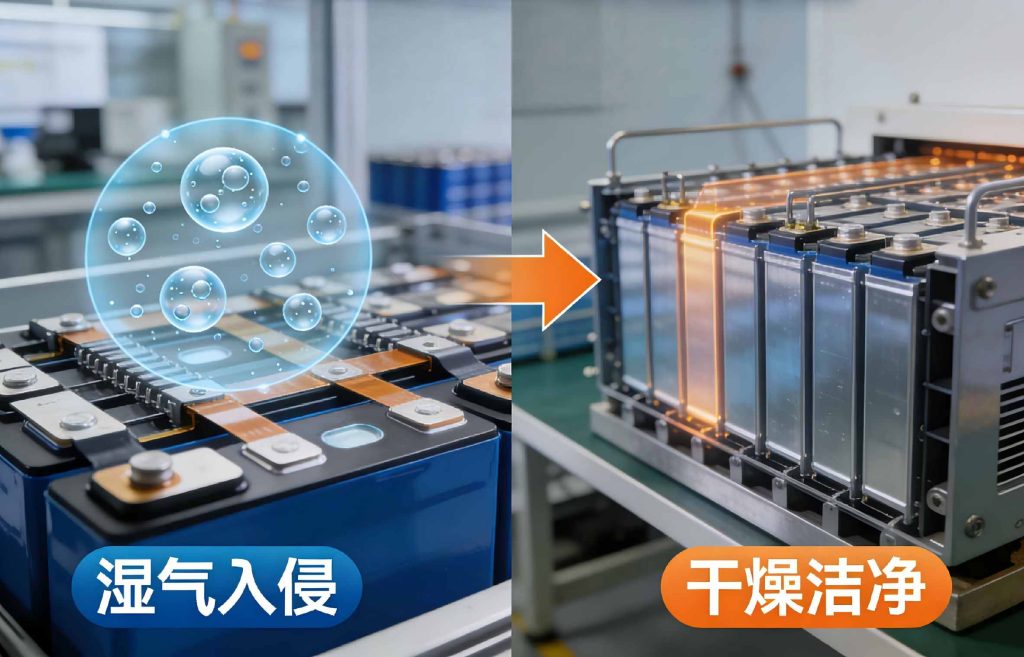
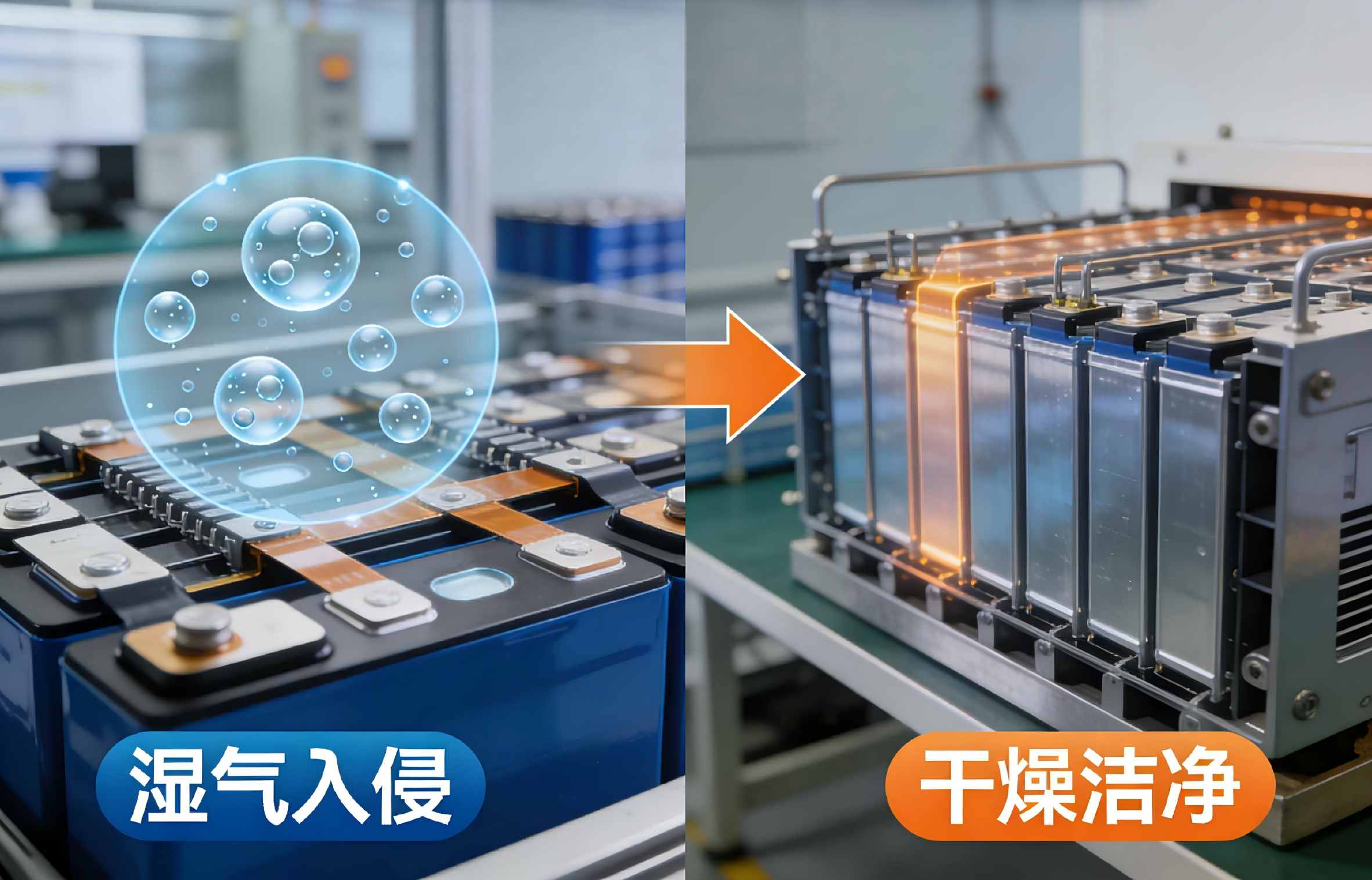
Residual lithium salts inside the battery are extremely sensitive to moisture. Upon contact with infiltrating moisture, they rapidly react to form highly corrosive hydrofluoric acid (HF). This acidic substance, like cancer cells, continuously corrodes the tabs, current collectors, and separator, damaging the cell’s chemical structure and ultimately leading to a sharp drop in capacity and a surge in internal resistance.
The Invisible Obstacle to Welding
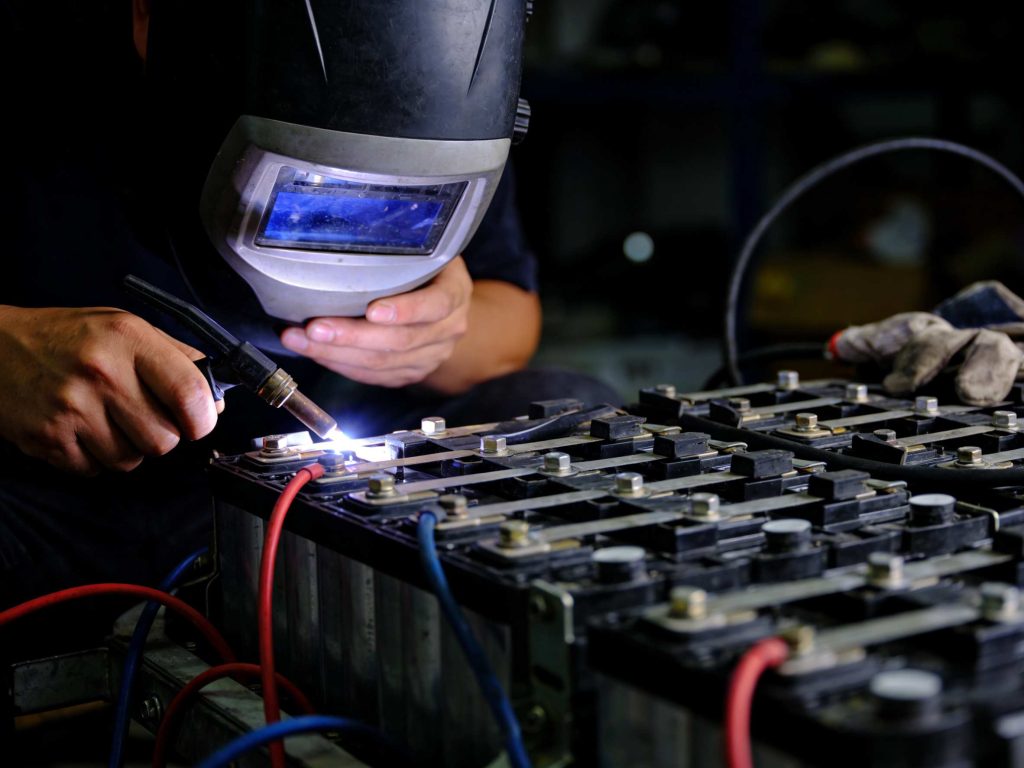
Laser welding is a process that demands extremely high precision in the surface condition of the workpiece. Even though invisible to the naked eye, tiny water molecules existing in the welding area as water films or vapors can instantly vaporize at high temperatures, causing the welding energy to be absorbed or interfered with. The result is spatter, spatter, incomplete welds, or excessive weld slag, directly causing insufficient connection strength and creating a hidden danger of overheating and desoldering during high-current charging and discharging.
The Long-Term Threat to Safety
Unremoved moisture can also react with solvents in the electrolyte, producing gas and causing slight bulging of the battery. Under long-term operation, this is equivalent to installing a “time bomb” inside the module, leading to increased self-discharge, decreased consistency, and in severe cases, even thermal runaway.
Why is 70℃ the “golden point” for module drying?
Since dehumidification is so crucial, simply blowing it with a fan or placing it in a regular oven solve the problem? The answer is no. Battery modules have a complex structure; the gaps between cells, the layers of insulation sheets, and the base of the terminals are all “dead zones” where moisture easily hides. To thoroughly remove this deep-seated moisture, both “temperature” and “stability” conditions must be met simultaneously.
- Penetration and activation: If the temperature is too low, only surface moisture can be removed; internal moisture cannot be effectively “awakened” and expelled.
- Balance between efficiency and materials: If the temperature is too high, it may damage the cell’s separator or insulation materials, or even accelerate internal side reactions within the cell.
Based on extensive experimental and case data verification, Guheng Energy defines 70℃ as the “golden point” for drying modules before reassembly. At this temperature, heat can effectively penetrate the module’s interior, driving out deep-seated moisture while remaining within the safe tolerance range of the battery materials, achieving a perfect balance between efficient dehumidification and zero damage.
Guheng Energy Battery Pack Dehumidification Drying Chamber: Reshaping Safety Standards for Module Reassembly
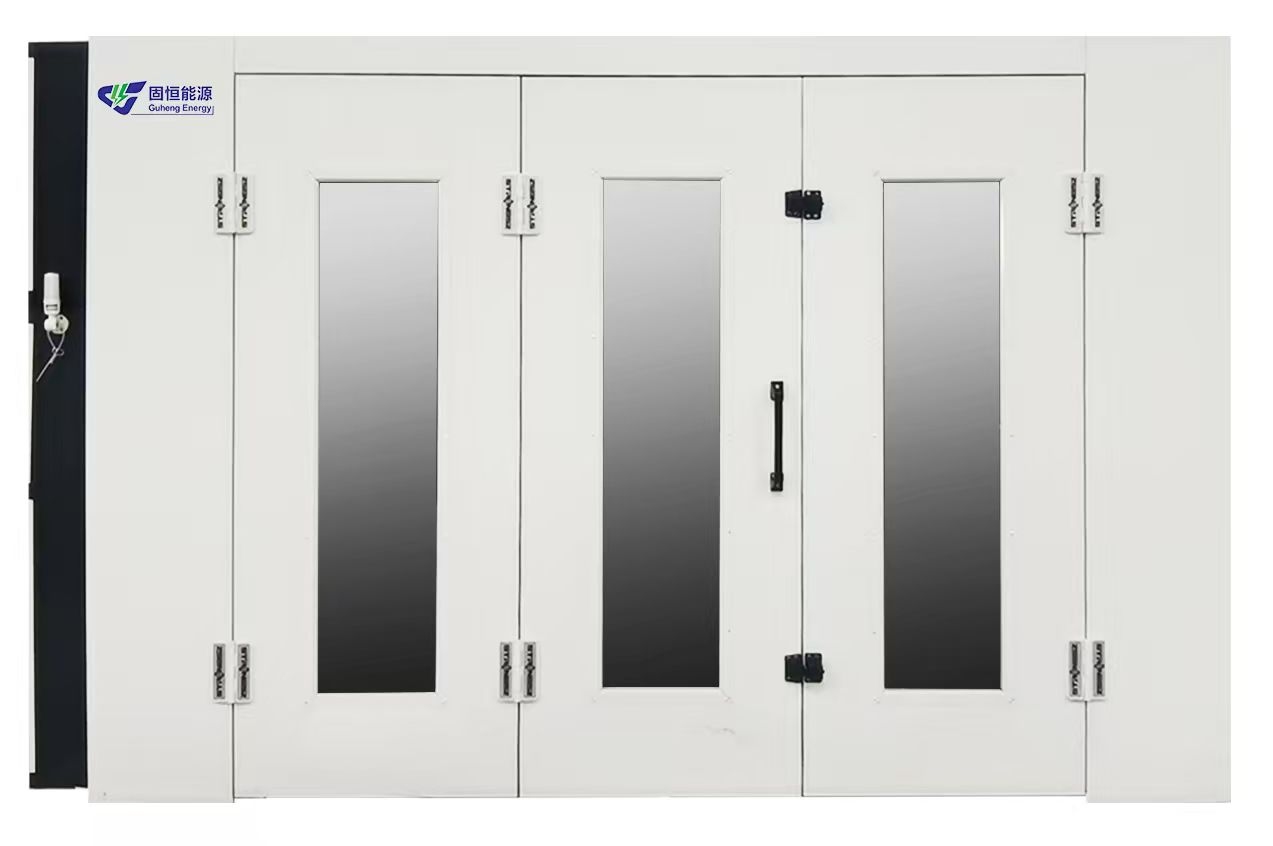
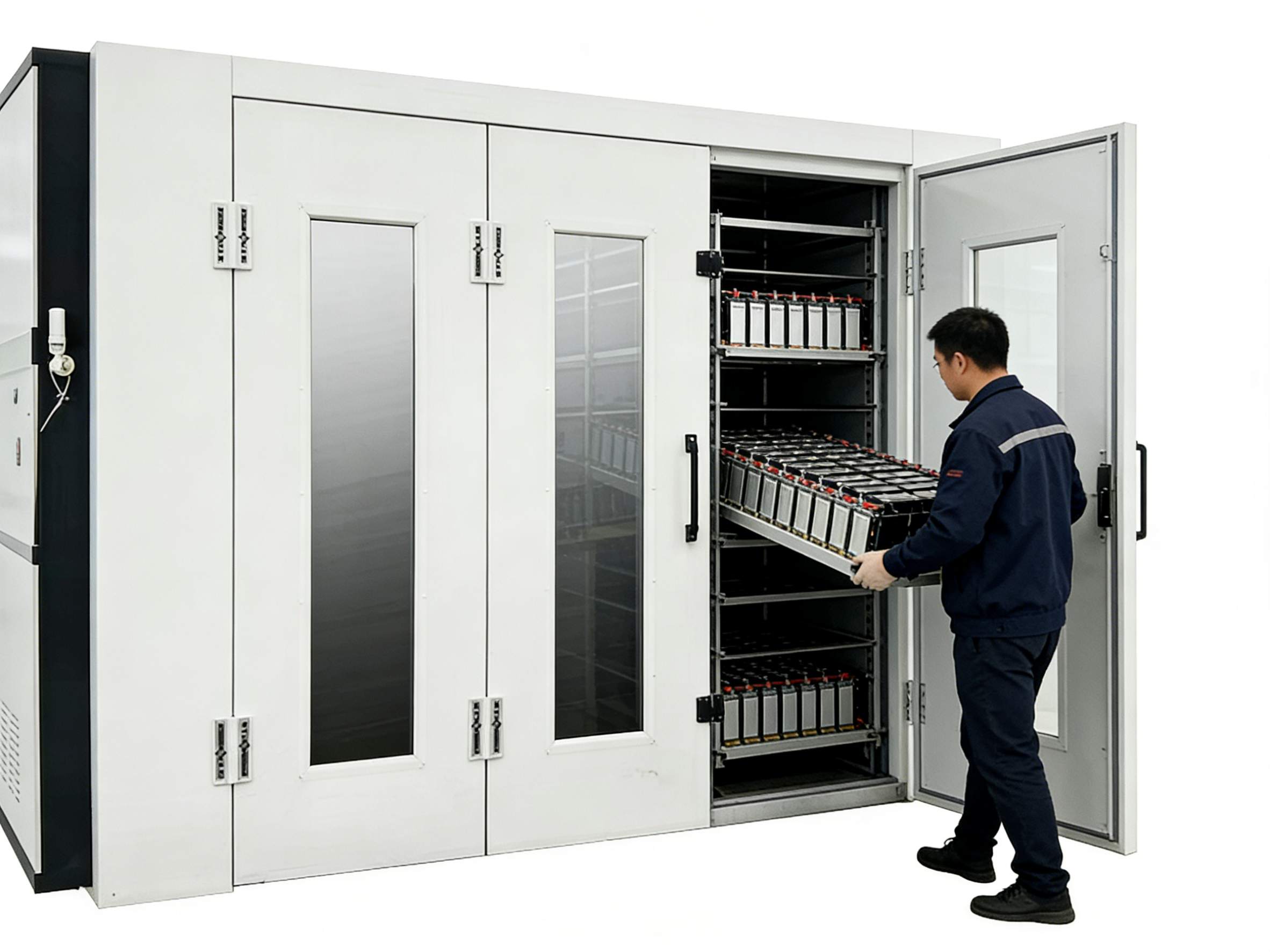
To meet the stringent requirements of the drying environment for module reassembly processes, Guheng Energy has launched a “Battery Pack Dehumidification Drying Chamber” specifically designed for battery repair and remanufacturing scenarios. It is not only a drying device but also a module pre-processing workstation integrating precise temperature control and intelligent humidity control.
Precise Humidity Control, Creating an “Absolutely Dry” Environment
The equipment supports a stable and adjustable drying environment up to 70℃ and can precisely adjust humidity within a wide range of 10% to 98% RH. Whether dealing with module processing in high-humidity southern weather or implementing standardized pre-welding processes, it provides consistent, stable, and reliable drying conditions, eliminating uneven drying caused by temperature fluctuations.
Intelligent Protection, Automated Control for Greater Peace of Mind
We understand that ease of operation and safety are equally important. This equipment innovatively adopts a dual temperature and humidity warning system. The drying and dehumidification processes are fully automated. Once the temperature or humidity deviates from the set range, the system immediately issues a warning and automatically adjusts, greatly reducing the cost of manual monitoring and the risk of misoperation.
High Efficiency and Energy Saving, Core Technology Guarantees Quality
Unlike traditional heating methods, the GHCS-01 uses a graphene heating device, significantly improving heat conversion efficiency and substantially reducing energy consumption. Meanwhile, core components, including the evaporator and condenser, are made entirely of copper, ensuring excellent thermal conductivity and long-term durability.
From Dehumidification to Welding: A Closed Loop for Quality Assurance
Guheng Energy designed this equipment with the intention of creating a complete closed loop between “module reassembly” and “welding quality assurance” through the crucial “pre-treatment” stage. When the modules are removed from our battery pack dehumidification and drying chamber, their temperature and internal environment have reached the ideal state for laser welding:
- Optimal surface condition: No water film interferes with the surfaces of the terminals and connectors, creating conditions for stable and uniform absorption of laser energy.
- Pure internal environment: Completely eliminating moisture—the “electrolyte killer” and “gas generator”—ensuring long-term chemical stability and safety after cell welding from the source.
Conclusion
In the meticulous field of battery maintenance, every tiny detail affects the performance and safety of the final product. Humidity control is the seemingly insignificant yet crucial link in the module remanufacturing process chain, determining success or failure. Guheng Energy is committed to providing industry customers with complete solutions from diagnosis and testing to maintenance equipment through professional technology and reliable products. Our battery pack dehumidification and drying chamber (GHCS-01) is not only a tool to solve the hidden dangers of moisture, but also an important cornerstone for building a high-quality, high-safety battery remanufacturing system.
If you have any questions about the drying process before battery module reassembly, or would like to learn more about Guheng Energy’s products, please feel free to contact us for professional information and technical consultation!
FAQ
Q: Why is dehumidification necessary before battery module reassembly?
A: During the disassembly process, the internal cells and connectors of the battery module are exposed to the air, making them highly susceptible to absorbing moisture. If rigorous dehumidification and drying are not performed, residual moisture can cause soldering defects and poor welds during subsequent welding, and react with the electrolyte to form corrosive hydrofluoric acid during battery use, severely damaging battery performance, shortening lifespan, and even causing safety accidents. Therefore, dehumidification is a core pre-step step to ensure the quality of reassembly and long-term safety.
Q: What is a battery pack dehumidification drying chamber?
A: A battery pack dehumidification drying chamber is a specialized device used for deep drying of disassembled battery modules or cells. Unlike ordinary ovens, it can precisely control both temperature and humidity, effectively removing trace amounts of moisture from hidden locations such as gaps and insulation layers inside the module. Taking Guheng Energy’s GHCS-01 as an example, it provides a stable drying environment up to 70℃ and features dual temperature and humidity warning functions, making it a professional piece of equipment in the battery repair and remanufacturing field.
Q: Will drying at 70 degrees Celsius damage the battery modules?
A: For battery cells and module materials that meet quality standards, 70℃ is a proven safe and efficient drying temperature range. This temperature is sufficient to “awaken” and remove deep moisture, while remaining far below the thermal deformation or aging temperature thresholds of the cell separator and insulation materials. Guheng Energy’s equipment supports adjustable temperature, and users can also set parameters according to the specific cell manufacturer’s recommendations to ensure optimal dehumidification under absolutely safe conditions.
Q: What are the core technologies of Guheng Energy’s battery pack dehumidification and drying chamber?
A: Our core technologies are mainly reflected in four aspects: 1. Graphene heating device, which has high thermal efficiency and significant energy saving; 2. Stable temperature control up to 70℃ and precise humidity control capability over a wide range of 10%~98%RH; 3. Dual early warning system for temperature and humidity, realizing fully automatic safety control; 4. Core components such as evaporator and condenser are made of all-copper material, ensuring the durability and long-term stability of the equipment.