
In the field of new energy vehicle repair, a core pain point is becoming increasingly prominent: after the electronic control system (especially the motor drive) is repaired, how can we objectively and quantitatively prove that it has been “fully recovered” and can be safely and reliably put back on the road?
For a long time, many repair shops have relied on “experience-based judgment” and “simple road tests.” However, this model has huge hidden dangers. Functional restoration (the car can run) does not equal performance restoration (all system indicators are consistent with the factory condition). Hidden performance degradation and potential intermittent faults are like undetected “internal injuries,” which may at any time cause secondary faults, safety accidents, or even affect the lifespan of the entire vehicle, ultimately damaging the reputation of the repair shop and the trust of customers.
Therefore, transitioning from “relying on intuition” to “relying on data,” and establishing a scientific, standardized, and traceable final inspection process has become an inevitable trend for the industry to improve the quality of repair services and ensure safe operation. As a company deeply rooted in new energy testing technology, Guheng Energy is committed to using innovative tools to make this trend a reality accessible to every repair technician.
The Core of Scientific Judgment: A Key Leap from Qualitative to Quantitative Analysis
To determine whether a repaired drive system is truly “healthy,” we must focus on verifying the integrity of two dimensions:
- Functional Integrity: Do all basic commands and protection mechanisms respond normally? For example, can it start and adjust speed normally? Can overvoltage, overcurrent, and overheat protection trigger accurately?
- Performance Integrity: Has the system’s output quality and control precision returned to their original state? This includes key parameters such as the waveform, amplitude accuracy, harmonic content, and dynamic response speed of the output voltage/current.
These parameters are like the “electrocardiogram” and “blood indicators” of the human body. They must be measured under simulated real load conditions using professional “testing equipment” and rigorously compared with standard values to arrive at accurate conclusions. This is precisely the area that traditional road tests and experience-based judgment cannot reach.
Guheng Energy Solution
Addressing the aforementioned industry pain points, Guheng Energy developed the MTS-AC series final inspection instrument for electrical control systems service terminals. It’s more than just a testing device; it’s the “ultimate judge” and “digital archivist” for maintenance quality control. Our design philosophy is clear to standardize and automate complex professional testing, generating unquestionable “factory certificates,” reducing the over-reliance on the personal experience of operating technicians at service terminals, minimizing the subjectivity of quality judgment, and achieving standardized operations.

A Deep “Check-up” Simulating Real-World Working Conditions
The equipment incorporates high-voltage and low-voltage programmable power supplies and professional loads, capable of simulating various dynamic working conditions during vehicle operation. It accurately measures the amplitude, frequency, phase balance, harmonic distortion (THD), and dynamic response characteristics of the controller’s three-phase voltage and current output. This is like providing the electrical control system with a professional “treadmill,” allowing it to undergo a full-process test from idle speed to full power output.
One-Click Automated Intelligent Flow
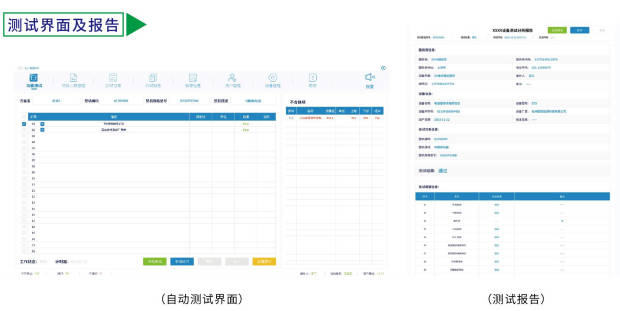
Operation is extremely simple. After automatically matching the corresponding testing scheme by scanning the controller ID, technicians only need to activate the “one-click fully automatic testing” function. The equipment will automatically execute the preset, industry-standard optimal testing steps, eliminating omissions or misjudgments that may occur during manual testing. After testing, the interface will clearly “display non-conforming items individually,” focusing on the problem points.
Generate an Authoritative Digital “Health Report”
This is the core value output of the MTS (Mechanical Control System Service Terminal) final inspection instrument. All test data is intelligently analyzed, automatically generating a detailed test report. This report not only includes the original data curves but also compares the measured values with standard limits, providing a clear “pass/fail” conclusion. It becomes a traceable and verifiable digital archive of repair quality, providing a solid data foundation for internal quality inspection, customer delivery, and subsequent dispute resolution.
Comprehensive Data Management and Process Integration
The equipment supports local storage, retrieval, export, and printing of test data and reports, and can automatically upload them to a server platform, facilitating group-wide and digital quality management at service stations. Its multi-level user management and remote software upgrade functions ensure the standardization and sustainability of equipment management.
Establishing a Standardized Final Inspection Process, Empowering Service Stations
Introducing the Guheng Energy MTS final inspection instrument means that service stations can establish a set of efficient and standardized final inspection SOPs (Standard Operating Procedures):
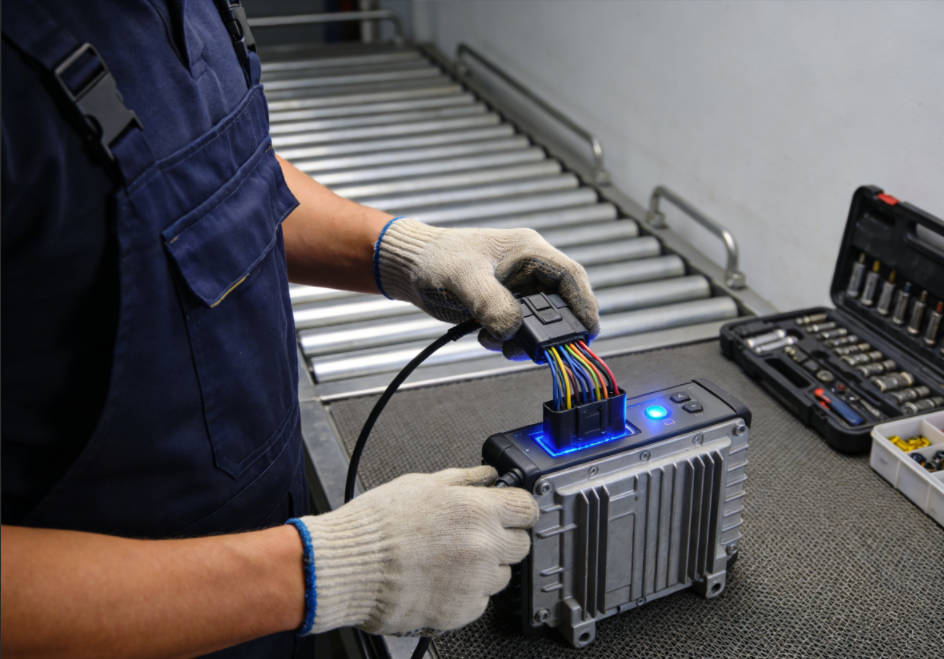
- Connection and Preparation: Reliably connect the repaired motor controller to the MTS equipment.
- Barcode Scanning and Matching: Scan the controller barcode to automatically call up the dedicated testing scheme.
- Testing Execution: One-button start; the equipment automatically completes all functional verifications and performance tests.
- Reporting and Release: Review the automatically generated test report. Only when all items are “qualified” can the equipment be signed off and released for re-operation.
The value of this process lies in:
- For technicians: It provides clear and objective work guidelines and quality judgment standards, enhancing technical confidence and operational efficiency.
- For managers: It achieves a leap in repair quality from “human control” to “machine control,” ensuring consistency in work across different technicians and at different times, significantly reducing quality risks.
- For customers: A professional inspection report is worth more than a thousand promises, greatly enhancing service transparency and trust, becoming a core competitive advantage of the repair station.
Conclusion
The maturity of the new energy vehicle industry is not only reflected in the manufacturing end but also permeates every aspect of aftermarket services. Scientific post-repair inspection is the final and crucial line of defense for ensuring the safe and reliable operation of vehicles throughout their entire lifecycle. Guheng Energy firmly believes that through professional safety protection tools like the MTS electronic control system service terminal final inspection instrument, we can help our repair partners jointly promote the industry’s move away from “empiricism” and into a new era of “scientific repair” driven by data and guaranteed by standards. Every repair delivery will be confident and traceable.
FAQ
Q: The road test went well after repair, so why is it necessary to use specialized equipment like the MTS for further testing?
A: Road testing verifies functionality but cannot perform quantitative performance testing. For example, key performance indicators such as output voltage harmonic distortion, dynamic accuracy of current control, and temperature rise characteristics under specific loads cannot be revealed in a simple road test. The MTS can simulate extreme operating conditions on a safe test bench, performing in-depth diagnostics to ensure the system 100% meets safe commissioning requirements and eliminates hidden risks.
Q: How convincing is the test report from the Guheng Energy MTS final inspection instrument?
A: Extremely convincing. This report is not simply a statement of results, but an objective record containing complete test data curves, standard limit comparisons, and clear criteria. It directly proves that the tested controller meets the prescribed technical standards in all key parameters, providing tamper-proof data evidence for repair service quality. It can be used for internal archiving, customer delivery, and quality traceability, effectively avoiding disputes.
Q: Is the operation complicated? Will it increase our labor costs?
A: No. The core design goal of the MTS is to “simplify operation and improve efficiency.” Its “one-click fully automatic detection” and automatic code-scanning matching functions compress complex tests that originally required hours of work by experienced technicians into an automated process of just a few minutes. By improving the accuracy and consistency of final inspections, it avoids rework and long-term warranty costs caused by incomplete repairs, significantly reducing overall operating costs.
Q: Can this equipment adapt to different brands and models of vehicles?
A: Yes. Guheng Energy’s MTS boasts high flexibility and scalability. We provide a continuously updated database of vehicle model testing solutions and support customized configurations through a “flexible test solution synchronous editing function.” Our professional technical team also provides adaptation support, ensuring the equipment covers a wide range of mainstream electronic control systems.
Q: Besides ensuring quality, what other practical benefits does introducing this system bring to repair shops?
A: There are three main benefits: ① Brand Enhancement: By issuing professional testing reports, a brand image of technical expertise and reliable quality is established, becoming a differentiated competitive advantage. ② Cost Control: Rework, warranty claims, and potential disputes caused by undetected potential performance defects are avoided, reducing long-term operational risks. ③ Efficiency Improvement: Standardized testing processes shorten the technician training cycle, making quality control independent of the experience of individual veteran workers, and ensuring the stability and scalability of the team’s output.