


In today’s rapidly developing new energy industry, battery system safety remains a key focus. When thermal runaway accidents occur in energy storage power stations or electric vehicles, analysis often focuses first on the battery cells themselves.
However, a highly concealed “hidden killer” is often overlooked—loose connection points within the battery pack. Today, we will provide an in-depth analysis of this hidden danger from a first-person perspective, explaining how Guheng Energy‘s Battery Pack DC Impedance Tester RDT can achieve early warning and location of potential thermal runaway hazards through precise DC impedance monitoring.
Hidden Risk: Deterioration of Contact Reliability in Battery Connection Systems
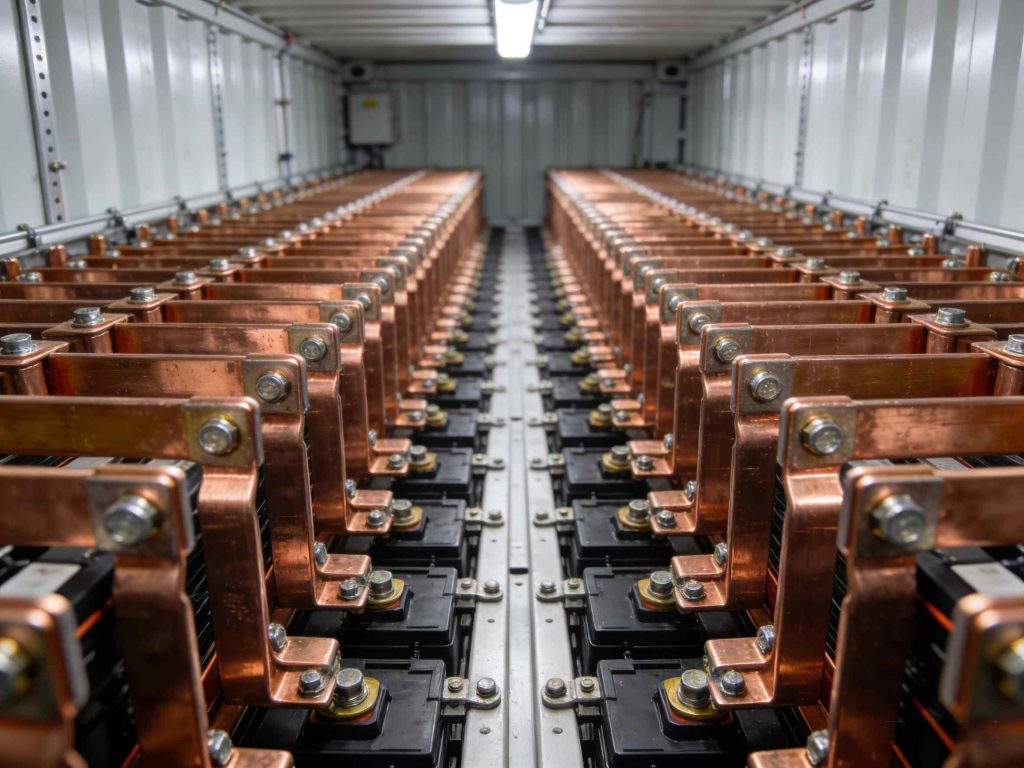
A battery pack is a complex electrical system, containing hundreds or thousands of cells connected in series and parallel via bolts, laser welding, or copper busbars. The electrical contact integrity of these connection points directly determines the reliability and uniformity of the current path within the battery system. However, under the stress of real vibration, impact, and thermal expansion and contraction from charge-discharge cycles, these “joints” may silently deteriorate. Tiny loosening begins, and contact surfaces may oxidize due to overheating. These early defects are difficult to identify effectively by visual inspection or periodic torque checks alone, but their consequences can be catastrophic.
Risk Mechanism Analysis: How Connection Point Failure Causes Systemic Failure
When connection points become loose or oxidized, the most direct manifestation is a significant increase in contact resistance (a key component of the battery system’s loop resistance/total DC internal resistance).
According to Joule’s law (Q=I²Rt), even an abnormal increase in connection impedance at the micro-ohm (μΩ) level during high-current battery operation will generate significant local heat accumulation. This can lead to:
- Thermal runaway risk: Local overheating accelerates oxidation and corrosion of the connection surfaces, further increasing contact resistance, generating more Joule heat, forming a positive feedback loop, and ultimately potentially causing connection point melting, arcing, ignition, or the spread of thermal runaway.
- System Performance Degradation: Increased connection impedance causes additional voltage drops, reducing the overall energy efficiency of the battery system and leading to shorter range or insufficient depth of discharge. It also disrupts the uniformity of the battery pack’s internal resistance, accelerating the aging of some cells and shortening the overall battery pack’s lifespan.
Monitoring Challenges: Why are traditional methods ineffective in providing timely warnings?
Traditional methods fall short in addressing this hidden danger:
- Visual Inspection and Torque Checks: These cannot quantitatively assess the true electrical state of connection points, nor can they detect existing oxide layers.
- Temperature Monitoring: Infrared thermal imagers or BMS temperature sensors are effective auxiliary tools, but their alarms are based on the fact that “heat has already been generated,” exhibiting significant lag and failing to provide true “early warnings.”
Solution: Guheng Energy RDT Series
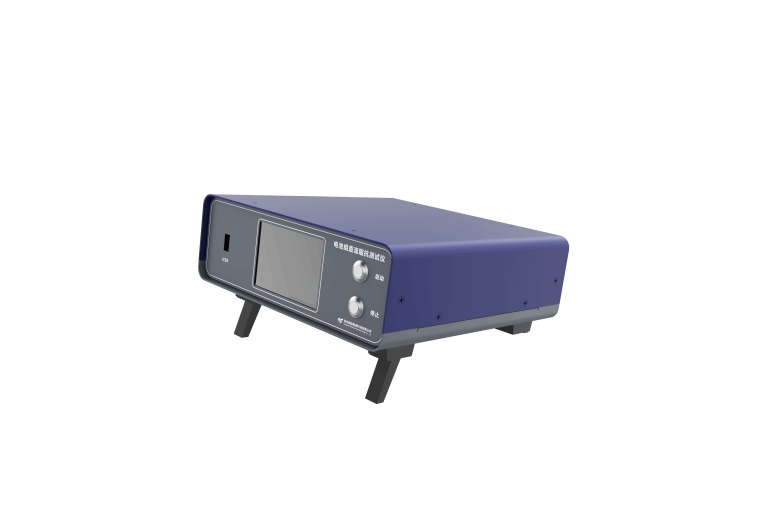
To address this industry pain point, Guheng Energy developed Battery Pack DC Impedance Tester RDT series. Our design philosophy is to directly detect problems through changes in electrical parameters before heat generation occurs.
Core Technology: Direct Correlation Between DC Impedance (DCR) and Connection Status
DC internal resistance (DCR) is composed of the cell’s inherent impedance and the connection impedance. A clean, tight connection point has a stable and extremely low impedance value. Guheng Energy’s RDT series, by applying a high-precision DC test signal, can effectively detect micro-ohm level impedance changes caused by loosening or oxidation. This means that before a connection point develops into a hotspot, the RDT series can issue an early risk warning through abnormal impedance data.
Product Advantages: Precise, Portable, Intelligent
- Micro-ohm Level High-Precision Measurement: Employing advanced algorithm models, it ensures high precision and repeatability in internal resistance testing, reliably distinguishing minute impedance increments, providing a data foundation for accurate judgment.
- Overall Pack Evaluation and Branch Location: The Battery Pack DC Impedance Tester RDT can not only measure the total loop DC resistance of a battery module or battery box to evaluate the overall connection status, but also simultaneously measure the DC internal resistance of up to 12 series branches (battery strings). This feature helps maintenance personnel quickly locate specific modules or series branches with abnormal connections, enabling accurate diagnosis.
- Truly Portable and Efficient: The device is powered by a built-in battery, equipped with a color touchscreen, and supports one-handed operation. Maintenance personnel can easily carry it between battery clusters in energy storage power stations or quickly troubleshoot faulty packs in repair workshops. It also supports local storage and export of test data and can create independent ID files for battery packs, facilitating historical data comparison and trend analysis.
Building a Comprehensive Safety Monitoring System
In the field of battery manufacturing and maintenance, safety is a systematic project. In addition to the RDT series for connection status, Guheng Energy also offers a range of professional maintenance equipment. For example, in the early stages of battery pack assembly, our airtightness tester can be used to ensure the integrity of the casing’s seal, preventing moisture intrusion and oxidation of connectors from the source; in routine maintenance, it can be used in conjunction with an insulation resistance tester to regularly monitor the insulation performance of the battery system, preventing leakage risks caused by insulation degradation. These, together with the RDT series, constitute Guheng Energy’s comprehensive battery safety diagnostic solution.
Application Scenarios: How the RDT Series Acts as an “Early Warning System” Throughout the Energy Storage System
Scenario 1: Preventive Maintenance Inspections of Energy Storage Power Stations
O&M teams can incorporate the Guheng Energy Battery Pack DC Impedance Tester RDT into their preventive maintenance (PdM) inspection procedures. At predetermined intervals (e.g., monthly or quarterly), impedance tests are performed on each battery cluster within the energy storage container, both for the entire group and individual strings, establishing an initial health baseline database. By comparing historical data longitudinally, if a continuously rising impedance value is detected at a connection point (e.g., an increase exceeding 20%-50%), tightening or cleaning can be performed before it develops into a failure point, transforming passive maintenance into proactive early warning.
Scenario 2: A Powerful Tool for Fault Diagnosis in Battery Repair Service Stations
When customers report excessive voltage drop or capacity reduction in battery packs, the cause could be cell aging or excessive connection impedance. Repair personnel can use the RDT series for testing. If the overall impedance is found to be too high, and single-string testing pinpoints an abnormally high impedance in a specific module, the problem is most likely in the connection, not the cell itself. This avoids the huge cost waste of blindly replacing cells and achieves precise repair.
From Passive Maintenance to Proactive Early Warning: Building a Smart Safety Defense Line
The health of battery pack connection points is one of the cornerstones of system safety. As a technology solution provider deeply rooted in the new energy testing field, Guheng Energy firmly believes that safety is not only designed in, but also monitored. Our portable battery pack impedance tester, the RDT series, is a product of this philosophy. It empowers maintenance personnel with predictive maintenance capabilities, transforming the identification of safety hazards from post-event tracing to pre-event early warning.
We urge industry practitioners to elevate DC impedance monitoring to the same level of importance as voltage and temperature monitoring. By adopting professional tools like the Guheng Energy RDT series, we can jointly promote the industry’s transformation from a “passive maintenance” to a “proactive early warning” smart operation and maintenance model, working together to build a more robust and reliable new energy safety defense line.
FAQ
Q: What is the difference between the Guheng Energy Battery Pack DC Impedance Tester RDT and traditional single-cell internal resistance testers?
A: The RDT series is a professional device specifically designed for evaluating the circuit resistance and connection status of battery systems (packs, clusters, modules). It not only possesses micro-ohm-level measurement capabilities for the DC internal resistance of a single cell, but also focuses on evaluating the system loop resistance formed by connection points, busbars, etc., and supports multi-channel synchronous measurement for rapid location. Its design is more suited to the needs of on-site operation and maintenance scenarios such as battery packs and energy storage power stations.
Q: Will using the RDT series for testing affect the normal operation of the battery pack?
A: Absolutely not. The RDT series from Guheng Energy uses a non-destructive DC testing method with short testing time and minimal impact on the voltage and internal state of the battery pack. It can be safely and non-invasively tested while the battery is stationary or undergoing maintenance.
Q: How much impedance change indicates a problem at the connection point?
A: We recommend establishing a baseline value for judgment. Measure the initial impedance when the connection is in good condition. If, during subsequent inspections, the impedance value at a certain point is found to be significantly increased compared to the initial value or similar points (e.g., an increase of 20%-50% or more), it indicates a risk at that point and requires immediate inspection. The data comparison function of the RDT series can help you easily make this judgment.
Q: What types of batteries can the RDT series be used with?
A: The Guheng Energy RDT series is designed to be compatible with various mainstream lithium-ion batteries, including lithium iron phosphate and ternary lithium batteries. Its wide voltage range design can meet the testing needs from small modules to large battery boxes.
Q: How is test data managed?
A: The equipment has local storage and export functions for test data. You can easily export the data to your computer via USB flash drive or other means for in-depth analysis or archiving, providing data support for predictive maintenance.