
With the continuous increase in the number of new energy vehicles, the aftermarket for the three core electric systems (battery, motor, and electronic control) is undergoing a profound transformation towards specialization. For auto repair service stations targeting the aftermarket, repairing power battery faults is no longer a simple matter of “replacing parts,” but rather a sophisticated technical task centered on “diagnosis and repair.”
Against this backdrop, Guheng Energy, as a professional manufacturer specializing in new energy service technology solutions, has discovered a crucial factor determining the quality of battery repairs: the meticulous handling of excess adhesive on the sides of the battery module after cell replacement and re-adhesion assembly. This step is quietly becoming a watershed moment in measuring the professionalism of repair stations.

Power battery repair: A closed loop from “diagnosis” to “repair”
In traditional maintenance approaches, fault diagnosis tools often stop at “finding problems.” However, their true value lies in “solving problems” and ensuring long-term reliability after repair.
Micro-diagnostic microprograms: Precisely locate faults
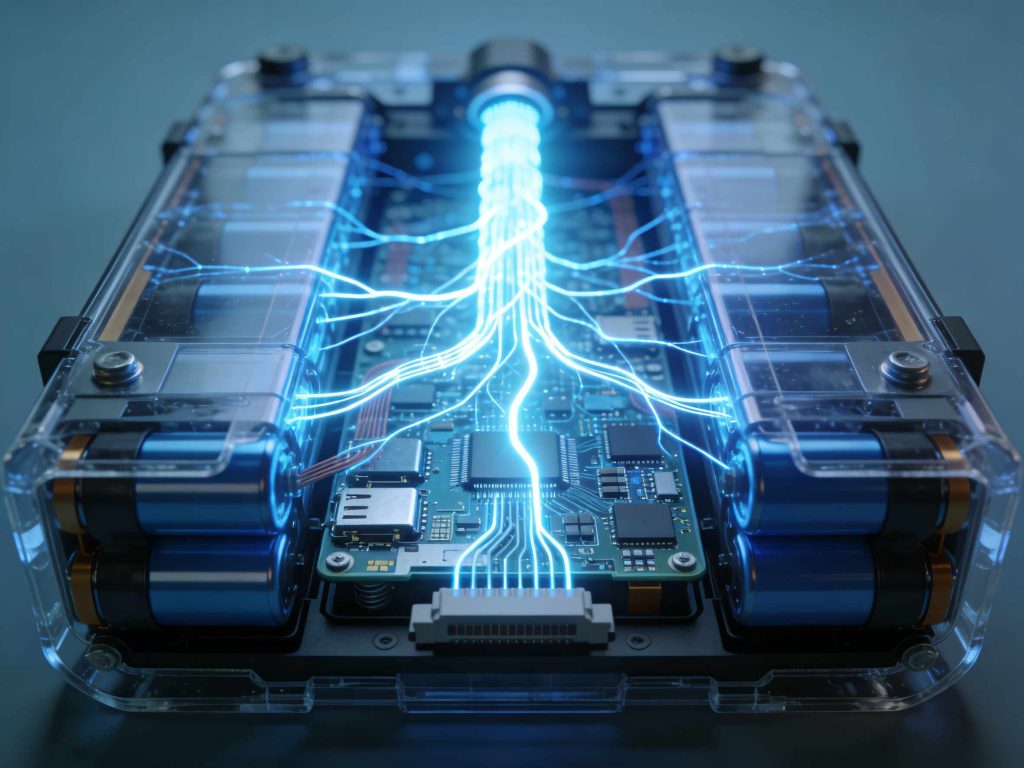
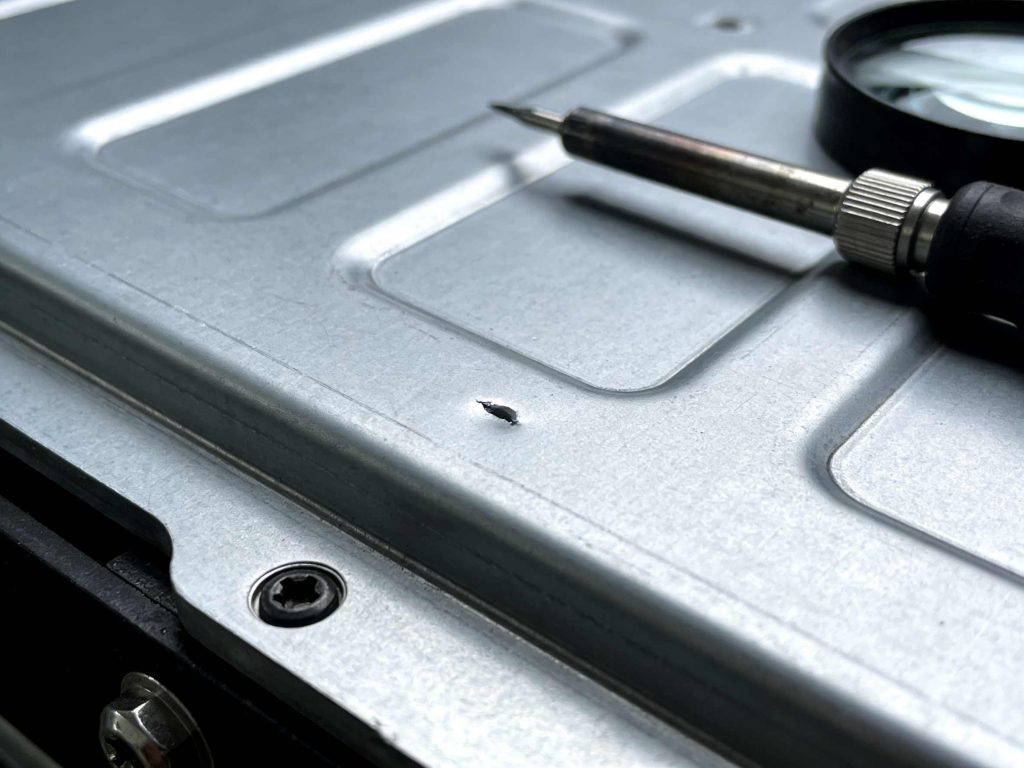
Modern battery pack repair begins with precise “micro-diagnosis.” Using specialized diagnostic equipment, repair technicians can delve into the battery management system (BMS) to accurately pinpoint the location and failure mode of the faulty cell, providing a precise “surgical map” for subsequent physical disassembly and repair.
Flip-over bag inspection: the first step in safe disassembly
Once the fault is located, the next step is to operate on the battery pack itself. Guheng Energy’s flip-over battery pack solution helps service stations safely and efficiently flip the heavy battery pack at multiple angles, allowing technicians to disassemble it from the bottom or side. This ensures that other healthy cells are not damaged during disassembly, laying a safe foundation for subsequent module repairs.
The “Invisible Battlefield” After Battery Cell Replacement: Side Glue Overflow Treatment
The repair work is far from over once the battery pack has been safely disassembled and the faulty cell has been successfully replaced. An often overlooked detail—excess adhesive on the side—becomes a key factor affecting the final repair quality.
Residual adhesive: The “invisible killer” of battery health
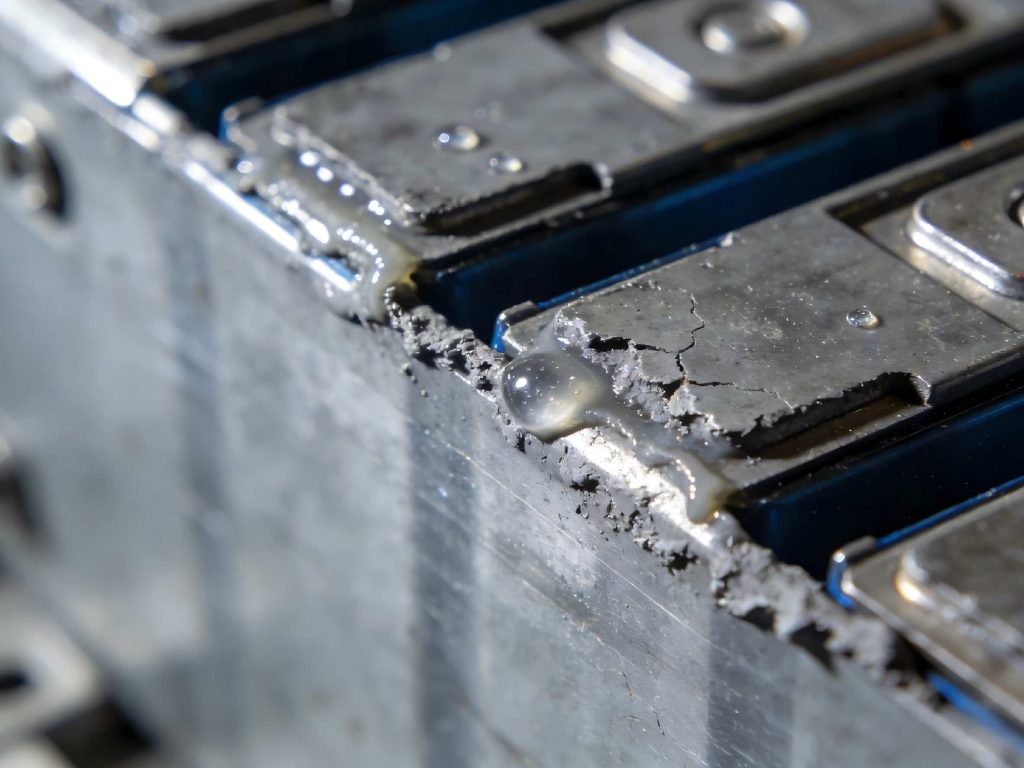
When re-bonding and securing battery cells or modules, high-strength structural adhesive may overflow from the sides under pressure. If this excess adhesive is not removed evenly and precisely, it can lead to the following problems:
- Impact on installation accuracy: Residual adhesive may prevent the module from being installed flat into the battery pack housing, resulting in stress concentration.
- Interference with heat dissipation: Uneven glue overflow can hinder heat conduction between the cell and the liquid cooling plate, which will affect the health of the battery in the long run.
- Potential safety hazard: During the vibrations of subsequent vehicle travel, the uncleaned hard rubber blocks may fall off, causing an internal short circuit risk.
Limitations of traditional cleaning methods
Faced with stubborn hardened colloids, many repair shops still resort to manual sanding or using simple tools. This is not only inefficient, but more importantly, it cannot guarantee the flatness and consistency of the sanding.
The inevitable choice for professional polishing: Guheng Energy CNC polishing machines
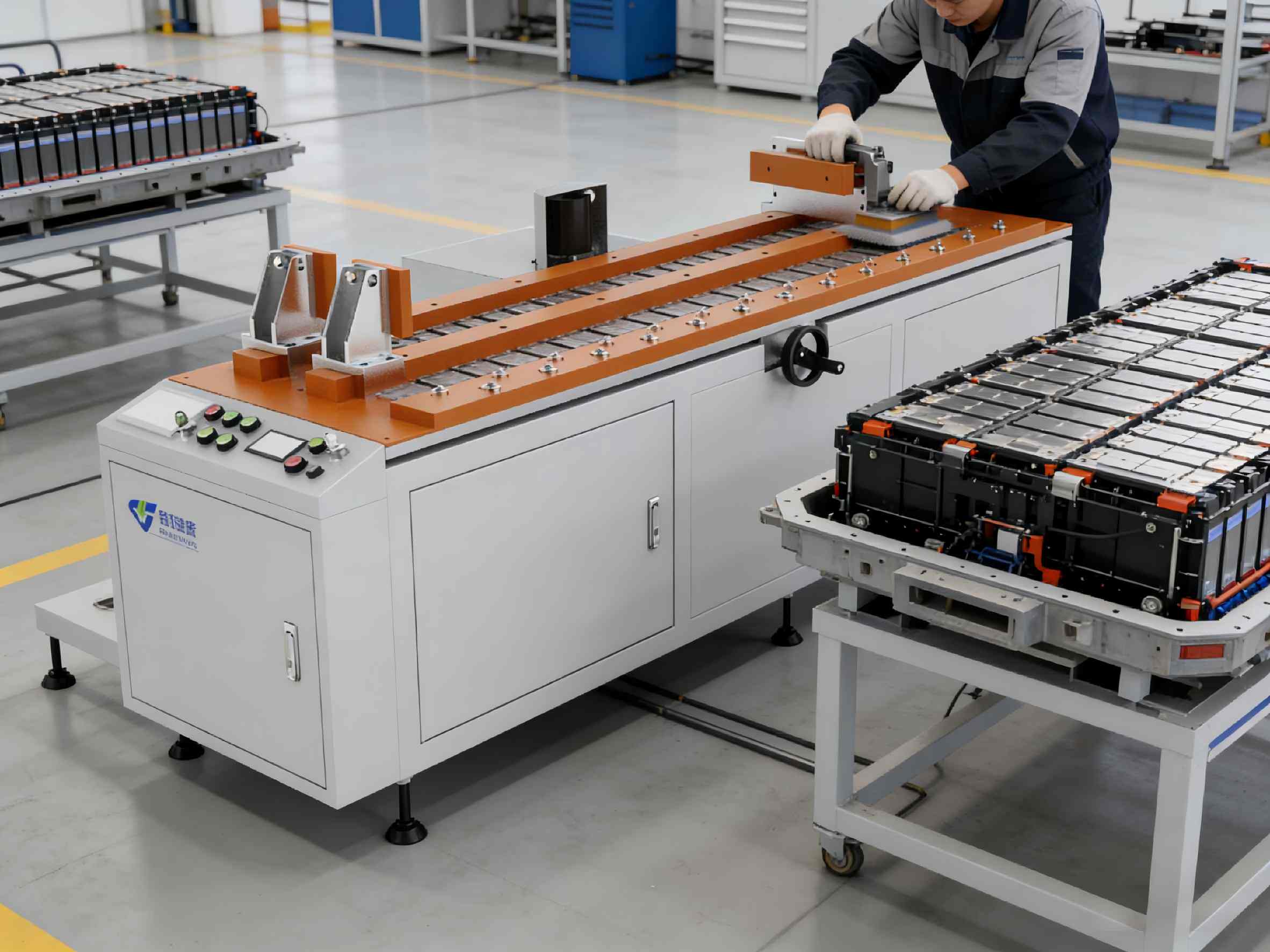
To solve the problem of side-side adhesive overflow, a “hidden battlefield,” specialized automated equipment must be introduced. This is precisely the core application scenario for Guheng Energy’s CNC grinding machine. It is not just a tool, but also a quality assurance mechanism to ensure that repaired batteries meet factory standards.
Large worktop size: compatible with multiple module sizes
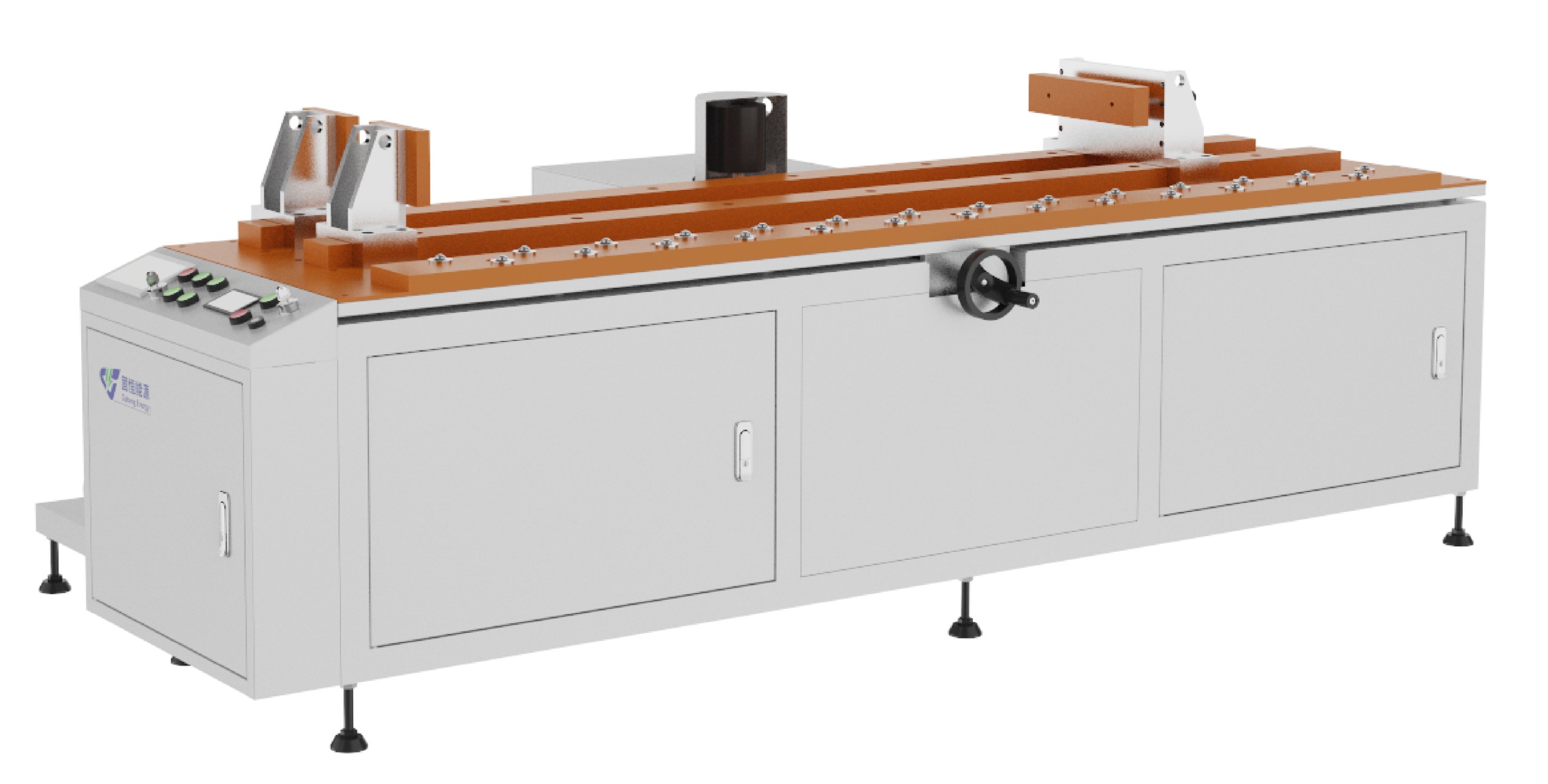
New energy vehicle battery modules come in a wide variety of types and sizes. Guheng Energy’s CNC grinding machine boasts an extra-large table size of 2000×510mm, a design that allows it to easily accommodate various module specifications from passenger cars to commercial vehicles. Whether it’s a long, narrow module or a standard square module, it can be stably clamped on the machine, achieving “one machine for multiple uses” and greatly improving the return on investment for automotive repair service stations. Its maximum processing length reaches 1100 mm, and its grinding height ranges from 0-80 mm, almost covering the size requirements of mainstream modules on the market.
CNC precision: the key to ensuring battery health
Compared to manual grinding, the core advantage of Guheng Energy’s CNC grinding machine lies in the word “CNC”. Through preset programs, it can precisely control the grinding feed, speed, and path.
- Precise removal: With a grinding speed of up to 3000 mm/min and a spindle power of 1.2 kW , it can efficiently remove excess adhesive without damaging the battery cell or insulation layer.
- Flatness assurance: Ensure that the flatness of the top or side of the module meets the assembly standards, providing a guarantee for a tight fit after the battery pack is restored.
- Cleaning operation: The equipment integrates a high-efficiency dust collection system, which can simultaneously remove dust during the grinding process, ensuring a clean working environment and preventing secondary pollution of the battery interior by dust.
- Data traceability: The CNC program ensures that every polishing process follows a standard, maximizing the restoration and protection of the battery’s health after repair, and truly achieving a perfect closed loop of “repair after diagnosis”.
Empowering the Aftermarket: From Repair Stations to Value Reshaping
For auto repair service stations targeting the aftermarket, introducing the Guheng Energy CNC grinding machine is not just about adding a piece of equipment, but also about achieving a leap in technological capabilities. It signifies that the repair station now possesses full-chain service capabilities, from fault diagnosis and battery cell replacement to precision assembly.
In the repair of power batteries, the ability to promise “battery health restoration” is key to winning customer trust. By using professional CNC grinding equipment, the repair station sends a clear signal to the market: we offer not simple repairs, but deep restorations that meet original factory standards. This professionalism is precisely the core of building technological barriers and enhancing brand premium in today’s highly competitive new energy aftermarket.
Conclusion
The essence of new energy vehicle repair is shifting from “mechanical repair” to “precision manufacturing.” After the battery pack undergoes flip-over inspection, precise disassembly, and cell replacement, the sanding of excess adhesive on the sides is no longer a dispensable “finishing touch,” but a core step that determines the success or failure of the entire repair. Guheng Energy ‘s CNC sanding machines provide repair shops with professional, efficient, and reliable solutions, ensuring that every repaired power battery can return to the road with optimal battery health .
In the wave of specialization in the new energy aftermarket, choosing Guheng means choosing to align with standards. Contact us now to obtain Guheng Energy’s CNC grinding machine solutions and help you become a leading regional expert in new energy battery repair!
FAQ
Q: When repairing battery modules, why can’t we directly use manual polishing to clean the excess adhesive?
A: Manual polishing makes it difficult to guarantee flatness and consistency, easily damaging the insulation layer or outer shell of the battery cell, leading to short circuit risks or decreased battery health. In contrast, Guheng Energy’s CNC polishing machine, through program control, achieves precise and uniform removal of excess adhesive , ensuring high-quality repair while maintaining high efficiency.
Q: How exactly do CNC grinding machines help improve battery health?
A: Accurate removal of excess adhesive ensures that the modules are installed flat within the battery pack, guaranteeing a tight fit between the cells and the liquid cooling system, thereby optimizing heat dissipation. Simultaneously, the integrated high-efficiency dust extraction system removes dust, preventing secondary contamination. All of these contribute to maintaining and restoring the overall health and lifespan of the battery pack.
Q: How compatible is the equipment with battery modules for different car models?
A: Guheng Energy’s CNC grinding machine is compatible with various mainstream battery modules for passenger cars and commercial vehicles on the market. Stable processing of different modules can be achieved through simple fixture adjustments. It is a multi-purpose machine with high cost performance.
Q: Will using professional polishing equipment significantly increase maintenance costs?
A: Quite the opposite. By introducing CNC grinding machines, repair stations can significantly improve rework efficiency and yield rates, reducing rework and scrap losses due to operational errors. In the long run, this is an effective investment in improving repair quality, building a professional reputation, and reducing overall costs.