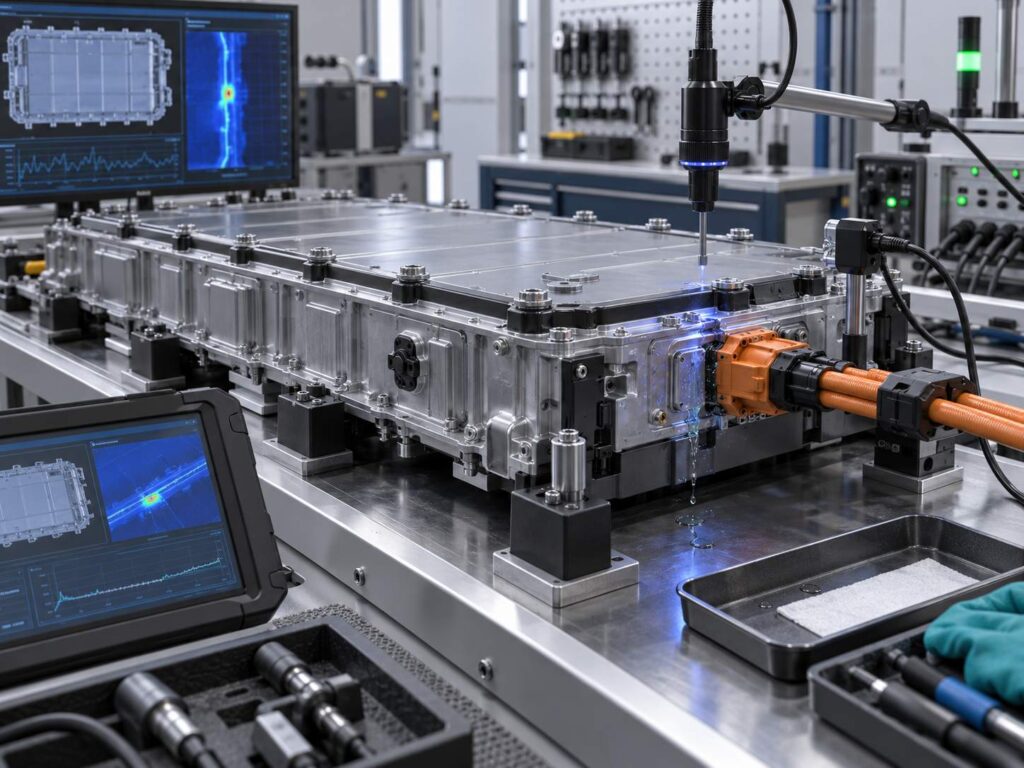

In the new energy vehicle industry chain, the safety of the three core electric systems (battery, motor, and electronic control) has always been the core of technological breakthroughs. With the increasing trend towards lightweight vehicle bodies and battery casings, aluminum alloys and their bonding with dissimilar materials have become a technological high ground in production and maintenance.
As a manufacturer deeply rooted in the new energy field, providing professional technical solutions and battery maintenance and testing instruments, Guheng Energy is keenly aware of the stringent requirements of welding processes in battery pack manufacturing.
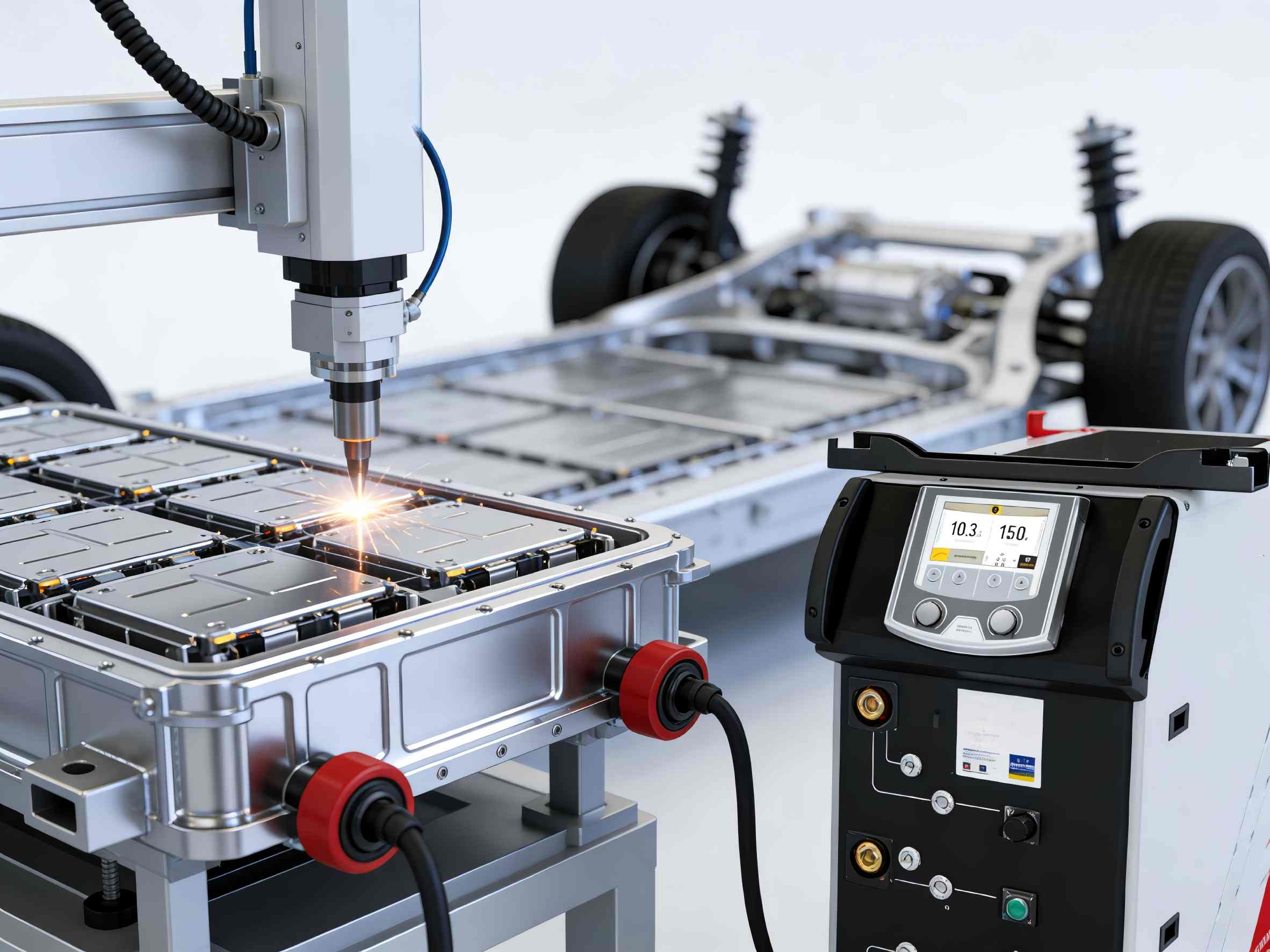
The “Aluminum” Challenge in New Energy Power Battery Packs
The trend towards light-weighting and the large-scale application of aluminum alloys
To improve driving range, new energy vehicles generally use aluminum alloy to manufacture the battery pack casing and internal support structure. Aluminum alloy has low density and high thermal conductivity, but it is very easy to form an oxide film during the welding process, leading to poor welding.
Physical barriers to joining dissimilar materials (aluminum, copper, steel)
The connection between modules and battery cells often involves conductive connections between aluminum and copper, and between aluminum and steel. Due to the significant differences in melting points and coefficients of thermal expansion among different metals, traditional welding methods are prone to generating brittle intermetallic compounds at the joints, directly threatening the safety of the three-electric system (battery, motor, and electronic control system).
Safety risks of traditional welding processes to battery cells and modules
Excessive heat input can damage the internal separator of the battery cell and even trigger thermal runaway. Therefore, it is crucial to find a process that can precisely control heat input, reduce spatter, and produce aesthetically pleasing results.
Dual-pulse MIG welding: A technological leap in aluminum welding processes
Fully digital control: redefining welding precision
Guheng Energy’s aluminum welding machine utilizes leading fully digital technology. With four built-in microprocessors, the device can adjust the welding waveform in real time at extremely high computing speeds, ensuring consistent welding energy output, which is crucial for precision battery pack components.
How dual-pulse technology suppresses welding spatter and thermal distortion
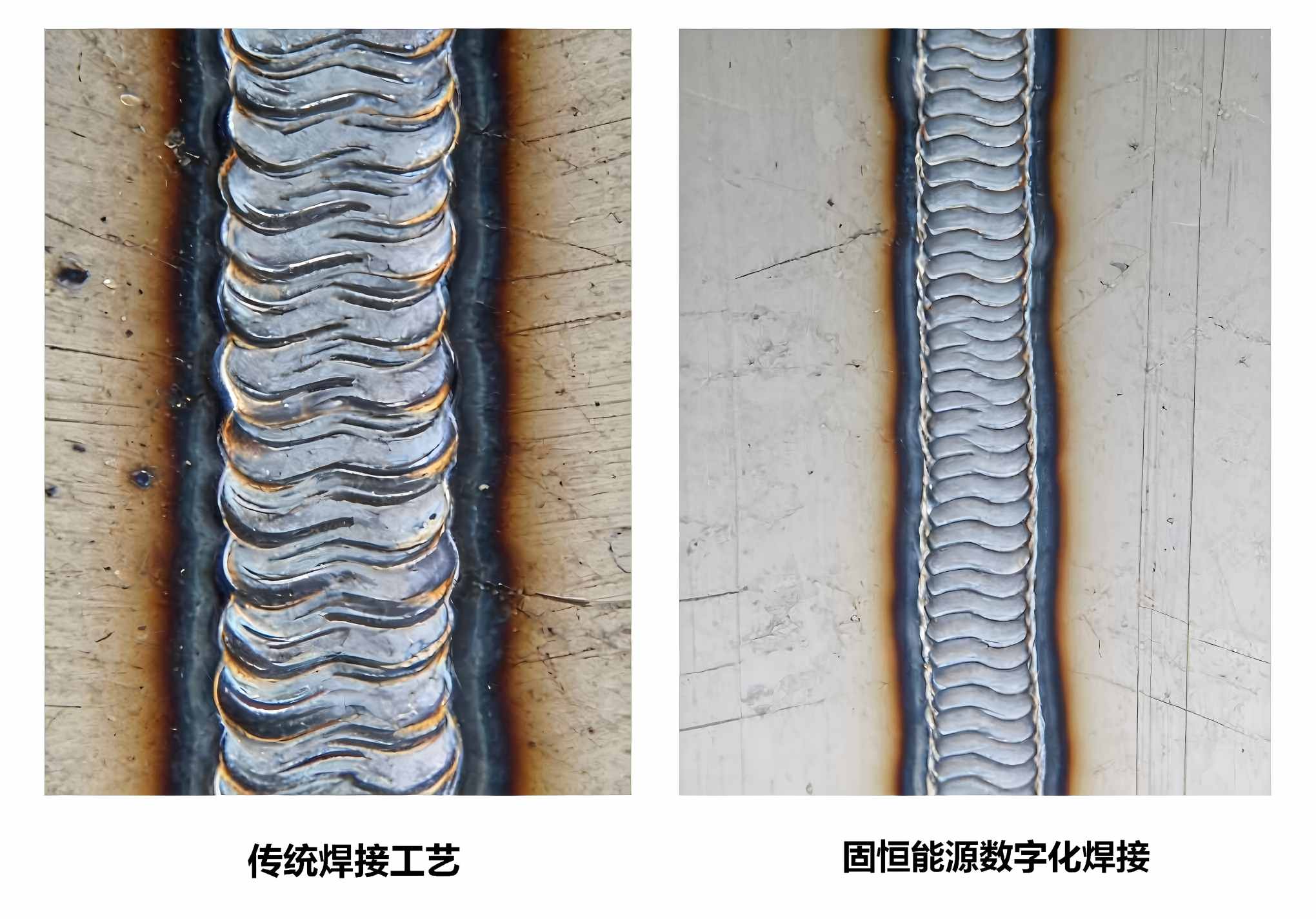
Dual-pulse technology uses alternating high and low current outputs to electromagnetically stir the molten pool, effectively removing porosity and achieving a stable “one pulse, one drop” transition. This process significantly reduces welding spatter and prevents metal particles from scattering inside the module and causing short circuits.
Advantages of arc initiation stability brought by ultra-high arc voltage
Guheng Energy’s aluminum welding machines boast ultra-high arc voltage, enabling instantaneous and easy arc initiation on both clean aluminum and all types of coated materials , significantly improving production efficiency.
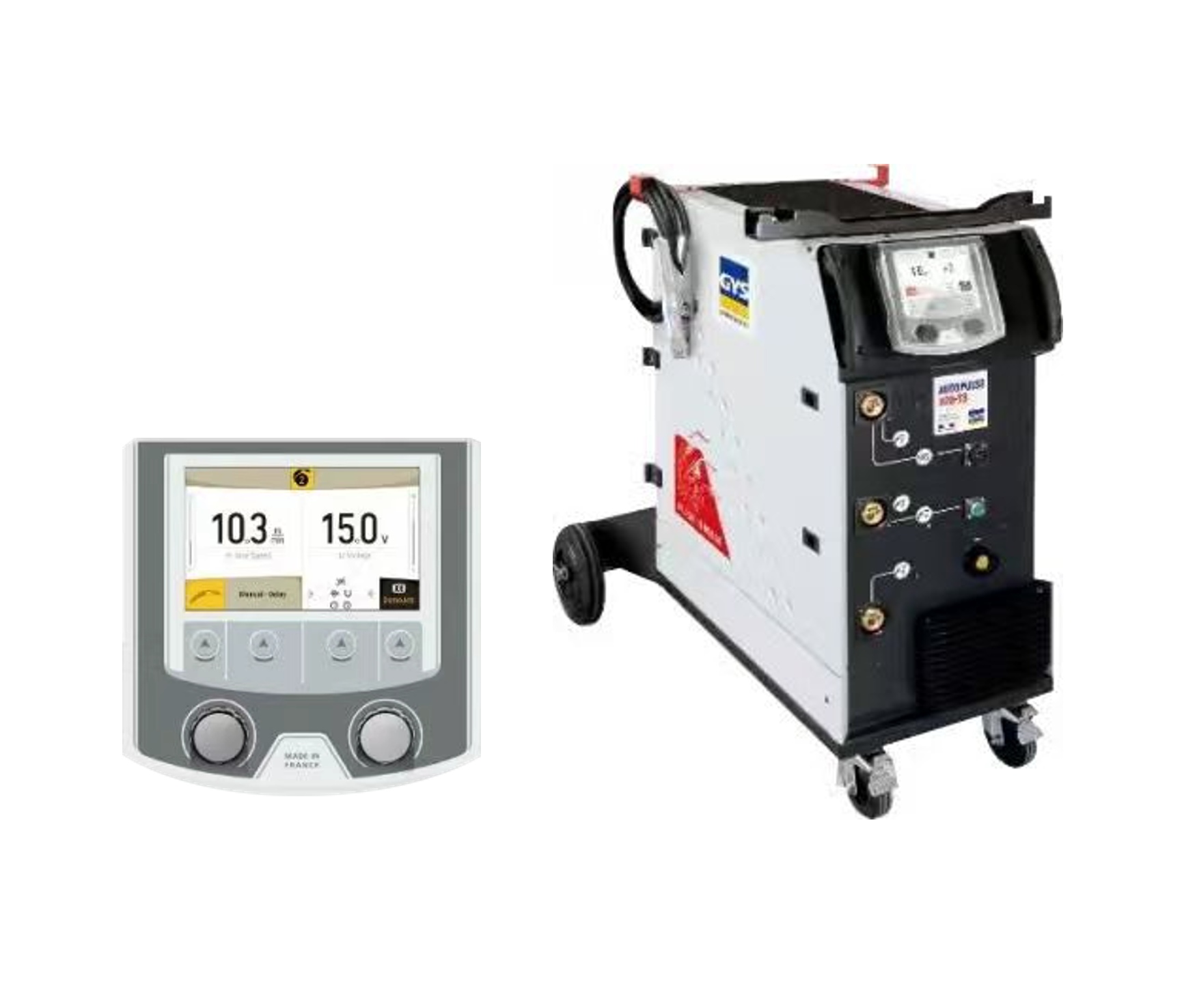
Guheng Energy Aluminum Welding Machine : A Comprehensive Welding Solution
Compatible with all types of materials : from highly conductive copper to high-strength steel
As a dual-pulse MIG/MAG welding machine equipped with three wire feeding systems, our aluminum welding machine supports the simultaneous mounting of three welding torches. Its output current ranges from 15 to 320A, perfectly handling all types of materials from stainless steel and aluminum alloys to CuSi3/CuAl8, allowing for seamless switching between different materials without frequent wire changes.
Deep optimization of CuSi3 and brazing process
CuSi3 brazing is a commonly used process in battery pack sealing or structural reinforcement welding. This machine ensures the smoothness and corrosion resistance of the brazed weld seam through precise wire feed speed control (0.5-20 m/min) and digital pulse coordination.
Intelligent collaborative systems reduce the operational threshold
The equipment is equipped with a brand-new, simplified IHM human-machine interface. This interface was developed based on the usage habits of experienced sheet metal technicians. Through intuitive operation, the operator only needs to select the material type and welding wire diameter (0.8-1.2 mm), and the system can automatically match the optimal parameters to ensure the standardization of welding quality.
In-depth analysis: What common problems might be encountered during the welding process?
Pores and cracks: Core hidden dangers affecting the structural safety of battery packs
Aluminum alloy welding is highly susceptible to hydrogen absorption, resulting in porosity. Guheng Energy’s aluminum welding machine utilizes dual-pulse pulsating pressure to continuously oscillate the molten pool, allowing gas to escape promptly and fundamentally solving the strength reduction problem caused by porosity.
Brittle joint problems caused by intermetallic compounds
When welding dissimilar materials such as copper and aluminum, by controlling the digital arc energy, Guheng Energy’s solution can effectively shorten the time the metal is in the molten state, suppress the thickness of the brittle layer, and ensure the mechanical properties of the joint.
Control strategies for conductivity degradation and contact resistance
High-quality , low-splatter welding is not only for aesthetics, but also to ensure minimal contact resistance in the electrical system. By precisely controlling the current (up to 24 kVA), we can ensure that the weld seam is free of impurities, thus improving overall conductivity.
Conclusion
The welding of aluminum in power batteries is not only a revolution in materials science but also a contest of precision manufacturing processes. Guheng Energy has successfully solved industry challenges such as joining dissimilar materials, heat control, and spatter suppression through its fully digital dual-pulse aluminum welding machine. We not only provide high-performance production tools but are also committed to building a more robust and safer foundation for the green future of the new energy industry through advanced technological solutions. To learn more about the detailed specifications of Guheng Energy’s aluminum welding machines and new energy battery pack welding solutions, please contact our technical experts immediately.
FAQ
Q: Why is welding aluminum and copper so difficult in the manufacturing of power battery packs?
A: This is mainly because aluminum and copper have large differences in melting points and poor miscibility, which easily leads to the formation of brittle intermetallic compounds. In addition, both have extremely high thermal conductivity, resulting in rapid heat loss during welding. If the welding machine power is insufficient or the arc ignition is unstable, it can easily lead to incomplete fusion or severe welding deformation.
Q: What are the significant advantages of fully digital aluminum welding machines compared to traditional welding machines?
A: Guheng Energy’s digital welding machine has a built-in microprocessor that can fine-tune the current waveform at millisecond speeds. Compared to traditional welding machines, it has a higher arc ignition success rate, extremely low spatter, and more precise heat input control, which can significantly improve the consistency of battery pack production.
Q: How to effectively reduce spatter during aluminum alloy welding?
A: The key is the use of dual-pulse MIG technology. By controlling the droplet transfer through high-frequency pulses, the welding wire breaks without contacting the molten pool, achieving “one pulse, one droplet”. Combined with an ultra-precise wire feeding system, this ensures an extremely stable welding process with virtually no particle spatter.
Q: Does your aluminum welding machine support welding stainless steel and galvanized sheet?
A: Yes. This equipment supports welding of different types of materials , including stainless steel, all types of steel, and CuSi3 brazing process with special requirements, making it a versatile tool in the maintenance and manufacturing of new energy vehicles.