
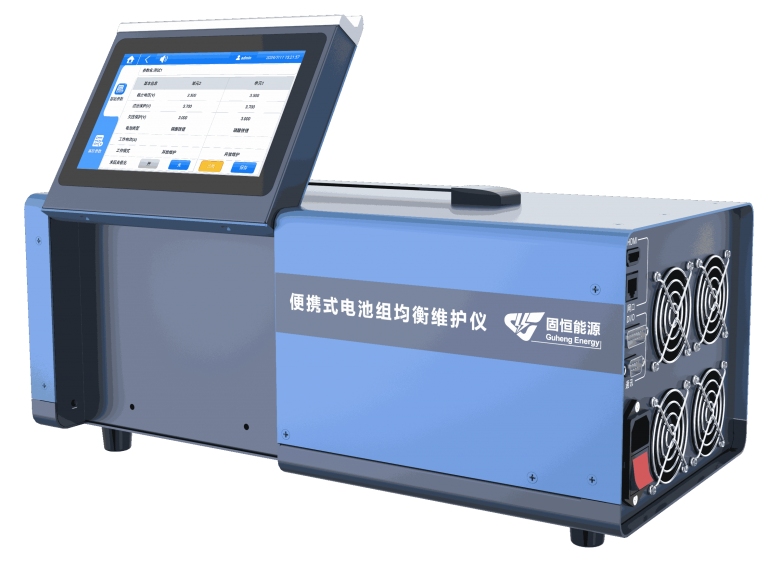
A portable battery pack balancing maintenance instrument helps extend battery life by reducing cell-to-cell inconsistency before it turns into usable capacity loss, false failure judgment, or unstable field service. For EV service centers, energy storage maintenance sites, and battery repair workstations, it is not a general charger. It is a field tool for controlled parallel charging, parallel discharging, and balancing maintenance. Guheng Energy PBM-PW-F-3605 is built around this practical maintenance need.
Why Cell Inconsistency Shortens Battery Life
After lithium or sodium cells are connected into a battery pack, the weakest cell often limits the usable capacity of the whole group. When one cell reaches the cutoff voltage earlier than the others, the system restricts further charge or discharge even if the rest of the pack still has usable energy. Long storage, repeated cycling, temperature variation, and connection changes can all widen cell inconsistency. Looking only at pack voltage may hide the problem, while replacing the pack too early can waste a maintainable asset.
How a Portable Battery Pack Balancing Maintenance Instrument Works
A portable battery pack balancing maintenance instrument changes maintenance from pack-level guesswork to cell-level management. Guheng Energy PBM-PW-F-3605 supports parallel charging, parallel discharging, and balanced maintenance, allowing technicians to choose a workflow according to battery condition. Its balance current is adjustable up to MAX ±5A, with 36 equalization channels and an adjustable cutoff voltage range of 1.1~4.2V. These numbers matter because they determine whether the instrument can match the target battery and maintain clear safety boundaries during service.
Parallel Charging, Parallel Discharging, and Balancing
Parallel charging is useful when low cells need controlled replenishment. Parallel discharging helps bring higher cells down to a more consistent level. Balanced maintenance focuses on gradually narrowing cell differences within a controlled process. In energy storage inspection, EV battery service, or standby power recovery, the workflow should reflect the actual cell condition, cutoff setting, temperature, and maintenance objective rather than applying one fixed routine to every pack.
Why Field Maintenance Needs Data Records
PBM-PW-F-3605 combines real-time mobile-terminal monitoring, backend remote management, historical data records, and analysis reports. Recorded maintenance data helps technicians judge whether cell deviation has improved and whether follow-up maintenance is needed. For multi-site service or energy storage operation, data also supports standard procedures. Teams can review each maintenance process and reduce the uncertainty that comes from relying only on experience.
Where Guheng Energy Balancing Maintenance Fits
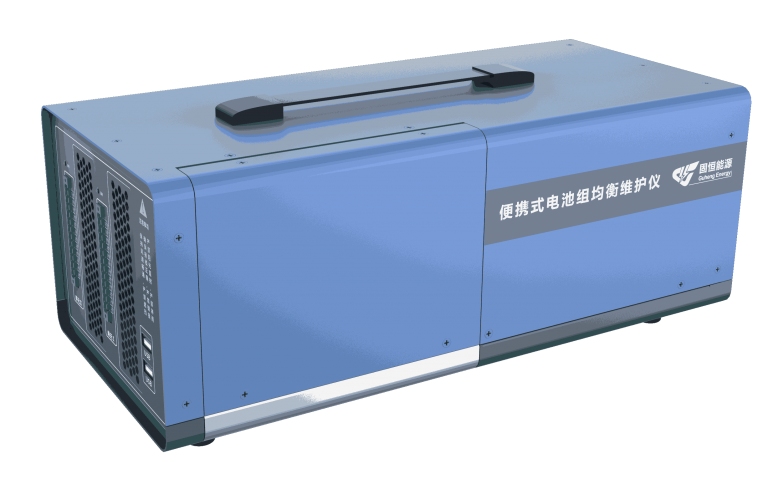
Guheng Energy’s portable balancing maintenance instrument fits EV after-sales service, battery pack maintenance, energy storage module inspection, and condition adjustment before recovering long-idle battery groups. The aluminum alloy trolley-case design supports mobile field work when sending batteries back to a fixed lab is inefficient. The Guheng Energy portable battery pack balancing maintenance instrument can be applied to lithium batteries, sodium batteries, and related battery objects; the maintenance product category helps users match equipment to pack, module, or cell service tasks. When cable connection and adapter design matter, the tooling harness category provides a useful companion reference.
What to Check Before Choosing Equipment
Before selecting a portable battery pack balancing maintenance instrument, define the cell count, voltage range, target maintenance current, connection method, and site power supply. PBM-PW-F-3605 supports 110/220Vac, voltage acquisition accuracy of ±1mV, and voltage resolution of 1mV, which suits work that needs close observation of cell-state change. Usability and safety mechanisms are just as important. Fault detection, multi-level protection, a clear human-machine interface, and report output all affect whether the instrument can be used consistently in service centers and operation teams.
Conclusion
A portable battery pack balancing maintenance instrument moves battery service from reactive replacement toward active condition management. By connecting cell consistency, data records, and field efficiency, Guheng Energy offers a practical path for teams that care about battery life and maintenance quality.
Explore Guheng Energy battery maintenance equipment to match a more complete solution for battery packs, modules, and field service workflows.
FAQ
Q: What batteries can a portable balancing maintenance instrument support?
A: PBM-PW-F-3605 is suitable for lithium batteries, sodium batteries, and related battery objects. Before use, technicians should confirm the cell-voltage range, channel count, connector method, and maintenance objective so the instrument matches the pack structure.
Q: Can balancing maintenance repair every degraded battery?
A: No. Balancing maintenance mainly addresses usable capacity loss and service uncertainty caused by cell inconsistency. If cells have severe aging, internal damage, leakage, or safety risk, the pack still needs testing, diagnosis, and proper safety handling.
Q: Why are historical data records important in field maintenance?
A: Historical records let technicians compare cell status before and after maintenance, judge whether deviation has improved, and standardize workflows across service sites. Without records, maintenance decisions rely too heavily on experience and are harder to trace later.
Q: Which parameters should be checked first?
A: Start with cell-voltage range, balance current, channel count, voltage acquisition accuracy, working mode, and site power. Then confirm wiring interfaces, permission management, report format, and protection logic so the equipment can fit the actual workflow.