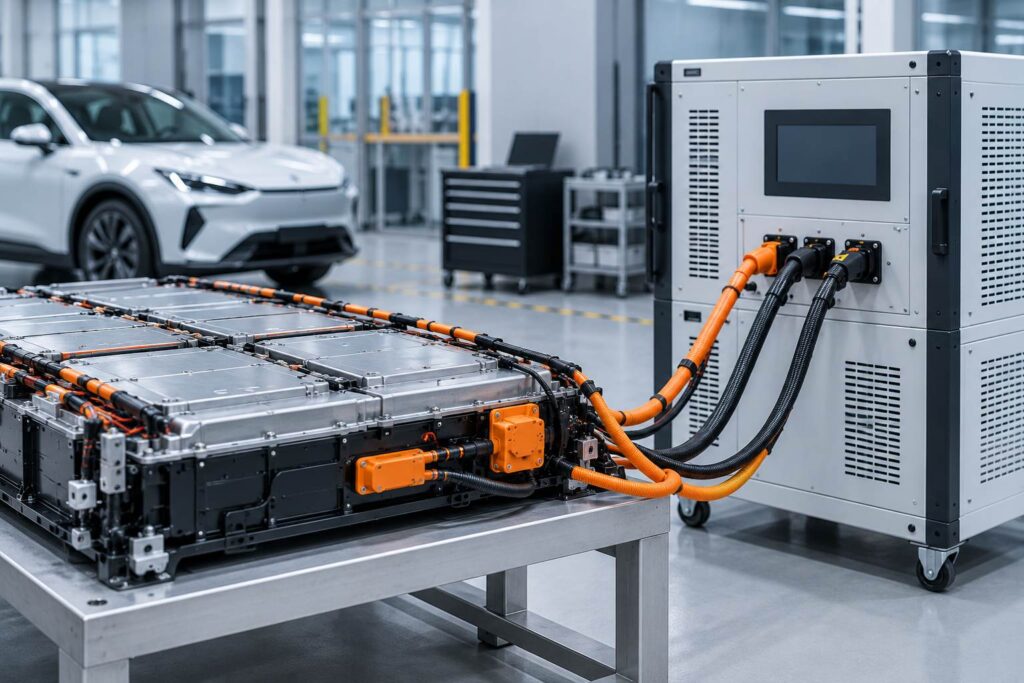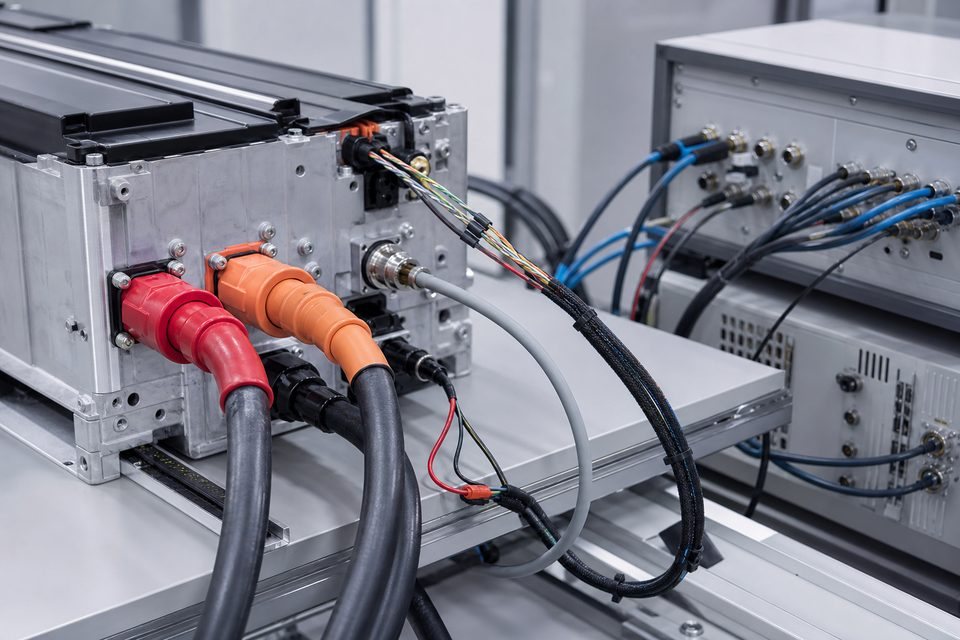

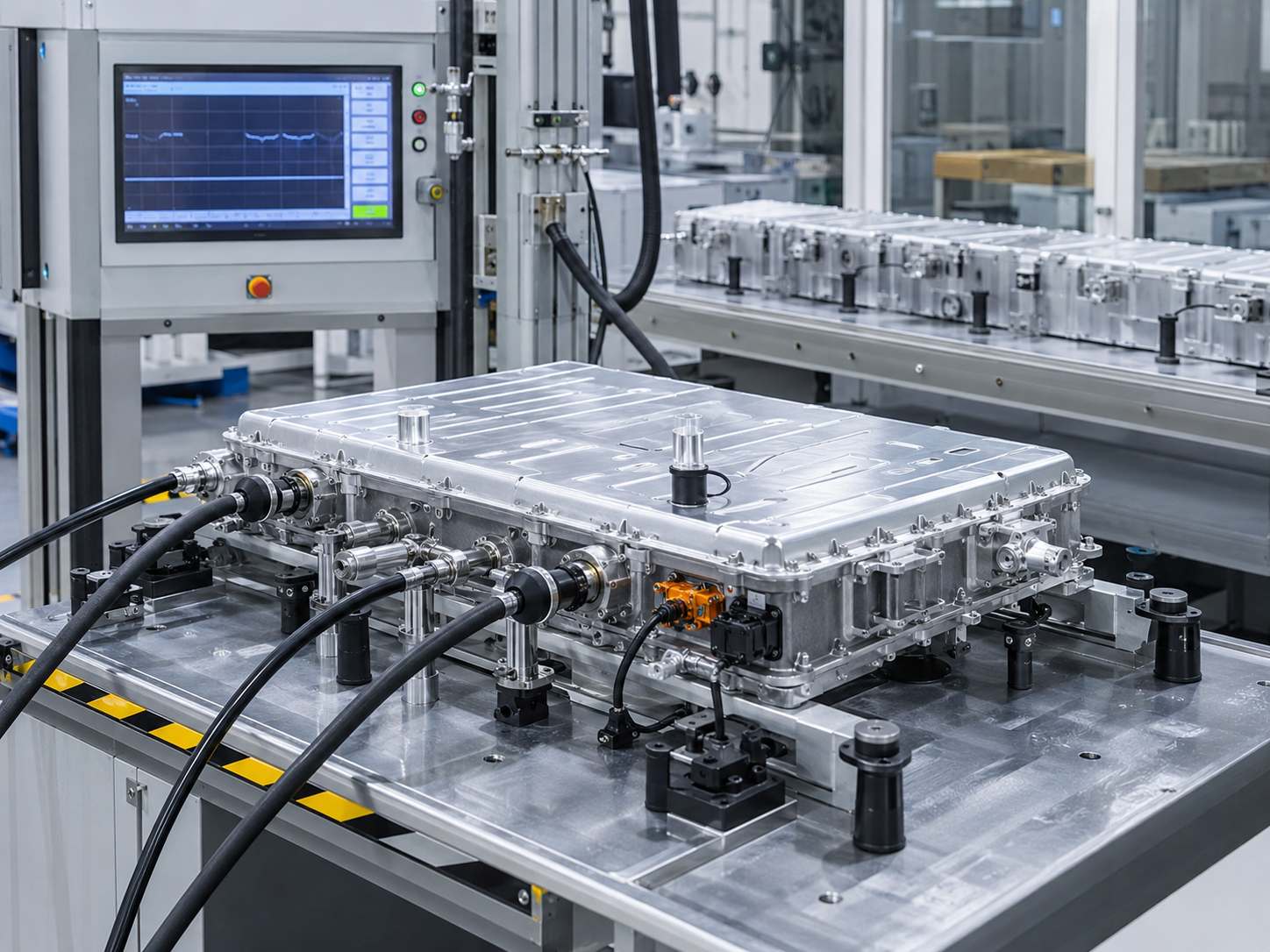
In high-precision manufacturing fields such as new energy vehicles, energy storage, and power communications, ensuring the sealing performance of components is the core of quality control. Especially for critical components such as power battery packs, liquid cooling plates, and electric drive systems, waterproof ratings typically require IP67 or higher. Even if companies have equipped themselves with advanced airtightness testing equipment , neglecting the selection of tooling plugs can often lead to serious consequences such as unstable pressure sampling, high false positive rates, and even equipment damage. As a professional force deeply rooted in the battery testing field, Guheng Energy has proven through accumulated experience in customizing over 1000 types of tooling that the perfect combination of precision tooling and high-performance testing instruments is the cornerstone of delivering reliable data.
What role do tooling plugs play in airtightness testing equipment?
How can we improve testing accuracy through tooling?
The essence of airtightness testing is to capture minute pressure changes, which requires the entire test gas path to have extremely high stability and a minimum system volume.
High-quality tooling typically employs a CNC-machined aluminum integrated gas path base. This design minimizes gas path connection points, thereby reducing interference caused by external environmental temperature fluctuations or mechanical vibrations. Combined with the redundant design of the high-precision sensor built into the airtightness testing equipment , precision plugs ensure a rapid and accurate pressure equalization process, achieving sensor sensitivity capture at the 1Pa level. In Guheng Energy ‘s technical solution, the tooling is not merely a physical connector, but also an integral part of the high-precision pressure sampling system, ensuring strong robustness of the test results.
Why is a backflow prevention design necessary?
When inspecting components with cooling circulation systems (such as liquid cooling plates for battery packs), residual coolant poses a significant technical safety hazard.
If the tooling plug lacks a dedicated protective mechanism, liquid can easily flow back into the airtightness testing equipment during the venting phase , causing sensor failure or damage to precision solenoid valves. Professional airtightness testing equipment manufacturers integrate liquid flow stoppers into the tooling for such scenarios and employ an independent venting path design. This physical isolation solution completely solves the equipment damage problem caused by liquid backflow and is a necessary guarantee for ensuring the long-term stable operation of the production line.
Which high-performance tooling plugs are suitable for different testing scenarios?
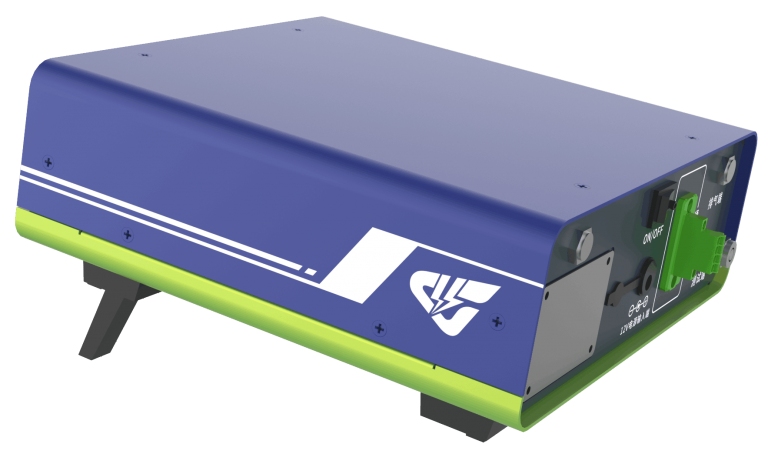
For explosion-proof valve interfaces commonly used in power battery pack sealing tests, a single ordinary plug is often insufficient to meet the high-frequency production efficiency requirements.
- G11 Series Knob-Type Inflation Clamp: This is a two-in-one professional tool that integrates plug sealing and air injection functions, specifically designed for the PBA2K-60G double-ear explosion-proof valve. Its dimensions are 125×95×78mm, and it comes standard with a Φ8 air hose connector.
- PW40 screw-type explosion-proof valve air injection fixture: Suitable for air tightness testing of explosion-proof valves of specifications such as PAM40*1.5-15. This fixture features a robust metal housing and also has dual functions of sealing and air injection.
- 2K42 screw plug: specially designed for explosion-proof valves such as PBA2K-42GP. Its modular architecture facilitates quick maintenance and replacement of consumable parts, significantly reducing the maintenance costs for enterprises.
How to choose the most suitable tooling solution?
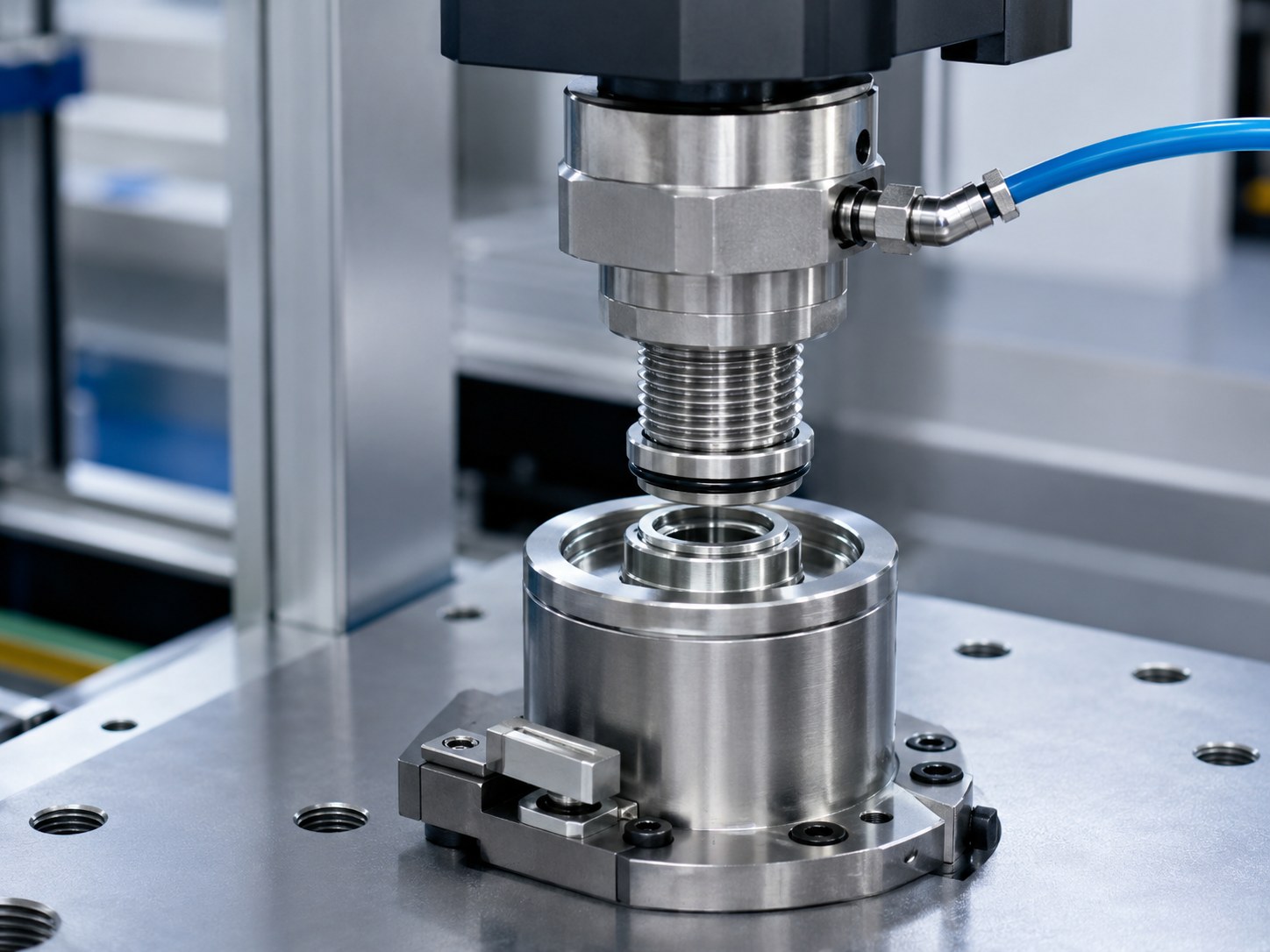
Why must we consider the physical characteristics of the interface?
The primary principle for selecting tooling is customized fit. Reputable airtightness testing equipment manufacturers must thoroughly investigate the physical characteristics of the test specimen before providing a solution. If the interface is threaded, it is recommended to prioritize screw-type plugs with a long lifespan design; if it is a knob or quick-connect interface, attention should be paid to the stability of the clamping mechanism. Furthermore, it is necessary to confirm whether the tooling needs to integrate an air injection function. Guheng Energy offers several tooling options that combine plug and air injection functions, simplifying operation and improving the overall efficiency of automated production lines.
Conclusion
Choosing the right tooling plug is not just about purchasing a physical component; it’s about precisely optimizing the entire workflow of the airtightness testing equipment . From using a CNC-machined aluminum integrated gas path base to improve stability, to protecting precision sensors with liquid flow stoppers, every detail determines the accuracy of the final test data. Guheng Energy, as a professional manufacturer of airtightness testing equipment , leverages over a decade of technological expertise and thousands of customized solutions to provide global customers with complete professional solutions , from testing instruments to precision tooling .
FAQ
Q: Why does Guheng Energy’s airtightness testing equipment need to be equipped with tooling with a liquid stopper?
A: When testing components with residual liquid (such as liquid cooling plates), liquid backflow can damage high-precision sensors. Guheng Energy addresses this by using a liquid flow stopper and an independent exhaust path design to physically prevent liquid intrusion, ensuring the safety and lifespan of its airtightness testing equipment in complex testing scenarios.
Q: As a manufacturer of airtightness testing equipment, how does Guheng Energy ensure the compatibility of non-standard tooling?
A: Guheng Energy has accumulated experience in customizing over 1,000 types of tooling and provides one-on-one professional customization services. By selecting universal standardized materials and using modular architecture design, we ensure that the tooling is precisely compatible with the customer’s test components (such as various explosion-proof valves and liquid cooling pipes) and meets the durability requirements for high-frequency insertion and removal.
Q: How can the airtightness testing equipment of Guheng Energy be used to achieve automated data management of the production line?
A: Guheng Energy’s equipment (such as the QMM series) uses the Android system and supports multiple communication interfaces such as WIFI, RS485, and CAN, enabling seamless integration with MES systems. As an advanced manufacturer of airtightness testing equipment , Guheng Energy also supports cloud data storage and cloud equipment management, helping customers build a digital quality closed loop.
Q: Who are some of the representative clients of Guheng Energy in the field of airtightness testing for new energy sources?
A: Guheng Energy has established a strong presence with well-known automakers and battery manufacturers, including Tesla, BYD, NIO, XPeng, CATL, and EVE Energy. This widespread recognition from these clients fully demonstrates the reliable performance of Guheng Energy’s airtightness testing equipment and its supporting tooling under extremely high industry standards.