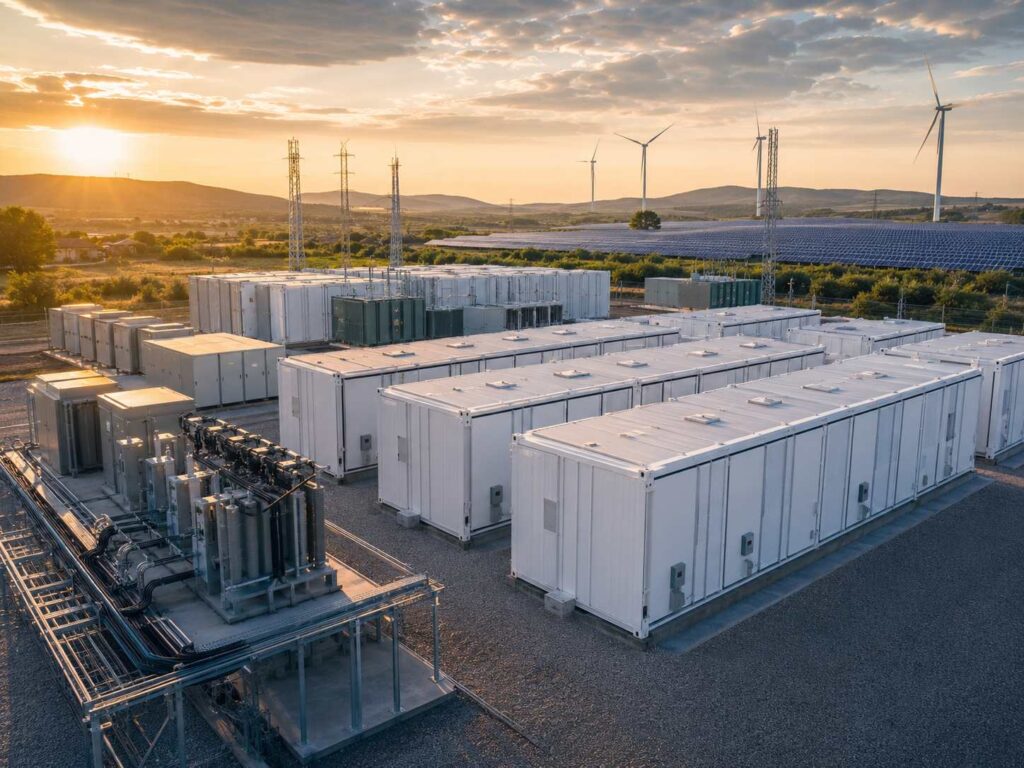

A battery service workshop should be arranged around the order of work, the energy stored in the battery, the information technicians must capture, and the controls needed when a pack is damaged or unstable. Testing equipment is only effective when it is connected to safe handling, suitable fixtures, clear quarantine areas, and traceable records. Guheng Energy supplies battery charge-discharge testers, air tightness testers, balance maintenance equipment, test harnesses, tooling, storage cabinets, immersion tanks, and transport solutions for new-energy battery service and inspection.
Begin with a Process Map, Not an Equipment List
Process Mapping
The first planning step is to map how a battery arrives, is identified, assessed, tested, repaired, released, or quarantined. A typical workflow may include receiving, visual inspection, state-of-charge control, electrical testing, air tightness testing, balancing or maintenance, repair, final verification, and dispatch. The layout should make that sequence visible and reduce unnecessary movement of heavy packs.
Different workshops will have different risk levels and service scopes. A dealer service centre may need compact test and maintenance stations, while a remanufacturing or recycling facility may need stronger isolation, transport, storage, and emergency controls. Guheng Energy’s product range can be considered as a group of functional stations rather than as unrelated machines.
Create Separate Zones for Normal and Uncertain Packs
Workshop Zoning
A battery with an unknown history should not be placed directly beside a pack that has passed inspection. The workshop should define receiving, test, approved, repair, and quarantine locations, with clear access rules and labels. Safety storage cabinets, explosion-resistant transport boxes, and mobile immersion tanks may support special handling decisions, but the site risk assessment must determine the final arrangement.
The separation also protects data quality. When a pack is moved between zones, its identification, condition, photographs, test status, and technician responsibility should move with it. This prevents a safe pack from being mixed with an unverified one and makes it easier to investigate an abnormal result.
Put Identification and Data Capture at the Front of the Workflow
Identification and Data Capture
Every pack should receive a traceable work order before testing. Record the serial number or internal ID, customer complaint, pack type, visible damage, connector condition, state of charge, temperature, and the test plan. A barcode or QR label can link the physical pack to the equipment record, but the workshop should define who checks the data before the test begins.
Data capture is especially important when the same pack moves through several stations. Charge-discharge results, BMS communication, pressure or leak results, balancing values, repairs, and final acceptance should be stored under one record. A clean data flow reduces repeated testing and helps technicians compare a field complaint with objective evidence.
Arrange Charge-Discharge Testing Around Power and Ventilation
Charge-Discharge Testing
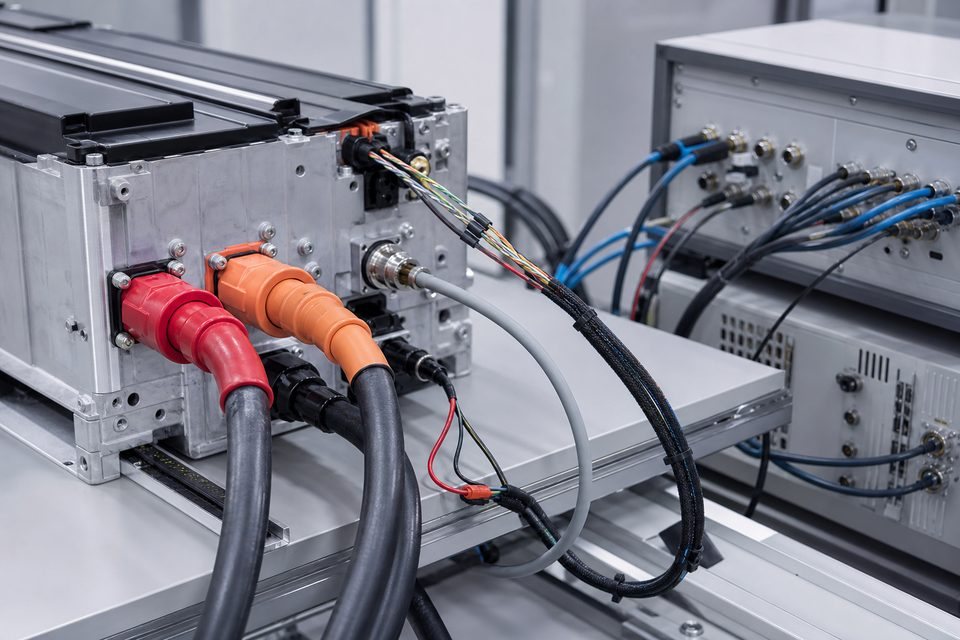
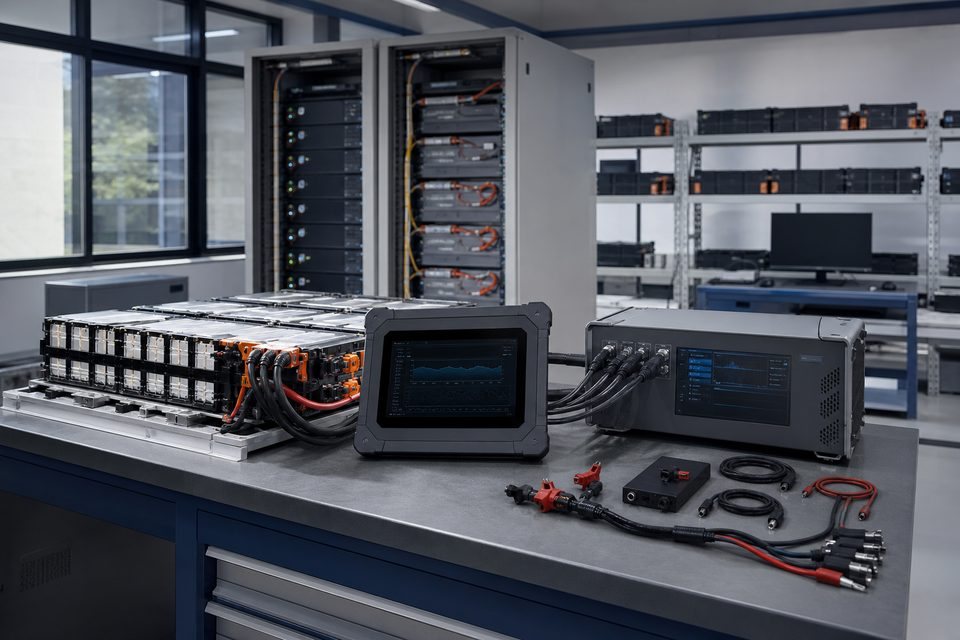
Charge-discharge testing needs adequate electrical capacity, cable routing, cooling or ventilation, physical clearance, and a stable work surface. The test area should keep power cables and communication lines organized so technicians can connect the pack without crossing walkways. The equipment specification should match the pack voltage, capacity, current, channel count, and required cutoff protection.
A test harness is part of the station, not an afterthought. The connector, polarity, current path, communication line, strain relief, and fixture must be checked before the pack is energized. Guheng Energy provides battery test harnesses and related tooling; the final harness should still be selected against the actual pack connector and service procedure.
Place Air Tightness Testing Near Sealing and Repair Work
Air Tightness Testing
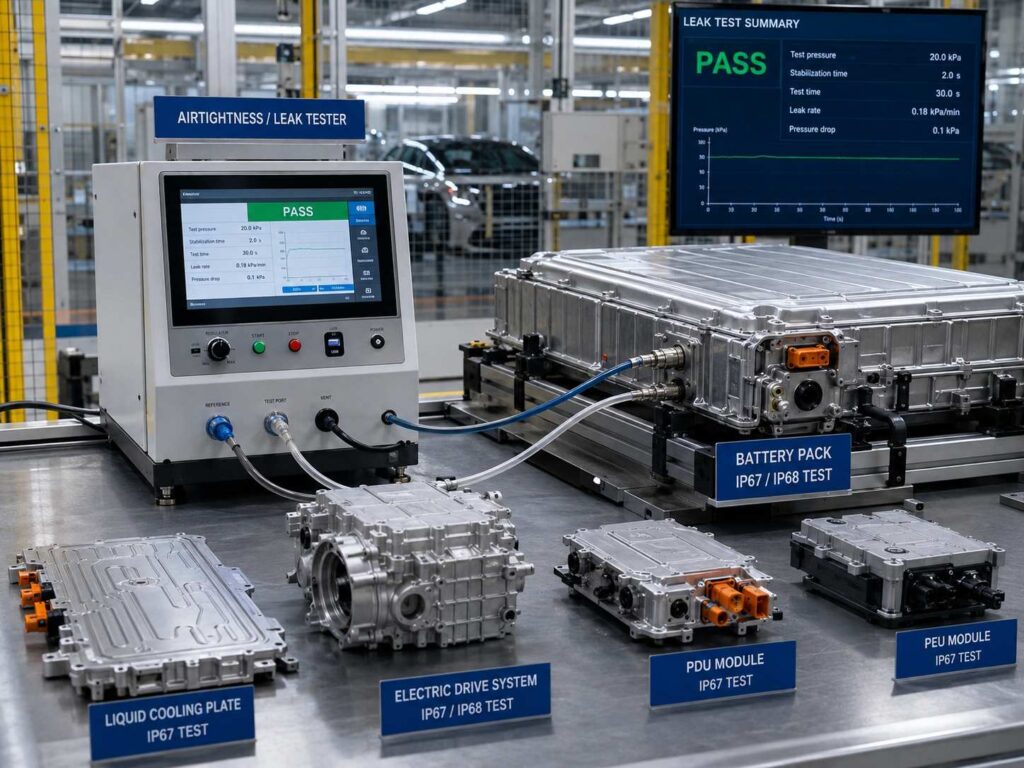
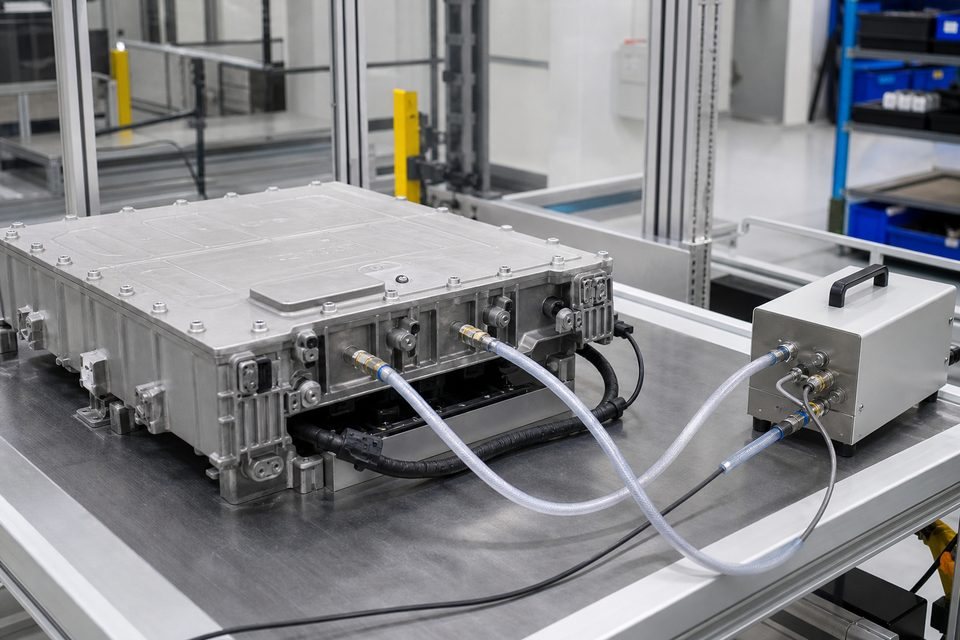
Air tightness testing is most efficient when it is close to the work that can correct a leak. Packs, cooling plates, covers, and sealed interfaces may need different fixtures or test connections. A workshop should provide a clean area for fitting the tooling, a stable air source or suitable built-in source, and enough space for technicians to inspect the result without disturbing the setup.
Guheng Energy describes QMM equipment with direct-pressure and differential-pressure methods, automatic pressure stabilization, and high-precision pressure sampling. Buyers should choose the test method, range, fixture, acceptance value, and record format around the component being tested. A measured result is valuable only when the fixture and procedure reproduce the real sealing condition.
Use Balancing and Maintenance as a Controlled Station
Balancing and Maintenance
A battery pack can show capacity loss or voltage imbalance even when the enclosure is intact. A balancing and maintenance station should therefore be separated from quick incoming checks. It needs a defined connection procedure, cell or module identification, protection against reverse connection, and a record of the before-and-after condition.
The technician should know when balancing is appropriate and when a pack must be rejected or escalated. The layout should make it easy to pause a job, isolate the pack, and move it to a safer area. This is a workflow decision as much as an equipment decision, because balancing changes the pack state over time.
Keep Safety Equipment Within the Actual Movement Path
Safety Equipment Placement
Safety equipment that is stored too far away may not be used when the situation changes quickly. Transport boxes, storage cabinets, immersion tanks, fire-response tools, and personal protective equipment should be positioned according to the workshop’s risk assessment and pack movement. Clear floor markings and unobstructed access are simple controls with daily value.
Guheng Energy’s safety products include storage, transport, immersion, and protection equipment for different battery conditions. The buyer should confirm load size, mobility, drainage or containment needs, ventilation, inspection access, and operator training. A product should be integrated into a written emergency and handling procedure rather than treated as a standalone safeguard.
Design the Technician Workstation for Repeatable Actions
Technician Workstation
Technicians should not have to remember a different connection sequence at every bench. Use labelled cables, fixture locations, tool shadowing, screen positions, and standard work instructions. Keep heavy packs at a workable height, provide lifting assistance where needed, and leave enough space to inspect connectors and sealing surfaces without reaching across energized equipment.
The best layout also supports maintenance of the workshop itself. Test equipment, harnesses, tooling plugs, pressure fixtures, and spare connectors need identification and inspection dates. When a cable or fixture is damaged, it should be removed from service and replaced through a controlled process instead of being left in a mixed drawer.
Verify the Complete Workflow Before Launch
Workflow Verification
Run a pilot with representative packs and follow the complete path from receiving to final release. Measure walking distance, connection time, waiting time, data re-entry, fixture changes, and the number of times a pack must be moved. Check whether technicians can identify a failed test, quarantine the pack, and escalate it without breaking the record.
Guheng Energy can be evaluated as a supplier of testing, maintenance, tooling, and safety equipment when the workshop needs an integrated battery service system. The final project should include a layout drawing, risk assessment, equipment list, harness and fixture details, test procedures, training, and acceptance records.
Conclusion
A battery service workshop performs best when testing, safety, movement, and data are designed as one workflow. Separate uncertain packs, identify every job, place charge-discharge and air tightness stations in the right order, and keep harnesses, fixtures, and safety equipment under control. Guheng Energy can support a coordinated workshop plan when the equipment is selected from the actual pack and service process.
For battery testing and safety equipment reference, visit Guheng Energy, review battery testing equipment, and see battery safety solutions.
FAQ
Q: What zones should a battery service workshop include?
A: At minimum, define receiving and identification, inspection, testing, repair, approved release, and quarantine areas. The exact zoning depends on pack type and risk assessment. Heavy packs, damaged packs, and packs with uncertain status should have controlled movement and should not be mixed with accepted work.
Q: Why does a test harness affect battery service quality?
A: The harness carries power and signals between the pack and the tester. Incorrect polarity, loose terminals, poor strain relief, or an unstable connector can create false results or unsafe conditions. Select the harness against the actual pack connector, current, communication line, fixture, and service sequence.
Q: Should air tightness testing be close to repair work?
A: Usually yes. Keeping the tester near sealing and repair work reduces unnecessary pack movement and makes it easier to repeat a test after correction. The station still needs a clean fixture area, suitable connections, stable pressure control, and a recorded acceptance method for the component under test.
Q: How can a workshop improve traceability?
A: Use one work order or digital record for each pack. Link the physical ID to visual inspection, charge-discharge data, BMS results, air tightness results, balancing, repairs, and final release. Require a status change when the pack moves between zones and keep the approved test procedure with the record.