

A battery pack charge-discharge maintenance instrument evaluates true EV battery capacity by turning range complaints, SOC drift, and module imbalance into controlled, repeatable data. Instead of relying only on fault codes or a short road test, service teams can use managed charging and discharging, capacity accumulation, SOC adjustment, module voltage balancing, and BMS communication to understand the pack’s actual condition. Guheng Energy‘s PBM-B series portable battery pack charge-discharge maintenance instrument is designed for battery groups and packs across different voltage platforms and capacities.
Why True Capacity Matters More Than Nominal Capacity
Nominal capacity describes how a battery was designed. True capacity describes what it can deliver today after cycles, aging, storage, repair, and operating stress. For EV service teams, that difference matters because customer experience is shaped by current usable capacity, not the specification printed on a datasheet.
Without a controlled charge-discharge test, technicians may confuse BMS estimation error, module imbalance, and real capacity fade. That makes repair decisions less consistent and can lead to unnecessary pack replacement or incomplete maintenance.
How a Battery Pack Charge-Discharge Maintenance Instrument Works
Controlled Cycling and Capacity Verification
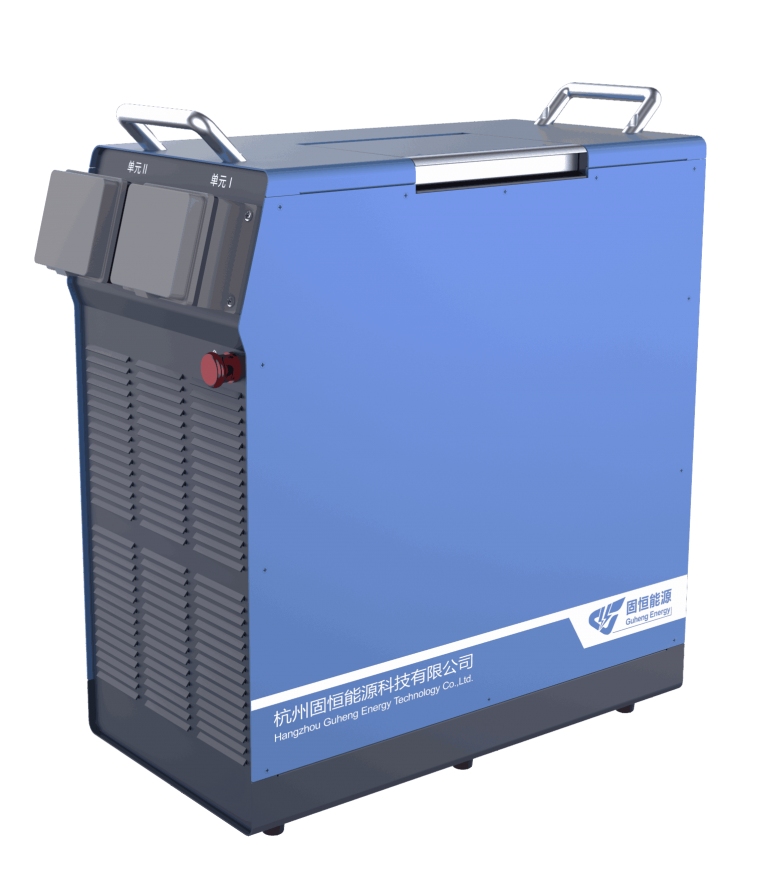
A maintenance instrument runs defined charge, discharge, or combined work steps under controlled conditions. The PBM series uses efficient power electronic conversion and load technology, giving it a wide output voltage adaptation range for service work across different battery pack platforms.
Capacity testing is valuable because it connects the result to the test conditions. When voltage limits, SOC limits, runtime, capacity cutoff, and report data are recorded together, later tests can be compared more reliably.
SOC Adjustment and Module Voltage Balancing
A pack with uneven modules may charge slowly, discharge quickly, or show unstable range behavior. The PBM-B series supports charge/discharge maintenance for power battery modules and packs, capacity testing, and voltage balancing between modules.
SOC adjustment is equally important. The series supports cutoff conditions based on pack terminal voltage, capacity, SOC, operating time, and cell voltage, helping the device follow defined boundaries instead of relying only on manual observation.
BMS Communication and Safer Control
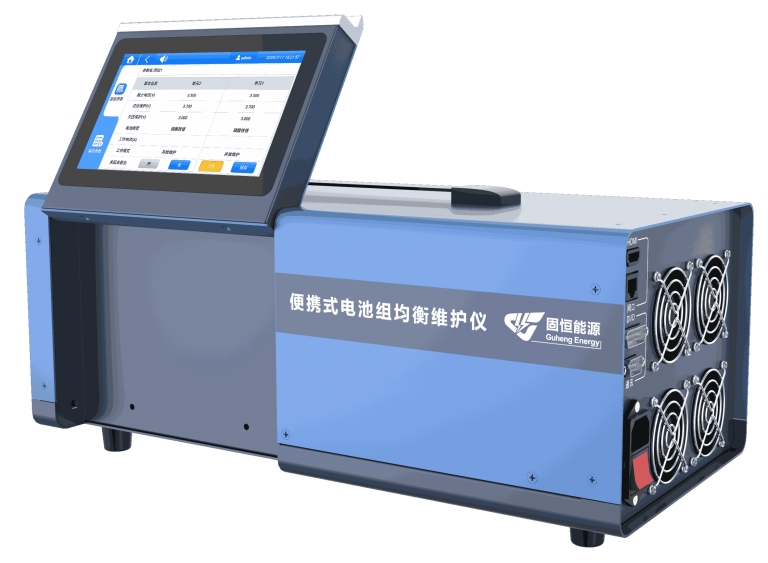
An EV battery pack is a managed system, not just a collection of cells. The PBM-B series supports CAN communication with the battery pack, allowing it to obtain battery information and control internal relays.
That communication makes testing more coordinated with the pack’s own control logic. In high-voltage maintenance, controlled startup, defined cutoffs, and abnormal-condition protection help reduce operator risk and improve process consistency.
Where the Instrument Fits in New Energy Battery Service
In EV service stations, the instrument is suitable for capacity verification, SOC calibration, and post-repair pack checks. After a battery pack has been removed, repaired, or reassembled, a standardized charge-discharge process helps confirm whether it is ready for continued use.
In energy storage service, battery packs may show performance decline after long cycling. Charge-discharge maintenance and capacity testing help operators identify packs that need targeted maintenance instead of treating the entire system as one undifferentiated asset.
Application Value of the Guheng Energy PBM-B Series
The PBM-B series supports single-step operation and multi-step workflow operation. It can store test data files locally and automatically generate test reports, which helps service teams keep maintenance quality consistent across different operators.
For capacity testing, SOC adjustment, and BMS-coordinated maintenance, start with the Guheng Energy PBM-B battery pack charge-discharge maintenance solution. The series can also be extended for cell voltage acquisition, external communication, and networked operation. This expandability matters when a service site wants its maintenance workflow to evolve without rebuilding the entire testing system.
Conclusion
A battery pack charge-discharge maintenance instrument is not just a charger or a load. Its value lies in using controlled workflows and traceable data to evaluate true EV battery capacity. Guheng Energy’s PBM-B series brings together capacity testing, module voltage balancing, BMS communication, cutoff protection, data storage, and report generation for consistent new energy battery maintenance.
When capacity judgment, SOC correction, and post-repair checks become routine work, a repeatable charge-discharge maintenance process makes battery decisions clearer and more defensible.
FAQ
Q: Can a charge-discharge maintenance instrument directly determine battery life?
A: It provides key evidence such as capacity, SOC behavior, runtime, and voltage response. Battery life assessment still requires operating history, BMS data, maintenance records, and usage context, so one test should be treated as part of a broader evaluation.
Q: Is the PBM-B series for battery packs or modules?
A: Available information shows that the PBM-B series supports charge/discharge maintenance for power battery modules and battery packs, capacity testing, and voltage balancing between modules. It is designed for service needs across different voltage platforms and capacities.
Q: Why is BMS communication important during maintenance?
A: BMS communication allows the instrument to obtain battery information and coordinate with internal pack control, including relay control. This is especially useful in high-voltage service because testing becomes more controlled and aligned with the battery pack’s own protection logic.
Q: What is the difference between capacity testing and SOC adjustment?
A: Capacity testing measures how much energy the pack can actually deliver or accept under controlled conditions. SOC adjustment focuses on aligning the state-of-charge reference with the pack’s real condition. In service workflows, the two often work together.