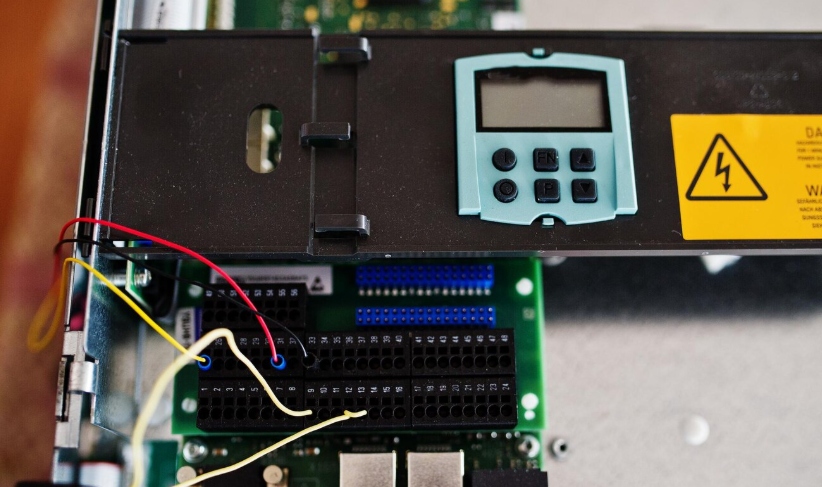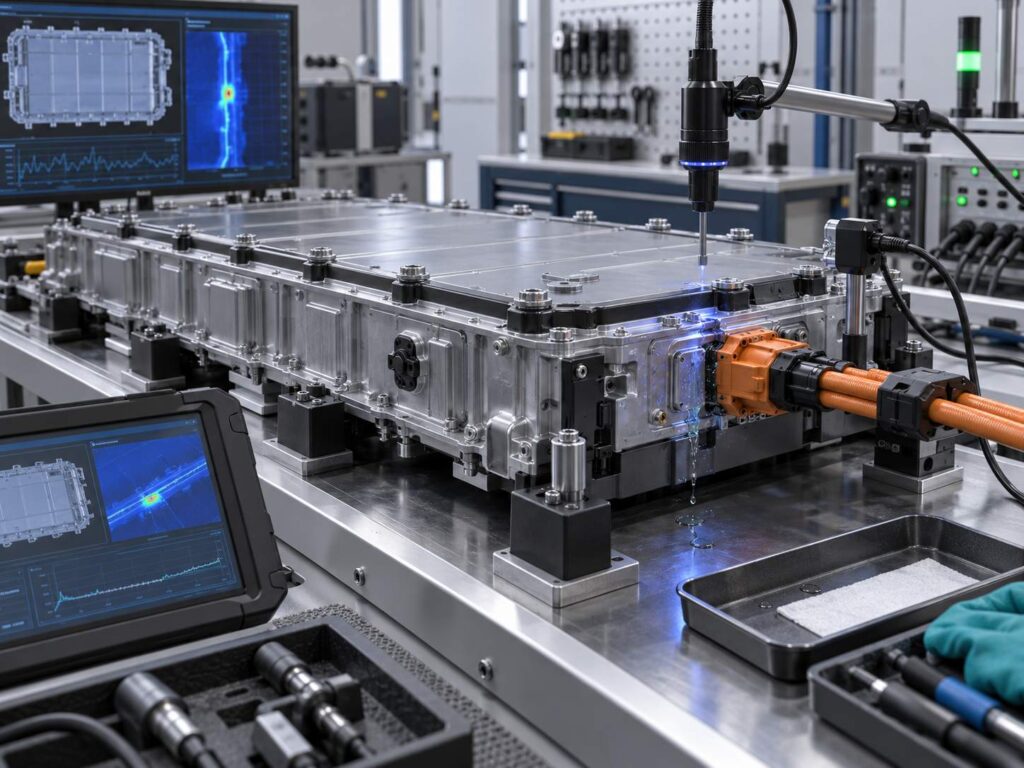

The stability of battery packs in new energy vehicles is directly related to the vehicle’s performance and safety. With the rapid growth of market demand, the frequency of battery pack use and the load are also constantly increasing, leading to increasingly prominent problems such as battery pack voltage drop, capacity decay, overcharging and over-discharging. These problems not only affect the battery’s lifespan but also increase maintenance costs, posing a significant challenge to operators.

Common problems with new energy vehicle battery packs
In the operation of new energy vehicles, the pain points of battery pack use are particularly significant. Specifically, inconsistent battery capacity and excessive voltage differences between individual cells have become common technical challenges. These problems typically lead to the following issues:
Reduced battery pack efficiency : When the voltage difference is too large, the overall efficiency of the battery pack is greatly reduced, resulting in a decrease in driving range.
Accelerated battery degradation : Inconsistent capacity of individual cells will accelerate battery degradation, thereby shortening the lifespan of the battery pack.
Increased safety risks : Severe differential pressure issues can lead to overcharging and over-discharging, and may even cause thermal runaway, posing a safety hazard to the vehicle.
High maintenance costs : Irregular battery inspections and maintenance will increase additional maintenance costs, especially when the battery pack fails, the cost of repair and replacement is very high.
Solutions are crucial to addressing these issues, especially in battery testing and maintenance. Ensuring the safety of battery pack differential pressure is key to extending the lifespan of new energy vehicle batteries.
How to extend the battery life of new energy vehicles
Extending the lifespan of new energy vehicle batteries requires first ensuring that the voltage difference of the battery pack remains within a reasonable range. Precise battery capacity testing and inspection can identify potential battery problems in a timely manner, allowing for repairs before they escalate.
1. Precise battery capacity testing
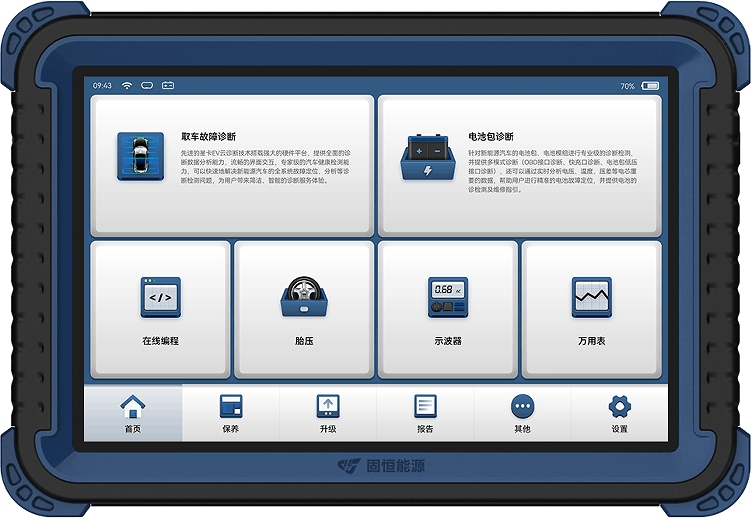
Battery capacity testing is a crucial method for assessing battery health. Traditional battery testing methods often suffer from insufficient accuracy and low efficiency. However, by using advanced battery voltage acquisition systems and automotive diagnostic tools, data from each individual battery cell can be accurately collected, allowing for timely detection of capacity deviations and voltage differentials, ensuring the battery pack operates at its optimal condition.
Guheng Energy ‘s portable 48V mild hybrid battery pack maintenance device is specifically designed for new energy vehicle batteries and features high-precision battery capacity testing capabilities. This device supports various battery testing methods, such as charge/discharge testing and internal resistance testing, and can monitor battery voltage and temperature changes in real time, ensuring the battery pack operates within safe limits.
2. Battery differential pressure safety monitoring
Excessive voltage differential is one of the main causes of accelerated battery degradation. To avoid excessive voltage differential within the battery pack, it is essential to monitor the voltage changes of each individual battery cell in real time. Guheng Energy ‘s battery voltage acquisition instrument employs multi-channel parallel acquisition technology, enabling simultaneous detection of the voltage and temperature of multiple battery cells. This allows for timely detection of voltage differential issues and provides accurate data support for subsequent battery maintenance.
3. Active balancing technology
Active balancing technology is one of the key technologies in battery management systems. It extends battery life by balancing capacity differences between individual cells through energy transfer. Using Guheng Energy ‘s battery pack charge/discharge tester , precise capacity testing and balancing operations can be performed on the battery pack, ensuring the consistency of each individual cell and reducing the negative impact of voltage differences.
Practical application cases
Case 1: Battery Pack Inspection and Maintenance of a New Energy Vehicle Company
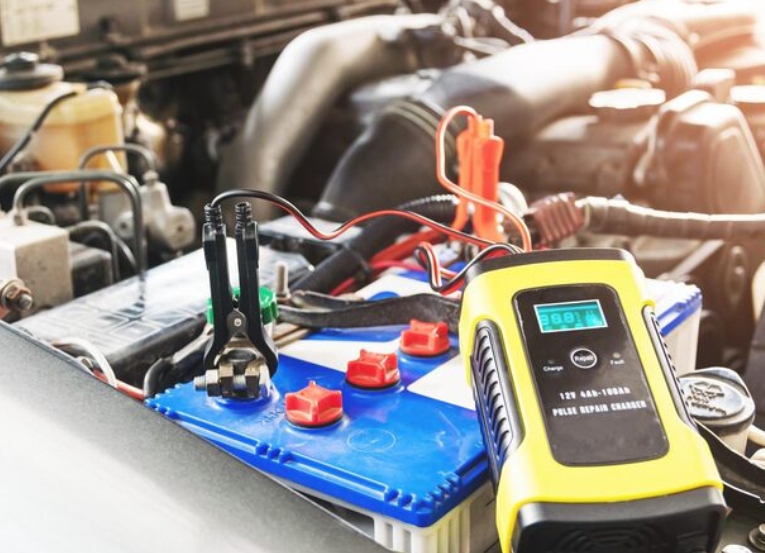
During routine battery pack maintenance, a new energy vehicle manufacturer discovered that the differential voltage of individual cells within the battery pack exceeded the standard, leading to a decrease in the vehicle’s driving range. They used Guheng Energy ‘s portable 48V mild hybrid battery pack maintenance instrument for on-site testing and rapid repair. Through battery capacity testing and differential voltage adjustment, the manufacturer successfully reduced the battery pack’s differential voltage from 70mV to below 10mV, restoring approximately 20% of the driving range and extending the battery’s lifespan.
Case 2: Battery Management in Energy Storage Power Stations
During operation, a certain energy storage power station experienced a 30% reduction in system capacity due to battery pack voltage differential issues. The power station then introduced a battery voltage acquisition instrument from Guheng Energy . Through precise battery capacity testing and data analysis, the usable capacity of the battery pack was successfully restored, and the voltage differential was controlled within a safe range, reducing annual operation and maintenance costs by 25%.
Choose appropriate battery maintenance and testing instruments
For brand owners, choosing the right battery maintenance and testing instruments is crucial. Guheng Energy , a leading manufacturer of battery maintenance and testing instruments, is committed to providing high-precision, high-efficiency battery testing solutions. Our products, such as battery pack charge/discharge testers and portable 48V micro-hybrid battery pack maintenance instruments , can accurately identify battery capacity deviations and voltage differential issues, providing strong support for your battery management.
By choosing our battery testing equipment, you can not only improve the efficiency of your battery packs, but also reduce safety hazards and maintenance costs caused by battery failures, helping you achieve more efficient battery management.
Conclusion
Battery management is crucial for ensuring safety and extending the lifespan of new energy vehicles. Precise battery capacity testing and differential voltage monitoring can effectively improve battery pack stability and performance. Guheng Energy ‘s high-precision battery maintenance and testing instruments can meet your various battery pack testing and maintenance needs, helping brands efficiently manage battery status and reduce operating costs.
For customized solutions or product testing, please feel free to contact us. We will provide you with professional technical support and equipment selection advice.
FAQ
Q: How do you ensure the safety of battery pack differential pressure?
A: By using high-precision battery capacity testing and battery voltage acquisition instruments, we monitor battery voltage and temperature in real time to ensure that the battery differential pressure is within a safe range.
Q: Does Guheng Energy’s equipment support testing of new energy vehicle batteries?
A: Yes, our portable 48V mild hybrid battery pack maintenance instrument and battery voltage acquisition instrument both support the testing and maintenance of new energy vehicle batteries.
Q: Can the battery capacity test data be exported?
A: Yes, data can be stored and exported via USB flash drive for easy analysis and report generation.
Q: Does the equipment meet industry certifications?
A: Our equipment has passed ISO9001 and CE certifications and is of reliable quality.