
In today’s rapidly developing new energy vehicle and energy storage industries, the battery pack, as the core energy source, directly determines the lifespan of end products. However, many brands often neglect in-depth battery pack testing during after-sales maintenance, leading to frequent issues such as battery thermal runaway and sudden reduction in range. These overlooked testing loopholes not only result in high recall costs but also severely damage brand reputation.
As a professional provider of new energy technology solutions, Guheng Energy deeply understands the industry’s pain points. We are committed to developing high-precision battery maintenance and testing instruments, and through standardized testing procedures and advanced testing technologies, we assist companies in building a closed-loop safety system.

I. Unveiling the Battery Pack Structure: The Physical Foundation of Safety and Performance
To ensure battery pack safety, the primary task is to understand the complex battery pack structure . A standard battery pack is not simply a stack of cells, but an organic whole composed of cells, modules, a battery management system (BMS), a thermal management system, and structural components.
1.1 Internal Mechanical Connections and Heat Dissipation Layout
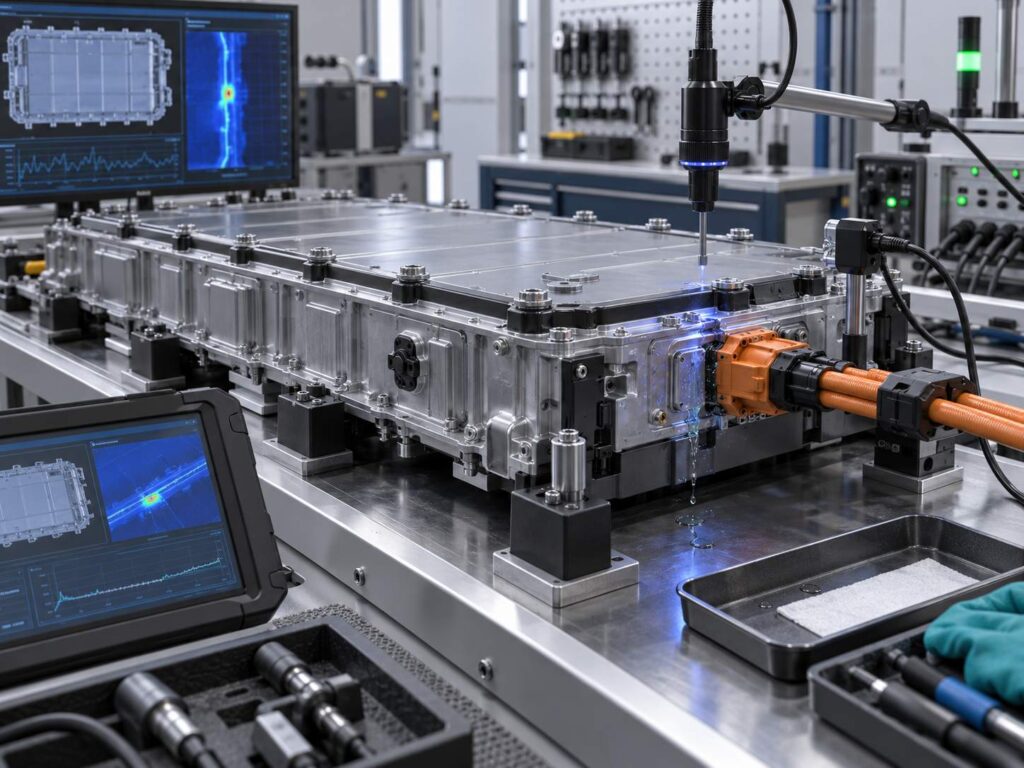
The internal physical stability of the battery pack is crucial. With the widespread adoption of CTP (Cell to Pack) technology , cells are directly integrated into the battery pack. While this improves space utilization and energy density, it also places higher demands on the accuracy of testing instruments. Any minute physical displacement or structural deformation can induce cell compression, thereby causing a safety accident.
1.2 Detection challenges under CTP technology
In CTP (Cell-to-Pack) structures, traditional detection methods struggle to reach the fine details at the cell level due to the elimination of the module layer. To address this, Guheng Energy has optimized its detection algorithm, ensuring accurate capture of microwave variations in each cell even in complex integrated environments.
II. What is Battery Capacity: A Core Indicator for Assessing Battery Health
In battery testing, battery capacity is the most intuitive parameter for measuring performance. Simply put, battery capacity refers to the amount of electricity a battery can release under certain discharge conditions (such as discharge rate, temperature, etc.), usually expressed in ampere-hours (Ah) or milliampere-hours (mAh).
2.1 Nominal capacity vs. actual available capacity
New batteries have a nominal capacity when they leave the factory, but as the number of charge-discharge cycles increases, active materials are lost, and their actual capacity gradually decreases. When the battery capacity decreases to below 80% of its initial value, the safety risk of the battery pack will increase exponentially.
2.2 Safety hazards caused by capacity distortion
Inaccurate capacity data obtained by the BMS can lead to incorrect SOC (State of Charge) estimation, potentially causing overcharging or over-discharging. Accurate battery capacity testing is not only crucial for ensuring battery life but also for providing reliable data support for safety warnings.
III. How to conduct battery pack testing: Standardized maintenance procedures
For B2B maintenance scenarios, how should battery pack testing be conducted? This requires a logically rigorous process that covers every step from disassembly to in-depth testing.
3.1 Safe Disassembly and Auxiliary Positioning
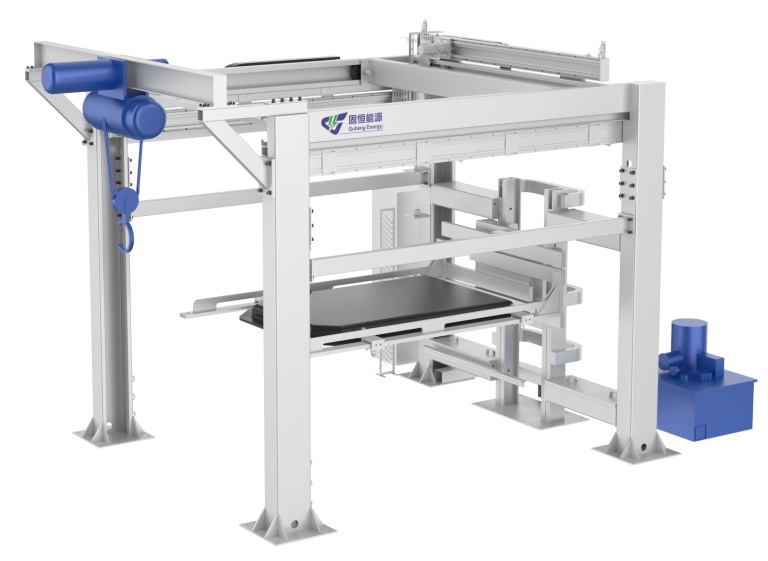
Before conducting any electrical performance tests, a physical structure inspection is essential. Guheng Energy ‘s battery pack flipping and disassembly machine is specifically designed for heavy-duty battery packs. This equipment can achieve smooth, multi-dimensional flipping, allowing technicians to comprehensively inspect internal structural components for damage, greatly improving safety and efficiency during the disassembly process.
3.2 Deep Charge/Discharge and Performance Evaluation
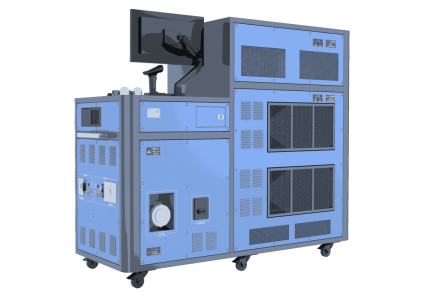
The core testing component involves charge-discharge tests that simulate real-world operating conditions. By using the BST-DW260 battery pack service terminal maintenance and testing instrument , we can perform high-precision charge-discharge cycles on the battery pack.
Test Step 1: Airtightness Check . Ensure the battery pack is properly sealed to prevent external moisture intrusion.
Test Step Two: Individual Cell Differential Voltage Analysis . The consistency of each cell string is monitored using the BST-DW260 to quickly pinpoint the faulty cell.
Test Step 3: Capacity Verification . Perform a complete full-charge and discharge process to calculate the actual usable capacity.
IV. Guheng Energy: Precise Detection Empowers a Highly Reliable and Secure System
As a technology-driven company, Guheng Energy has many technological highlights in the field of battery maintenance , especially in dealing with highly integrated battery pack testing.
4.1 Core Product Highlights: BST-DW260 Maintenance and Testing Instrument
The BST-DW260 is our flagship product designed for after-sales service stations and R&D laboratories. Its main advantages are:
High detection accuracy : It adopts a high-precision current and voltage sampling chip with an extremely low error rate, which can accurately identify minute voltage fluctuations under the background of CTP technology.
Integrated functions : It integrates charging, discharging, activation, and equalization, allowing one instrument to complete most battery pack testing tasks.
Data visualization : Automatically generates test reports, providing brand owners with detailed after-sales maintenance data.
4.2 Real-world application case: Maintenance and upgrade of a well-known brand of new energy vehicles
A joint venture new energy vehicle brand once faced the challenges of high battery pack return rates and slow fault location . After introducing a solution provided by Guheng Energy, by deploying battery pack flip-and-disassemble machines and multiple BST-DW260 testing instruments, the average testing time at its after-sales service outlets was reduced by 40%, and the fault diagnosis accuracy rate increased to over 98%. Through precise battery capacity calculation, the brand effectively filtered out claims disputes caused by falsely reported battery capacity, significantly reducing operating costs.
V. Addressing Pain Points: Why do brands choose Guheng Energy?
In the B2B market, efficiency and accuracy are lifelines. Common pain points encountered by brand owners include: incompatible testing equipment, opaque test data, and high operational risks for after-sales maintenance personnel.
Guheng Energy provides not only instruments, but also complete new energy service technology solutions. Our equipment supports multiple protocol interfaces and is compatible with mainstream battery pack protocols on the market. Whether at the end of the production line or at after-sales service stations, our accurate testing capabilities safeguard battery pack safety.
VI. Summary and Outlook
Building a highly reliable battery pack safety system begins with a deep understanding of the battery pack structure and is achieved through precise control of battery capacity. By conducting scientific and standardized battery pack testing, combined with Guheng Energy’s high-end maintenance and testing equipment, brands can effectively reduce safety risks and improve user satisfaction.
If you are looking for a reliable supplier of battery maintenance and testing instruments, or need professional new energy technology support, please feel free to contact Guheng Energy.
FAQ
Q: Is a complete charge and discharge cycle always required for battery pack capacity testing?
A: Yes, only through a complete full-charge cycle can its actual usable capacity be accurately calculated, thereby assessing its health.
Q: What types of battery packs does the BST-DW260 support?
A: The BST-DW260 supports mainstream lithium iron phosphate, ternary lithium and other chemical systems, and is compatible with a variety of communication protocols.
Q: How does a battery pack flipping and disassembly machine improve safety?
A: This equipment can avoid the risk of bumps and knocks caused by manually handling heavy battery packs, ensuring that the disassembly process is controlled and meets safety standards.
Q: Can a CTP (Cell-to-Pack) battery pack be repaired if it breaks?
A: Yes, but it requires higher precision testing instruments such as the BST-DW260 for positioning, and professional disassembly tools for precise operation.
Q: How can I obtain after-sales technical support from Guheng Energy?
A: We provide online remote guidance and offline on-site training to ensure that your technical team can operate various maintenance and testing instruments proficiently.