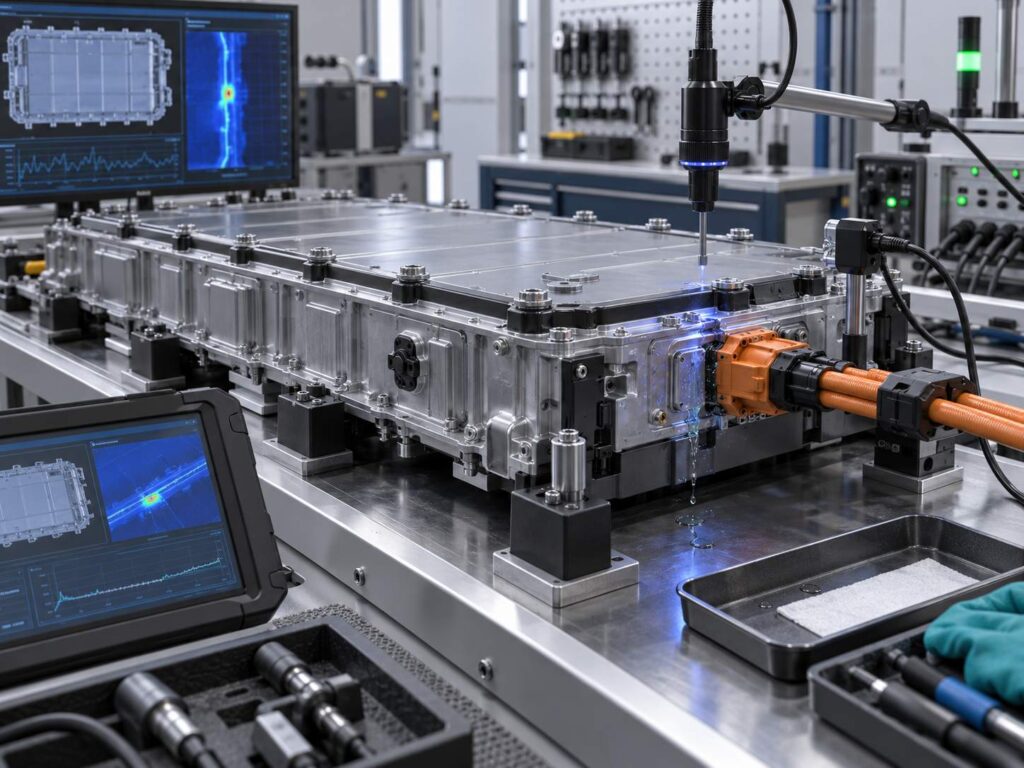

With the rapid development of new energy vehicles and energy storage systems, battery pack safety has been elevated to an unprecedented strategic level. As the first line of defense for battery safety, the airtightness testing of battery packs directly determines the product’s lifespan and safety factor. However, in actual production line final inspections and after-sales maintenance scenarios, companies generally face three core pain points: “undetectable, inaccurate, and slow.” Traditional water testing methods rely on manual visual observation, which is not only inefficient but also ineffective at detecting leaks at the micron level. Ordinary pressure drop testing methods are highly susceptible to environmental temperature fluctuations and test pipeline deformation, resulting in poor repeatability of battery airtightness test results, and even extreme situations such as “good products being misjudged as defective” or “missed products entering the market.” Furthermore, after ensuring airtightness, the consistency of the cells inside the battery pack , i.e., battery balance , if out of control, can also lead to the risk of thermal runaway. As a professional equipment manufacturer deeply involved in the field of new energy maintenance and testing, Guheng Energy has launched a complete set of technical solutions from precision airtightness testing to active equalization maintenance based on its profound understanding of industry pain points. It is committed to helping brand owners completely solve the safety and performance problems of batteries throughout their entire life cycle.

Pain Point Analysis: Failure Scenarios and Consequences of Traditional Airtightness Testing
In B2B manufacturing scenarios, battery pack airtightness testing is not only a standard procedure but also the cornerstone of quality reputation. If there are loopholes in the testing process, companies will face significant after-sales risks.
The “catastrophic” consequences of micro-leakage
Many companies neglect temperature compensation and pipeline expansion factors when using the simplified voltage drop method for battery airtightness testing. For example, battery packs that pass summer workshop testing may experience seal shrinkage and the expansion of previously overlooked micro-leakage points when used in cold winter regions. This allows moisture intrusion, leading to insulation failures or even short circuits. In such scenarios, traditional battery pack airtightness testing methods, lacking environmental simulation and compensation algorithms, cannot identify these “hidden killers.”
A zero-sum game between testing efficiency and accuracy.
In PACK plants with extremely high production line speed requirements, operators often shorten holding time or increase leakage thresholds in pursuit of speed, rendering battery pack airtightness testing a mere formality. During its investigations, Guheng Energy found that over 60% of after-sales battery burn-out incidents were related to oversights in initial airtightness testing. Brand owners urgently need a solution that can both match high-speed production lines and achieve high-precision quantitative testing.
Technological Breakthrough: High-Efficiency Airtightness Testing Solutions and Core Equipment
To address these pain points, Guheng Energy has proposed a solution of “high-precision pressure control + data-driven traceability.” We not only provide the instruments, but also testing processes that conform to the structural characteristics of CTP (cell-to-pack) battery packs.
QMP-ZK1-1 Precision Airtightness Leak Detection Testing Platform: A High-Efficiency Defense Line for Production Lines
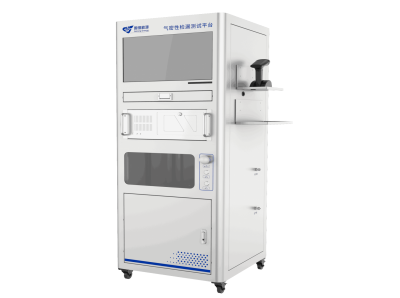
For the batch testing needs of large PACK factories, the QMP-ZK1-1 airtightness leak detection test platform is the flagship solution of Guheng Energy. This equipment adopts a unique closed-loop air pressure control technology, which completely solves the problems of “overshoot” and “underpressure” of traditional equipment.
In an application case, a leading battery manufacturer in East China encountered a misjudgment rate as high as 5% when using traditional equipment for battery pack airtightness testing due to large pressure fluctuations. After introducing the QMP-ZK1-1, its high pressure resolution of up to 1 Pa and multi-sensor redundancy design improved test stability by 40%. This platform not only supports a wide pressure testing range from -70KPa to 650KPa, covering all scenarios from vacuum negative pressure to positive pressure, but also automatically matches test schemes through barcode scanning, with data uploaded to the MES system in real time. This means that the battery airtightness test curve for each battery pack is traceable, allowing for rapid identification of whether after-sales issues stem from incoming materials or assembly problems.
Portable Leak Detector QMM -WZ-C-C0 : A Powerful Tool for After-Sales Service and Flexible Applications
For after-sales service stations or R&D laboratories that require frequent relocation, Guheng Energy has launched the portable airtightness leak detector QMM -WZ-C-C0 . Despite its compact size, it incorporates a high-precision differential pressure sensor.
In a maintenance case involving a bus group in northern China, repair personnel needed to inspect large battery packs in an underground pit. The QMM-WZ-C-C0 , with its robust CNC aluminum integrated air circuit base and 7-inch Android HD screen, operated stably even in harsh environments. Its unique “liquid-proof protection” technology effectively prevented liquid backflow from damaging the instrument due to operational errors, significantly reducing after-sales maintenance costs. Through a customized testing process, maintenance personnel could complete a rapid screening of a single battery pack within 15 seconds, achieving truly efficient testing.
Deep Integration: Comprehensive Management from Airtightness to Battery Balancing
For battery manufacturers, battery safety lies not only in the sealing of the casing but also in the consistency of the core components. Even with perfect airtightness, if there is a voltage imbalance within the internal cells, it can still lead to overcharging and over-discharging. Therefore, Guheng Energy recommends combining battery airtightness testing with battery equalization maintenance.
Balanced control: Solving the persistent problem of consistency
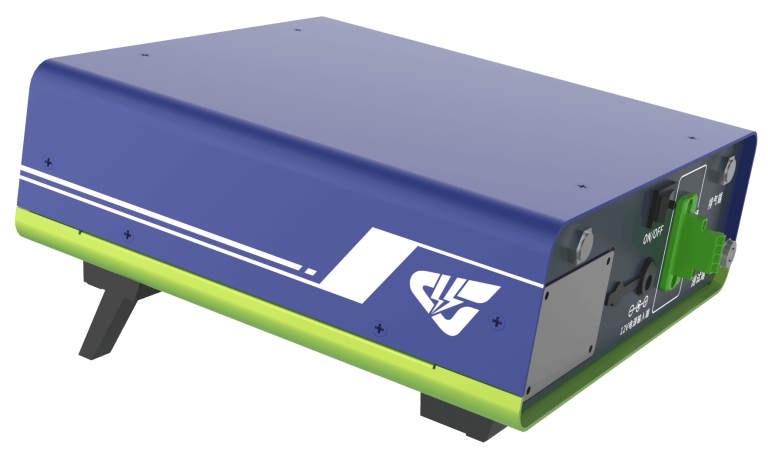
When water ingress is detected in a battery pack, or after prolonged use, the inconsistency among battery cells can worsen. Guheng Energy’s battery pack equalization and maintenance system series effectively addresses the voltage “weakest link” effect. We focus not only on the accuracy of battery equalization but also on its safety.
For example, when performing full-pack repair in conjunction with battery pack airtightness testing, technicians first use an airtightness testing platform to ensure that the enclosure meets the IP67 standard, and then use a balancing maintenance device to perform passive or active balancing on battery packs with a voltage difference exceeding 30mV. This standard operating procedure of “testing for leaks first, then balancing” has been included in the maintenance manuals of many OEMs.
CTP technology adaptation solution
With the increasing popularity of CTP (Cell-to-Pack) technology, battery packs have become more compact in internal structure, resulting in smaller maintenance access points. Guheng Energy’s testing instruments are designed with the characteristics of CTP battery packs in mind from the outset. Our airtightness testing fixtures—such as the PW40 screw-type explosion-proof valve injection fixture—use a unique screw-tightening sealing design to establish a stable test air path without disassembling the explosion-proof valve, avoiding damage to the fragile top cover of the CTP battery pack. This high-precision battery pack airtightness testing method protects the battery structure and ensures the accuracy of test results.
Comprehensive Solutions and Case Studies
Guheng Energy provides not just standalone equipment, but integrated hardware and software solutions. From testing scheme editing and cloud-based data interconnection to customized professional tooling and fixtures, we achieve full-chain coverage.
Case Study: A South China-based energy storage integrator faced a serious after-sales leakage problem. Investigation revealed that their existing battery airtightness testing solution was inadequate for testing large-capacity energy storage units. After intervention from Guheng Energy, they provided the QMP-ZK1-1 airtightness leak detection testing platform along with customized volume compensation fixtures. First, we used algorithms to eliminate the long pressure stabilization time caused by large volumes, reducing the testing cycle time for a single energy storage unit from 10 minutes to 3.5 minutes. Second, high-precision sensors captured previously overlooked minute pressure drops. After implementing this solution, the manufacturer’s overall unit pass rate increased to 99.8%, and the pass rate for overseas customer factory audits significantly improved. This case demonstrates that choosing the right battery pack airtightness testing method can directly translate into a brand’s commercial competitiveness.
Conclusion
In today’s new energy industry, which is shifting from “wild growth” to “high-quality development,” battery pack airtightness testing and battery equalization control have become key indicators of a brand’s technological strength. Guheng Energy, leveraging its years of technical expertise in airtightness testing and equalization maintenance, and its flagship products such as the QMM -WZ-C-C0 portable airtightness leak tester and the QMP-ZK1-1 airtightness leak testing platform, has successfully served numerous leading domestic automakers and battery manufacturers. We don’t sell “generic off-the-shelf products,” but rather provide customized, high-precision testing and maintenance solutions tailored to your specific process challenges.
If your team is struggling with insufficient accuracy in airtightness testing or low balancing efficiency, contact the Guheng Energy technical team immediately to obtain a customized battery safety testing solution. Let us work together to safeguard the safety of every kilowatt-hour of electricity.
FAQ
Q: What is the biggest technological advantage of Guheng Energy’s airtightness testing equipment compared to ordinary pressure drop meters on the market?
A: The core advantage lies in “high-precision pressure control and environmental compensation.” Ordinary pressure drop meters are greatly affected by temperature and pipeline volume, resulting in significant data drift. Guheng Energy’s equipment adopts closed-loop pressure control and redundant sensor design, achieving a pressure resolution of up to 1 Pa. It can also automatically compensate for changes in ambient temperature, ensuring that battery pack airtightness test data remains accurate and reliable even under diurnal temperature variations.
Q: Can SolidPower provide complete testing solutions for battery packs of different sizes and types?
A: Yes. We not only provide standard testing platforms such as QMP-ZK1-1, but also offer professional customized airtightness tooling services, including the PW40 screw-type gas injection tooling for explosion-proof valves. We customize a complete chain solution from sealing plugs to testing algorithms based on your battery pack interface, volume, and production line cycle time.
Q: Besides detecting leaks, how do Guheng Energy’s products address the battery balancing issue?
A: Guheng Energy focuses on the entire lifecycle management of batteries. After ensuring physical safety through battery airtightness testing, our battery pack equalization and maintenance device can efficiently solve cell voltage difference issues, improve battery pack consistency, and extend service life. We recommend “leak detection first, then equalization,” which is the golden combination for ensuring battery system safety.