
With the explosive growth in the number of new energy vehicles, the safety pressure on after-sales maintenance is becoming increasingly prominent. How to scientifically and efficiently handle the power batteries of accident vehicles, flooded vehicles, and battery packs with thermal runaway risks after they enter service outlets has become a crucial indicator of a maintenance station’s professionalism. Among numerous safety protection measures, mobile power battery immersion tanks , as key equipment for inherently safe handling, are playing an irreplaceable role.
Why do repair stations need standardized equipment for disposing of power batteries?
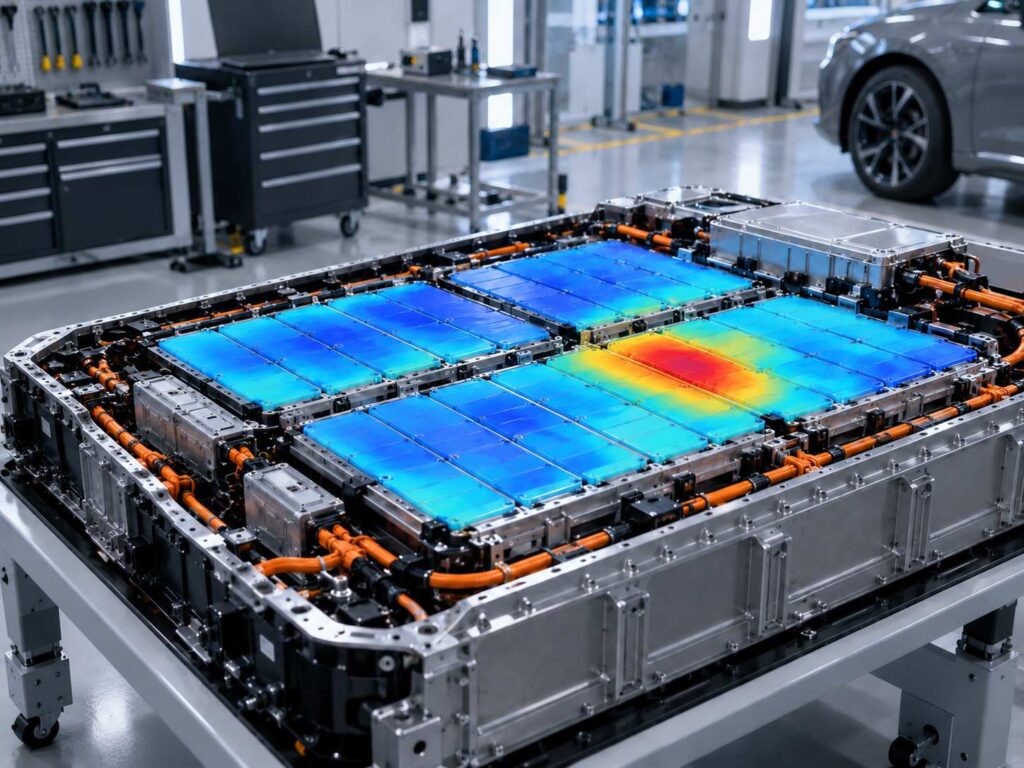
When the power batteries of new energy vehicles suffer physical damage or internal electrolyte leakage, they are highly susceptible to uncontrollable exothermic reactions. Traditional dry powder fire extinguishers or sand burial methods are largely ineffective in dealing with the release of chemical energy. In such cases, physically cooling and passivating the hazardous battery pack is the last line of defense to prevent the fire from spreading.
Guheng Energy has developed a professional protection matrix. Through standardized equipment, it can solve the following maintenance challenges:
- To prevent the continued spread of thermal runaway caused by internal short circuits in the battery.
- Achieve risk isolation in a controlled environment.
- Provide a stable and environmentally compliant working space for handling power battery power loss.
What are the technical details of a mobile power battery immersion tank?
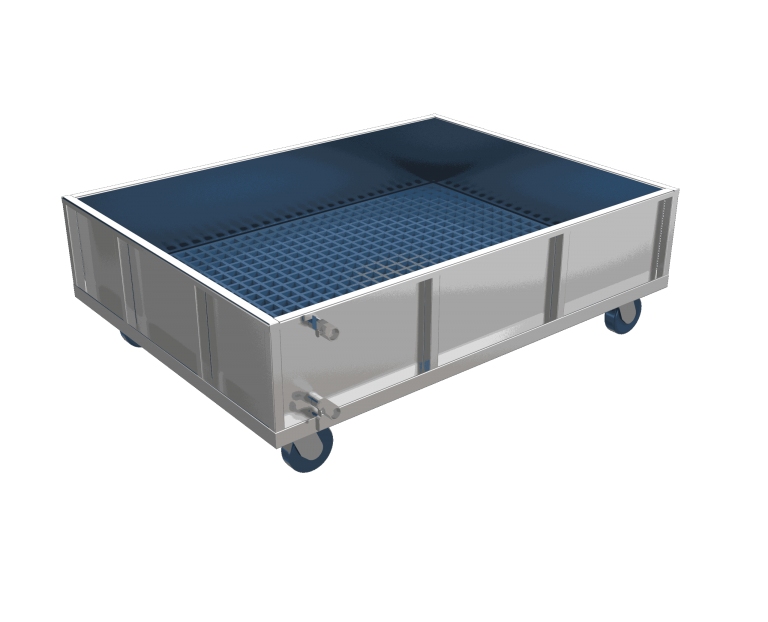
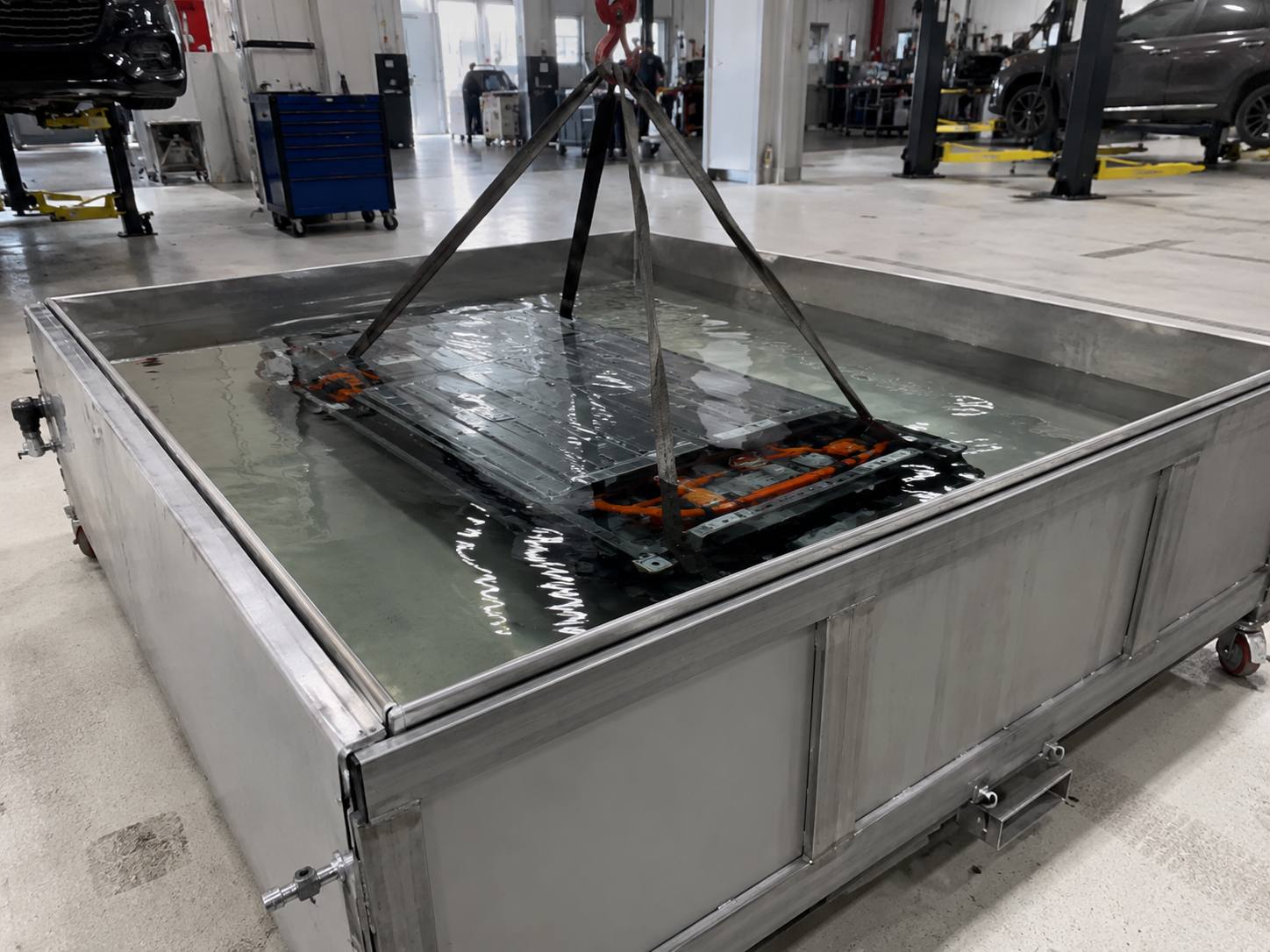
Rigorous industrial design is a prerequisite for ensuring safety. The mobile power battery immersion tanks (such as the STB-200 model) produced by Guheng Energy are not simply water containers, but high-tech safety equipment that has undergone in-depth deconstruction.
What are the advantages of combining 304 stainless steel with PP material?
In terms of material selection, the equipment uses 304 stainless steel as the core frame and outer shell, combined with a PP water tank structure. This combination provides extremely high corrosion resistance, effectively resisting corrosive substances such as hydrofluoric acid generated after leakage of power battery electrolyte. Professional welding technology ensures that the equipment does not leak or oxidize even when filled with water for extended periods, greatly extending its service life and meeting the durability requirements for long-term power battery disposal in maintenance stations.
How can fiberglass grating substrates improve safety?
The bottom of the soaking tank is designed with a high-strength fiberglass grating lining. This design detail serves a dual purpose:
- Mitigating water impact: When battery packs weighing hundreds of kilograms are hoisted and lowered into the water, the grid provides a certain degree of cushioning protection, preventing localized instantaneous pressure impacts on the bottom of the pool.
- Increase bottom load-bearing capacity: Ensure the structure remains stable even under full water and heavy load conditions.
What are the scientific principles behind the handling of power battery power loss?
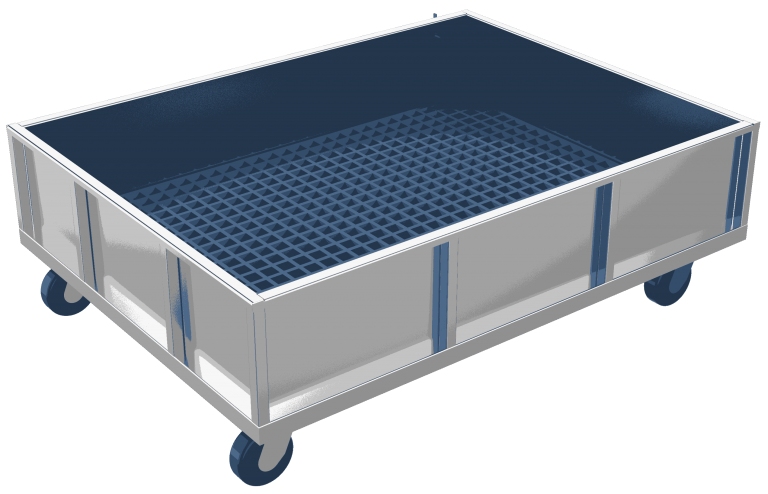
Why is active passivation the core of safety?
The fire hazard of lithium batteries primarily stems from the electrochemical energy stored within them. By completely immersing the potentially hazardous battery pack in a mobile battery soaking tank, the water medium can rapidly absorb the heat released by the battery, keeping its temperature below the critical point. Simultaneously, through a controlled soaking process, the residual charge in the battery pack is gradually released, and the active materials stabilize, fundamentally eliminating the possibility of re-ignition.
How can flexible mobility optimize maintenance efficiency?
The equipment is equipped with high-quality casters, allowing for free movement within the workshop. This means that when a vehicle enters a warning state or the QMD electrolyte leak tester issues an alarm, staff can quickly deploy the mobile power battery immersion tank to the vicinity of the fire risk point, shortening the emergency response path.
How does Guheng Energy help global automakers achieve safe maintenance?
As a national high-tech enterprise and a specialized and innovative enterprise, Guheng Energy has been deeply involved in the field of battery testing and safety protection for many years. Its safety protection products have become the first choice for well-known domestic and foreign OEMs and their after-sales service stations.
Industry-leading compliance and insurance support
Guheng Energy has passed ISO9001 quality management system certification, and all products are developed and manufactured according to strict procedures. Reliably, its safety protection products are underwritten by China Life Property & Casualty Insurance, providing global customers with a high level of reliability.
Widespread market recognition and real-world experience
Currently, the brand’s solutions have been successfully applied to leading battery companies such as CATL, BYD Technology, and EVE Energy, as well as new energy vehicle companies such as NIO, Li Auto, Hozon Auto, and XPeng. In actual power battery disposal cases at maintenance stations, the mobile power battery immersion tank, in conjunction with the EPB-015 emergency disposal box , constructs a closed-loop system from “initial isolation” to “final passivation,” effectively protecting the assets of maintenance stations and the personal safety of technicians.
Conclusion
In the field of new energy maintenance, safety is always the cornerstone. The mobile power battery immersion tank, through a deep integration of materials science and mechanical design, provides a standardized technical means for the disposal of power batteries at service stations. By achieving scientific power battery depletion treatment, Guheng Energy not only solves the hidden dangers and problems existing in the industry, but also sets a benchmark for the standardized development of new energy service technologies.
FAQ
Q: What maintenance is required regularly for mobile power battery soaking tanks?
A: Since this equipment is primarily used for holding and disposing of hazardous batteries in water, it is recommended to regularly check the 304 stainless steel welds for signs of leakage and clean the fiberglass grating at the bottom. Guheng Energy’s products have extremely wide environmental adaptability, but it is advisable to drain the wastewater promptly after use to keep the PP tank lining clean.
Q: Why can’t we just rely on simple outdoor storage to deal with power batteries that have lost power?
A: Potentially hazardous batteries stored outdoors are greatly affected by ambient temperature, and in the event of spontaneous combustion, they are highly likely to produce toxic fumes. Using mobile battery immersion tanks for power failure disposal can confine the chemical reaction to a controlled aquatic medium, significantly reducing the risk of secondary disasters.
Q: What size battery pack can Guheng Energy’s immersion tank support?
A: Guheng Energy offers a variety of models with customization support. For example, the standard model STB-200 basically covers the battery pack specifications of most passenger cars and light commercial vehicles on the market, which can meet the diverse needs of large repair shops for power battery disposal.