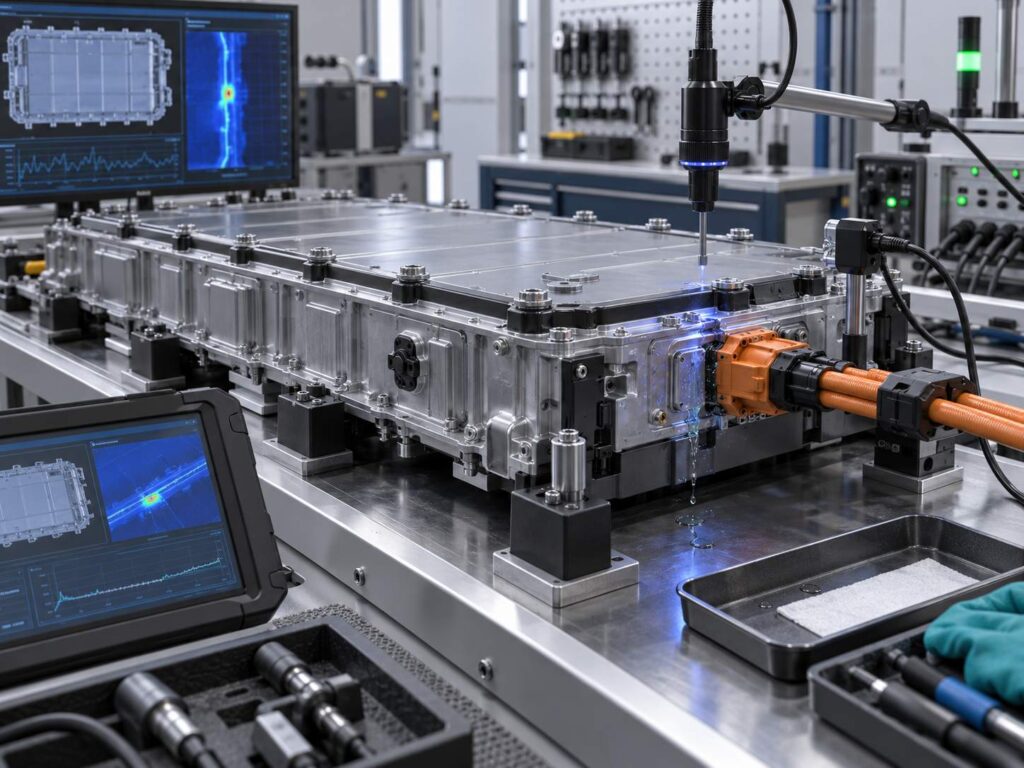

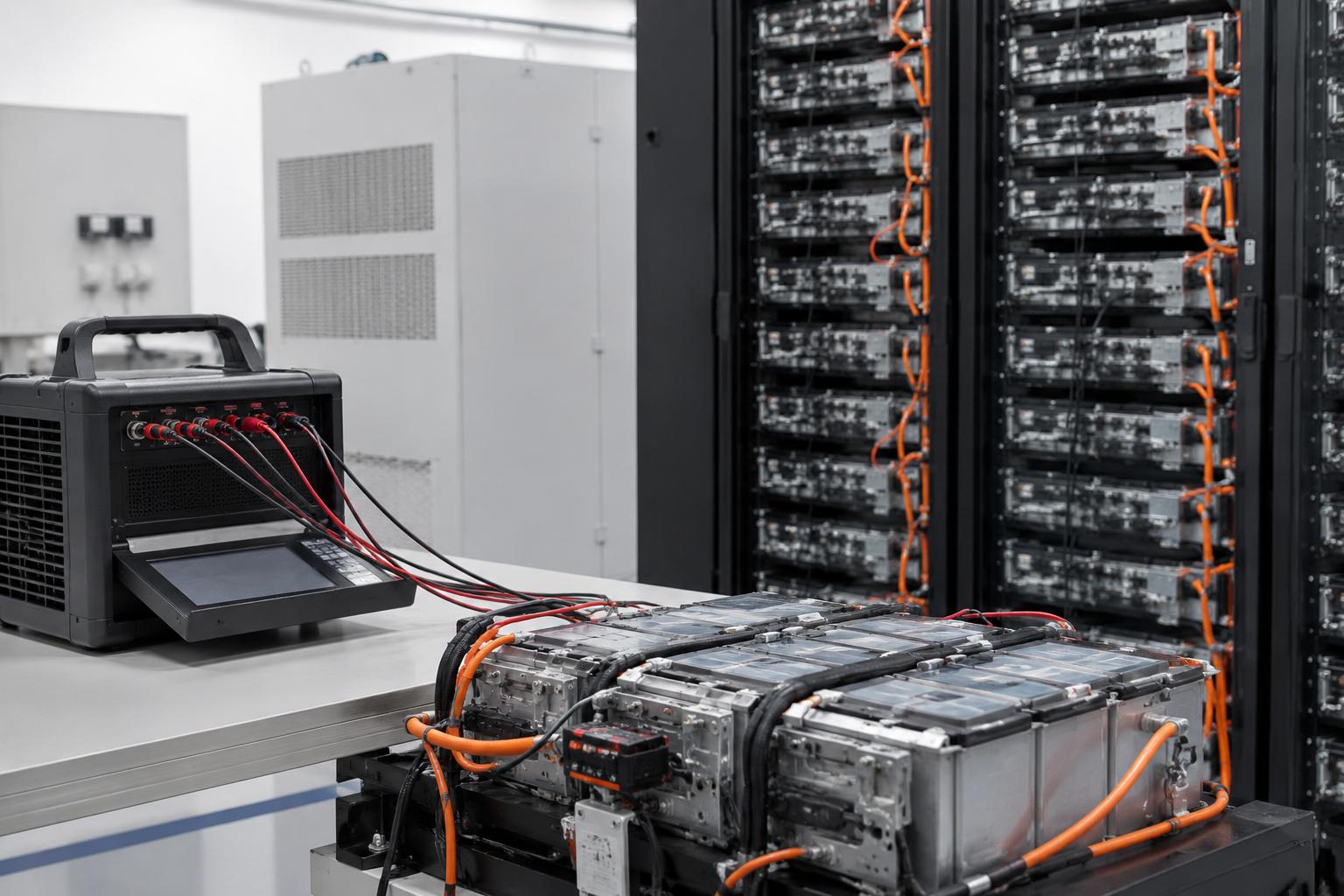
With the continuous expansion of applications such as energy storage power stations, new energy vehicles, and communication base stations, lithium battery capacity degradation has become a significant issue affecting system performance and asset returns. When battery capacity decreases, it not only affects driving range and energy storage efficiency but may also lead to poor battery pack consistency and increased operational risks.
Faced with this challenge, more and more companies are starting to use professional battery charge and discharge testers, lithium battery charge and discharge testers, and battery pack charge and discharge testers for capacity testing and health assessment, thereby achieving scientific maintenance and lifespan management.
Why does the capacity of lithium batteries decrease?
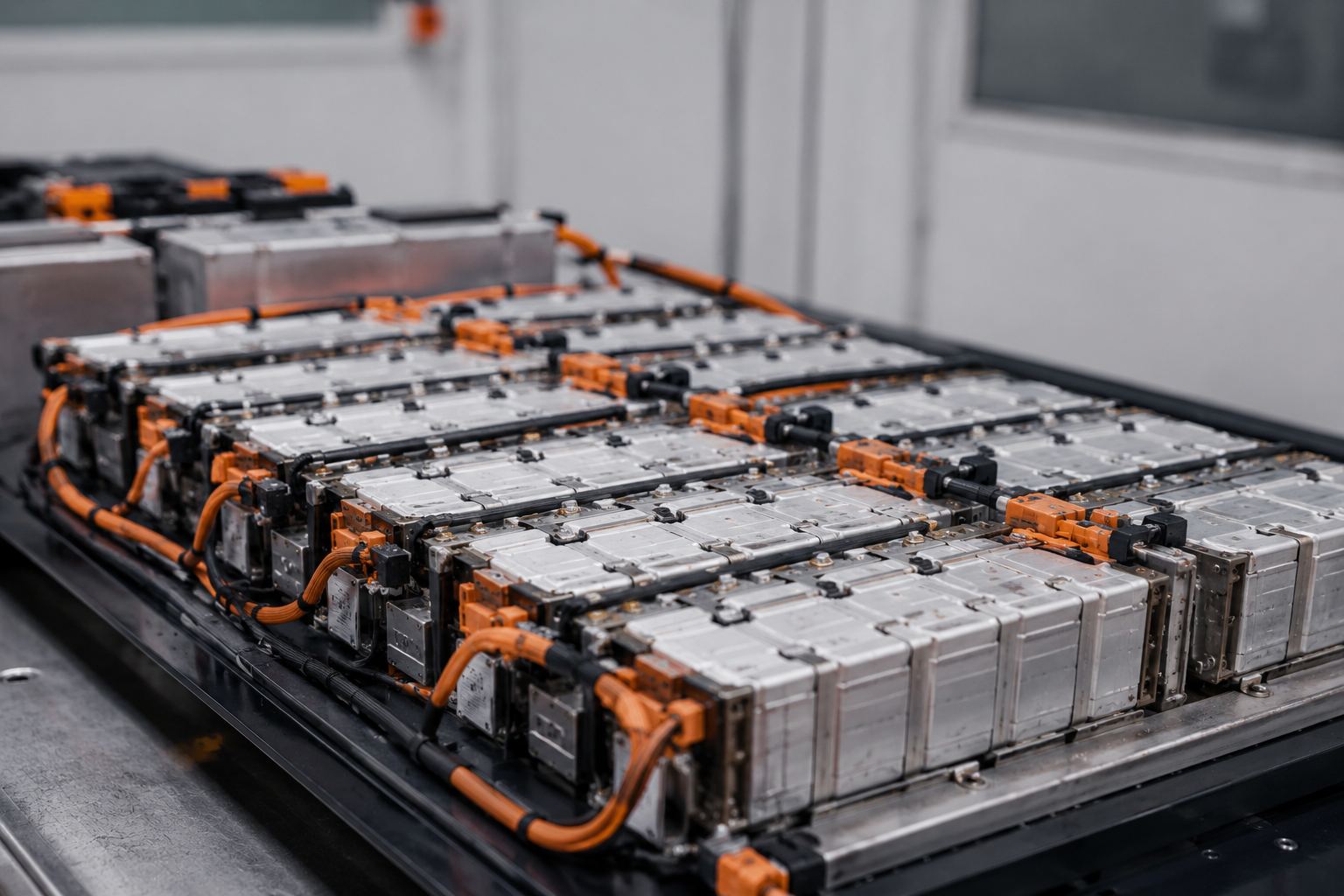
Lithium-ion battery capacity decay is an inevitable result of electrochemical material aging. During long-term cycling, the battery internally undergoes: loss of positive and negative electrode active materials , gradual electrolyte decomposition , continuous thickening of the SEI film , and increased internal resistance . As the number of cycles increases, the energy that the battery can release gradually decreases, ultimately manifesting as a decrease in capacity.
Energy storage systems typically consist of a large number of individual battery cells. When some cells degrade faster than others, the following issues can easily occur: widening voltage difference , SOC shift , decreased usable capacity , and premature system protection. Therefore, relying solely on BMS data is often insufficient to accurately determine the true health status, and verification using specialized testing equipment is necessary.
How to use a lithium battery charge/discharge tester to detect capacity decay?
What is the principle of capacity testing?
Professional lithium battery charge and discharge testers perform standardized charge and discharge tests on batteries through constant current and constant voltage control.
During the test, the following data can be recorded: actual charging capacity , actual discharging capacity , voltage curve , current curve , and temperature data . By comparing the actual capacity with the rated capacity, the state of health (SOH) can be accurately assessed.
What can a battery pack charge/discharge tester detect?
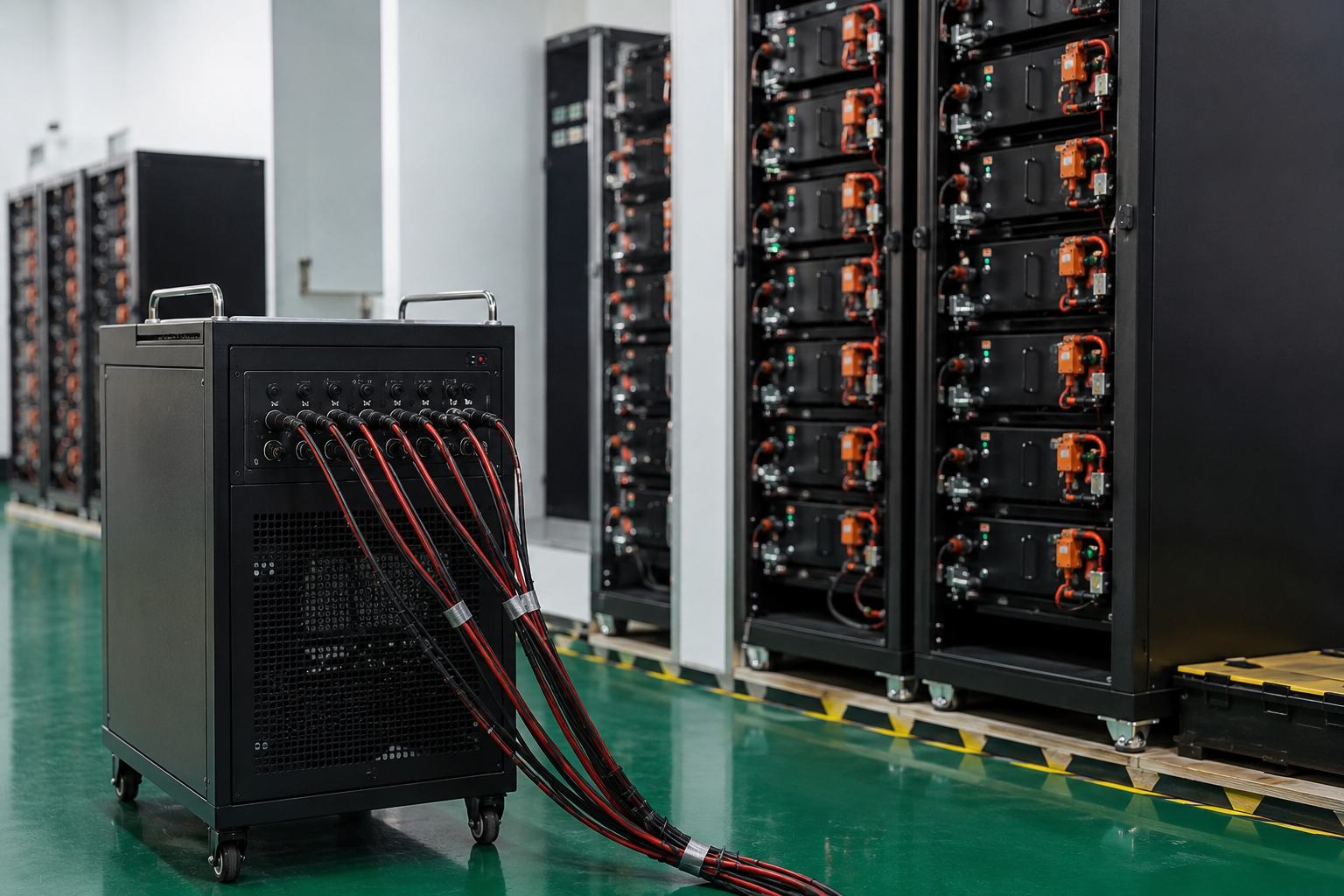
Modern battery pack charge/discharge testers can not only perform capacity testing, but also simultaneously analyze: state of charge (SOC) , voltage consistency , current variation , temperature variation , and cycle performance . Compared to traditional voltage detection methods, the test results are more comprehensive and reliable.
Why are professional battery charge/discharge testers more suitable for energy storage maintenance?
What features are more suitable for energy storage scenarios?
High-quality battery charge/discharge testers typically feature: high-precision constant current and constant voltage control , capacity testing , SOC adjustment , voltage equalization , data storage , and automatic report generation . These functions help maintenance personnel quickly identify abnormal batteries and improve maintenance efficiency.
Why are data management capabilities becoming increasingly important?
In large-scale energy storage projects, a single test cannot solve all problems. Equipment needs to support: historical data traceability , cloud data management , test report export , and lifecycle analysis . Continuous data accumulation helps companies establish a more scientific battery health management system.
How does Guheng Energy improve battery testing efficiency?
Guheng Energy has long focused on the research and development of new energy testing and maintenance technologies, and has launched the PBM series of portable battery maintenance equipment , which can realize functions such as capacity testing, SOC adjustment, and voltage balancing. The equipment is suitable for maintenance scenarios of single cells, battery modules, and battery packs.
The PBM-P series supports parallel charging maintenance, parallel discharging maintenance, and equalization maintenance modes, improving battery pack consistency through controlled charging and discharging management of individual cells. The equipment supports test data storage, analysis report generation, and remote management functions, effectively enhancing the maintenance efficiency of energy storage systems.
In actual energy storage projects, periodic capacity testing and equalization maintenance can promptly detect batteries with abnormal degradation, reduce the risk of unplanned downtime, and improve the available capacity and overall operational stability of the system.
Conclusion
Capacity decay is a normal phenomenon in the life cycle of lithium batteries, but scientific testing and proactive maintenance can significantly extend battery life.
Professional battery charge/discharge testers, lithium battery charge/discharge testers, and battery pack charge/discharge testers have become essential tools for energy storage operation and maintenance. Through capacity testing, SOC calibration, consistency analysis, and digital management, companies can achieve more accurate health assessments and maintenance decisions.
Guheng Energy continues to focus on the field of new energy testing and maintenance, providing efficient and accurate battery testing solutions for energy storage systems to help companies improve asset utilization and operational value.
FAQ
Q: How often should a battery charge/discharge tester check the capacity?
A: It is generally recommended that energy storage systems undergo capacity testing every 6 months and in-depth capacity assessment annually.
Q: What is the difference between a battery pack charge/discharge tester and a regular discharge device?
A: The battery pack charge/discharge tester can not only discharge, but also supports capacity testing, SOC adjustment, voltage equalization, and data analysis.
Q: In which scenarios are Guheng Energy’s PBM series equipment suitable?
A: Applicable to scenarios such as energy storage power stations, new energy vehicles, battery repair centers, and battery reuse enterprises.