

With the large-scale construction of industrial and commercial energy storage, grid-side energy storage, and new energy distribution and storage projects, the operational safety and asset return management of energy storage systems are becoming key concerns in the industry. For operators, energy storage battery packs are not only the most valuable core component of the entire system, but also directly determine the available capacity and return on investment of the energy storage power station.
However, many energy storage projects rely solely on BMS for online monitoring during operation, neglecting periodic in-depth testing and equalization maintenance. In reality, issues such as battery capacity degradation, decreased cell consistency, and voltage imbalance often require specialized battery pack charge-discharge testing equipment and battery pack equalization maintenance devices for accurate detection and handling.
What hidden risks do energy storage systems face?
Why do energy storage battery packs gradually lose performance?
During long-term cyclic operation, different cells in an energy storage battery pack will age to varying degrees due to differences in manufacturing tolerances, temperature environment, and operating conditions.
Common symptoms include: decreased actual capacity ; increased cell internal resistance ; poor voltage consistency ; reduced charge and discharge efficiency ; and abnormally increased temperature rise . As these problems accumulate, the effective capacity of the entire energy storage system will continue to decline.
Why is battery pack consistency so important?
Energy storage battery packs consist of a large number of cells connected in series and parallel. When a cell degrades first: charging reaches the cutoff voltage earlier; discharging triggers protection earlier; the amount of energy that can be released decreases; and the overall capacity of the pack is limited. This is what the industry commonly refers to as the “weakest link effect.”
Why is it necessary to periodically use battery pack charge/discharge testing equipment for inspection?
What can battery pack charge and discharge testing equipment achieve?
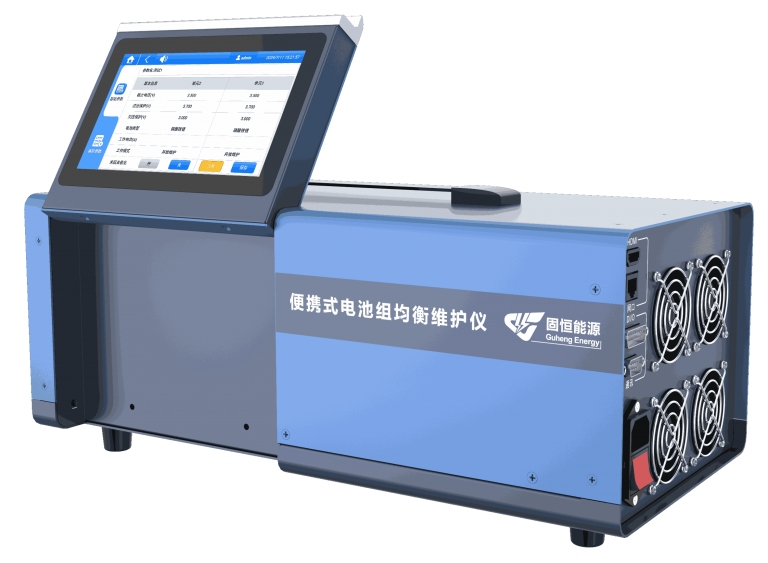
Guheng Energy’s PBM-B series battery pack charge and discharge maintenance instrument is specifically developed for battery packs with different voltage platforms and capacity levels. It can realize functions such as charge and discharge maintenance, capacity testing, voltage balancing, and communication expansion.
By standardizing the charge and discharge process, we can obtain: actual capacity (Ah) , output energy (Wh) , capacity retention rate , and state of health (SOH ). Compared to simple voltage detection, these data more accurately reflect the battery’s condition.
During the testing process, the following data can be collected simultaneously: cell voltage , battery temperature , SOC status , BMS communication data , and historical operating data , thereby quickly locating abnormal modules and abnormal cells.
Why are more and more energy storage projects emphasizing in-depth testing?
Regular inspections help companies : detect potential faults early ; reduce downtime risks ; increase energy storage returns ; extend battery life ; and reduce the cost of replacing entire battery packs . For large-scale energy storage projects, this preventative maintenance approach has become an industry trend.
How can a battery pack equalization and maintenance device improve the performance of an energy storage system?
What is a battery pack equalization and maintenance device?
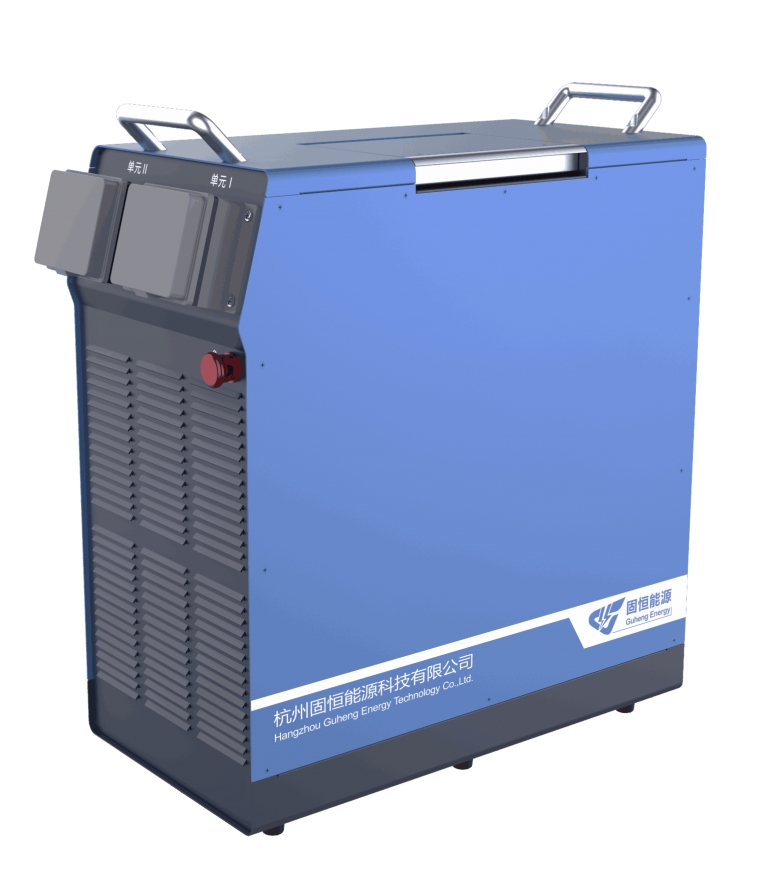
A battery pack equalization maintenance device is a specialized device for solving the problem of cell inconsistency.
Guheng Energy’s PBM-P series battery pack equalization maintenance instrument achieves SOC regulation and voltage difference equalization through controlled charging and discharging of individual cells, thus solving the problem of capacity reduction and shortened lifespan caused by voltage differences when batteries are connected in series. The PBM-P series employs unique equalization control technology, ensuring highly consistent maintenance results across all channels and supporting depolarization processing at the end of maintenance to improve equalization efficiency. The equipment supports three operating modes: parallel charging maintenance , parallel discharging maintenance , and equalization maintenance . It also supports independent, series, and parallel connections to meet the maintenance needs of different types of energy storage battery packs.
How can we achieve closed-loop management of detection and balance?
Standard operation and maintenance procedures typically include:
Testing phase: Capacity and health status data are obtained using battery pack charge and discharge testing equipment.
Analysis phase: Identify voltage difference anomalies and capacity-lagging cells.
Maintenance phase: Battery pack balancing maintenance equipment is used for balancing and repair.
Verification phase: Retest and confirm the maintenance effect.
How to choose the right battery pack charge and discharge testing equipment?
For energy storage operation and maintenance companies, the key areas to consider are: voltage coverage , current output capability , capacity testing accuracy , energy feedback capability , multi-channel support capability , and data analysis capability .
Conclusion
As the energy storage industry transitions from scale expansion to refined operation, the importance of energy storage battery pack health management is continuously increasing. Regularly using battery pack charge/discharge testing equipment for capacity testing and performance evaluation, combined with consistent maintenance using battery pack equalization equipment, can not only extend battery life but also improve the utilization rate of energy storage systems and project returns.
For energy storage operators looking to reduce operating costs and improve system reliability, establishing a full lifecycle management system encompassing “detection + analysis + balancing + verification” has become a crucial direction for energy storage asset management. With its comprehensive product portfolio and mature data management platform, Guheng Energy is providing professional and efficient battery testing and maintenance solutions for an increasing number of energy storage projects .
FAQ
Q: Can a battery pack equalization maintenance device increase the capacity of an energy storage battery pack?
A: Battery pack equalization maintenance devices can improve cell consistency and reduce capacity loss caused by voltage differences, thereby increasing the actual usable capacity of energy storage battery packs.
Q: In which scenarios is the Guheng Energy battery pack equalization and maintenance device suitable?
A: It can be widely used in energy storage battery packs, power battery modules, secondary utilization batteries, and new energy after-sales maintenance scenarios.
Q: How often should a battery pack charge/discharge testing device be used for testing?
A: It is generally recommended to conduct in-depth testing every 6 to 12 months. For high-frequency energy storage projects, the testing cycle can be shortened according to the operating conditions.