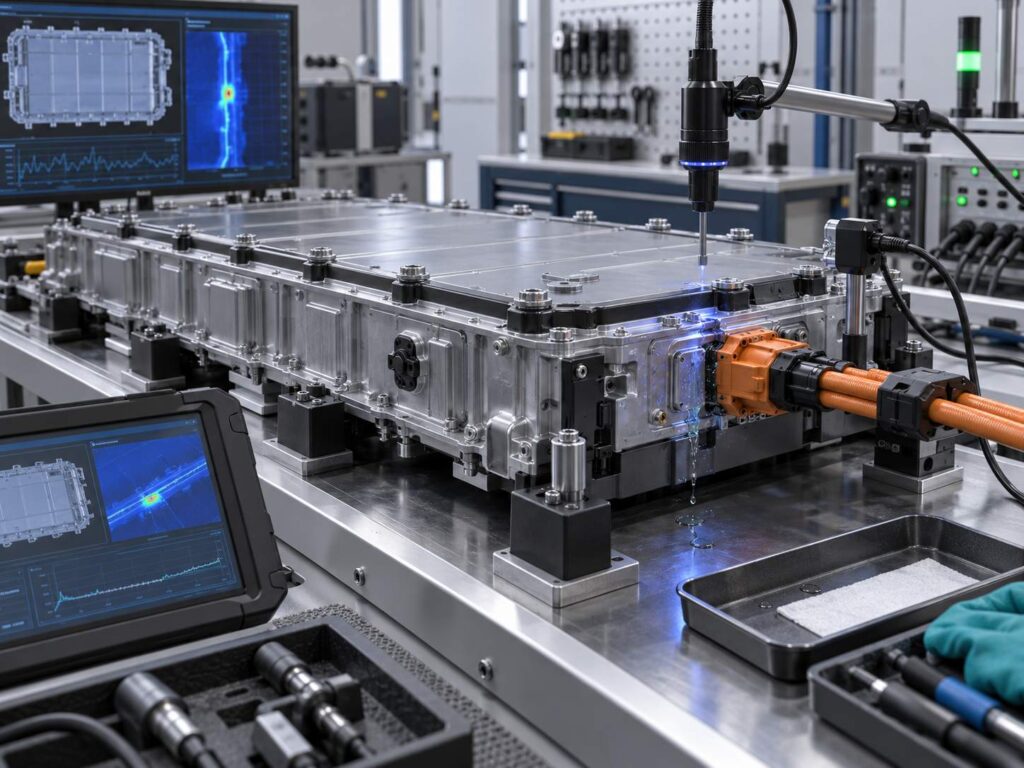

To choose a battery charge-discharge tester, define the pack or module voltage range, maximum current, power, test objective, BMS communication, and protection conditions first. Guheng Energy equipment can support capacity testing, controlled charge-discharge maintenance, process steps, reports, and communication options, but the selected configuration must match the actual battery.
Start with the Required Test Task
Capacity Testing and SOC Adjustment
A capacity test needs defined charge, rest, discharge, and cutoff conditions with full-process data recording. If the same equipment will also adjust SOC or perform maintenance, confirm the required operating modes and specify voltage, current, capacity, duration, and temperature limits in the test recipe.
Pack and Module Testing Are Different
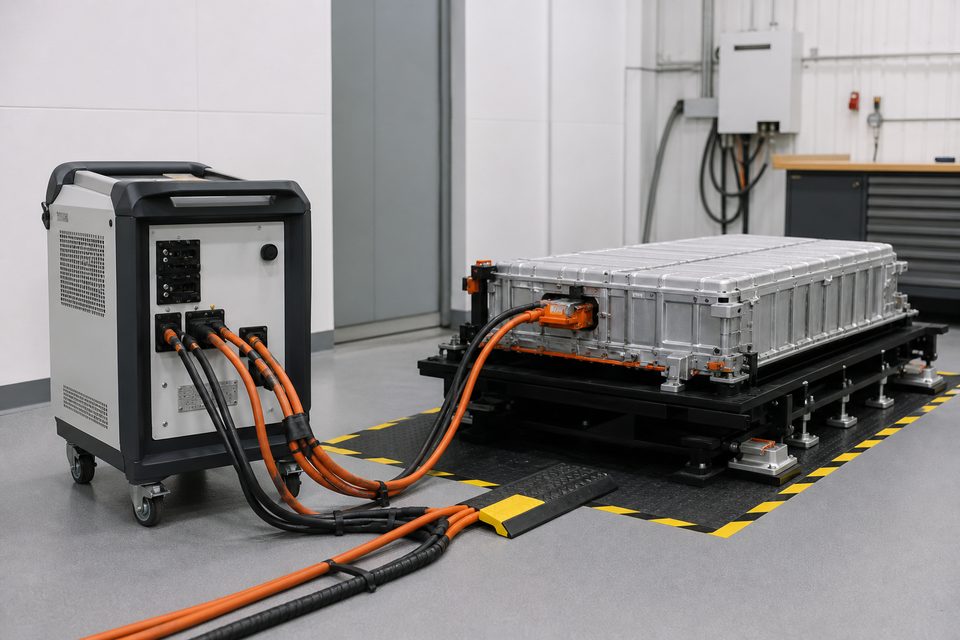
A complete pack and a module differ in voltage, connectors, BMS control, and isolation requirements. Even a tester with a wide output range still needs the correct harness, communication file, and operating procedure for each battery object.
Match Voltage, Current, and Power Together
Do Not Evaluate Maximum Voltage Alone
Maximum voltage establishes platform coverage, but control performance in the normal working range also matters. Supply the minimum operating voltage, nominal voltage, upper charge limit, and lower discharge limit, then confirm available current and protection behaviour across that range.
Power Limits the Usable Current
A maximum-current figure does not mean the same current is available continuously at every voltage, because power limits the operating point. Provide typical voltage-current combinations and duration so the supplier can state simultaneous capability instead of three unrelated maximum values.
BMS Communication Enables Complete Pack Testing
CAN Communication and Contactor Control
Relevant Guheng Energy equipment can obtain battery information through CAN and control contactors inside the pack. Buyers should prepare protocol messages, wake-up logic, handshake conditions, and fault handling, while confirming whether protocol adaptation is standard or customized.
Cell Voltage and Temperature Acquisition
Pack voltage alone may not reveal a cell reaching its cutoff limit early. Expanded cell-voltage and temperature acquisition can support protection and reporting, but the channel count, harness, connector definition, sampling method, and data synchronization must be specified.
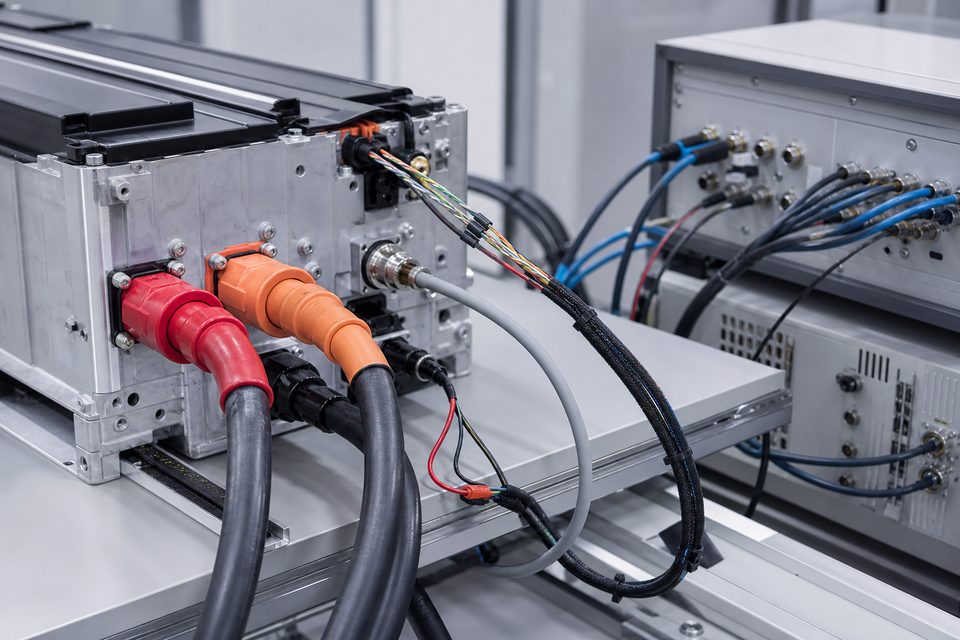
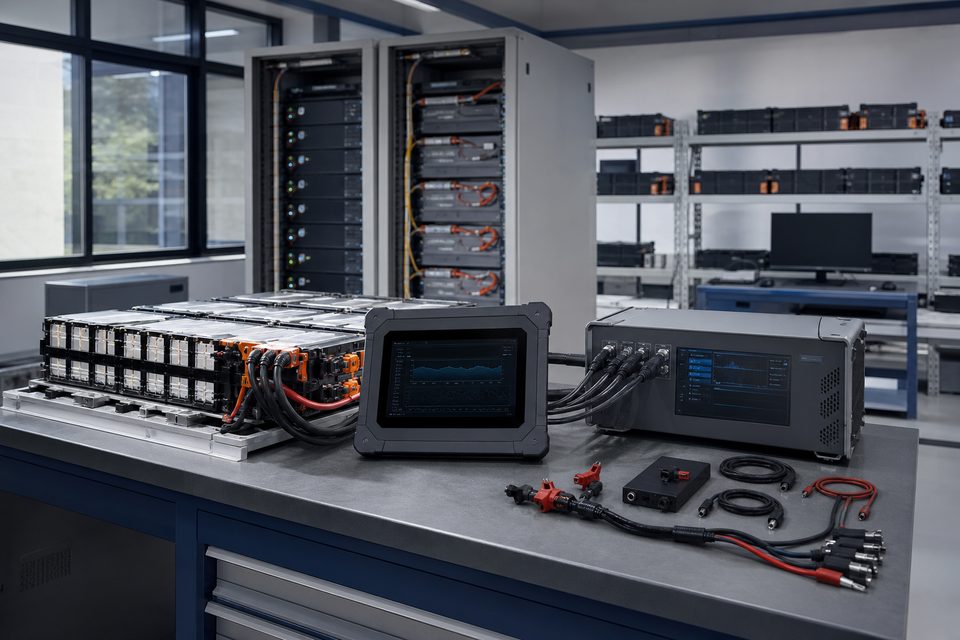
The Guheng Energy maintenance product centre covers equipment for packs, modules, and individual cells. The portable battery pack charge-discharge maintenance equipment combines controlled charge-discharge operation with data acquisition and reporting functions.
Require Multiple Cutoff and Protection Layers
Step Cutoffs and Global Limits
The test recipe should contain both step-level cutoffs and global protection. Available conditions include pack voltage, cell voltage, capacity, SOC, and run time. Acceptance testing should trigger each relevant condition and verify controlled stopping and data retention.
Connection Errors and Power Interruption
Service environments must also consider reverse, incorrect, or missing connections, overcurrent, and AC power interruption. Hardware protection, emergency stop, automatic data saving, and recovery procedures should be included in acceptance so that an interrupted test does not leave an unknown battery state.
Evaluate Reports and Networked Data
Local storage, report generation, and cloud interaction are valuable for multi-site or batch maintenance only when data can be queried, exported, and traced. Define report fields, file formats, naming, user permissions, and upload interfaces before confirming the equipment configuration.
Guheng Energy supplies new-energy testing and maintenance solutions for professional service workflows. The technical agreement should attach the target battery parameters, communication information, and required test process.
Where the Guheng Energy Solution Fits
Relevant Guheng Energy equipment can serve EV after-sales testing, battery pack and module maintenance, capacity verification, and data-managed workflows. Service centres should emphasize portability and standardized recipes, while energy-storage or batch-testing buyers should focus on power, continuous duty, energy handling, and data interfaces.
Conclusion
A battery charge-discharge tester should be specified as one system that combines range, power, BMS integration, sensing harnesses, cutoff protection, and reporting. Guheng Energy can provide equipment and harness options, but acceptance should use representative batteries and the intended test process.
FAQ
Q: What is the difference between a tester and a maintenance unit?
A: A tester normally emphasizes measurement and data recording, while a maintenance unit may also adjust SOC, balance voltage, or run controlled charge-discharge processes. The names can overlap in the market. Compare actual range, power, communication, cutoff conditions, operating modes, and report functions instead of relying on the product name.
Q: How should voltage, current, and power be matched?
A: List the minimum and maximum working voltage, typical current, required duration, and target rate, then check whether the power rating allows those values simultaneously. Maximum current is usually not available continuously at every voltage. Request capability at representative operating points together with cooling and duty-cycle conditions.
Q: Why is BMS CAN communication important?
A: Complete pack testing may require SOC, cell-voltage, temperature, and fault information, together with control of internal contactors. CAN lets the tester coordinate with the BMS, provided the protocol and permissions match. Include a DBC file or equivalent messages and define the supplier’s protocol-adaptation responsibility.
Q: What technical information is needed before purchase?
A: Prepare battery voltage range, capacity, allowable current, connector definition, BMS protocol, cell-sensing requirements, process steps, cutoff limits, site power, and report format. For multi-site operation, also define permissions, networking, data platform, recipe distribution, operator training, and after-sales support expectations.