
Power batteries play a crucial role in new energy vehicles, directly impacting the vehicle’s range and safety. However, with increased usage time, battery packs may experience performance degradation and capacity imbalances, leading not only to reduced range but also potential system failures. Therefore, accurate diagnostic technology is essential for ensuring battery reliability. Guheng Energy focuses on developing diagnostic, testing, and related maintenance equipment, data, and service processes for new energy vehicles. Its battery pack charge/discharge testing equipment provides objective data for power battery condition assessment, fault location, and maintenance decisions.
Diagnostic Needs and Challenges of Power Batteries for New Energy Vehicles
The key role of power batteries in new energy vehicles
The power battery is the core energy source of new energy vehicles. It not only provides power but also affects the overall performance and safety of the vehicle. Over time, battery performance may degrade, leading to capacity imbalances, which directly impacts the vehicle’s range. Furthermore, issues such as poor contact in connectors, aging wires, and abnormal voltage acquisition can also cause system failures. Therefore, accurate diagnostic technology is a crucial element in ensuring battery reliability.
Common types of power battery failures
Common fault types during the use of power batteries include single-cell capacity decay and increased internal resistance, poor contact of connectors or aging of wires, abnormal voltage acquisition and BMS data drift, and abnormal temperature caused by thermal management system failure. If these problems are not addressed in a timely manner, they will seriously affect the normal operation of new energy vehicles.
Functions and Principles of Battery Pack Charge and Discharge Testing Equipment
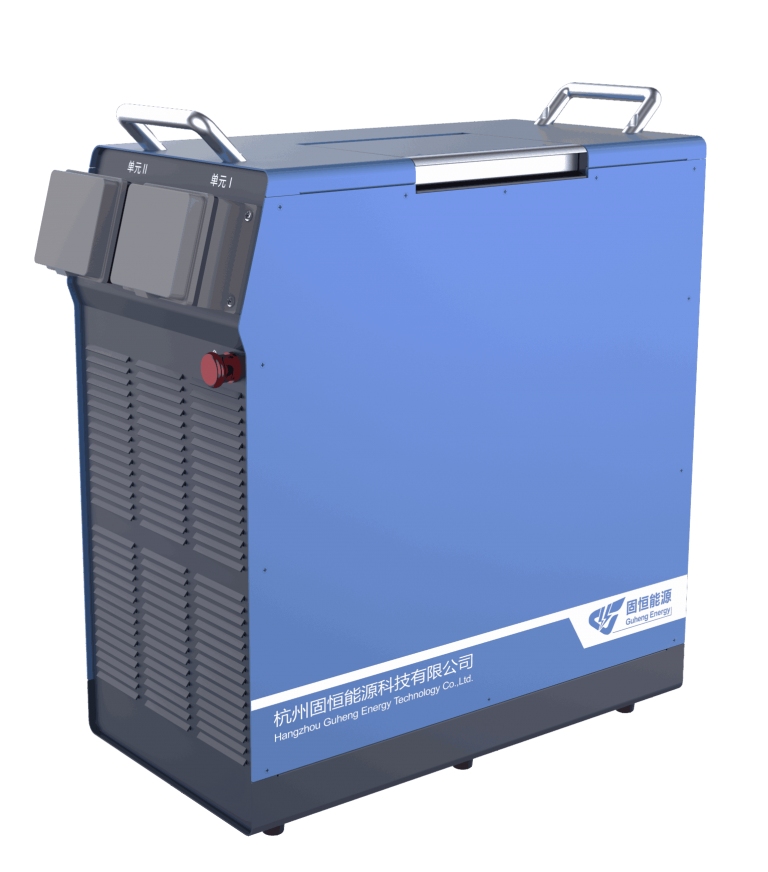
Core components of the equipment
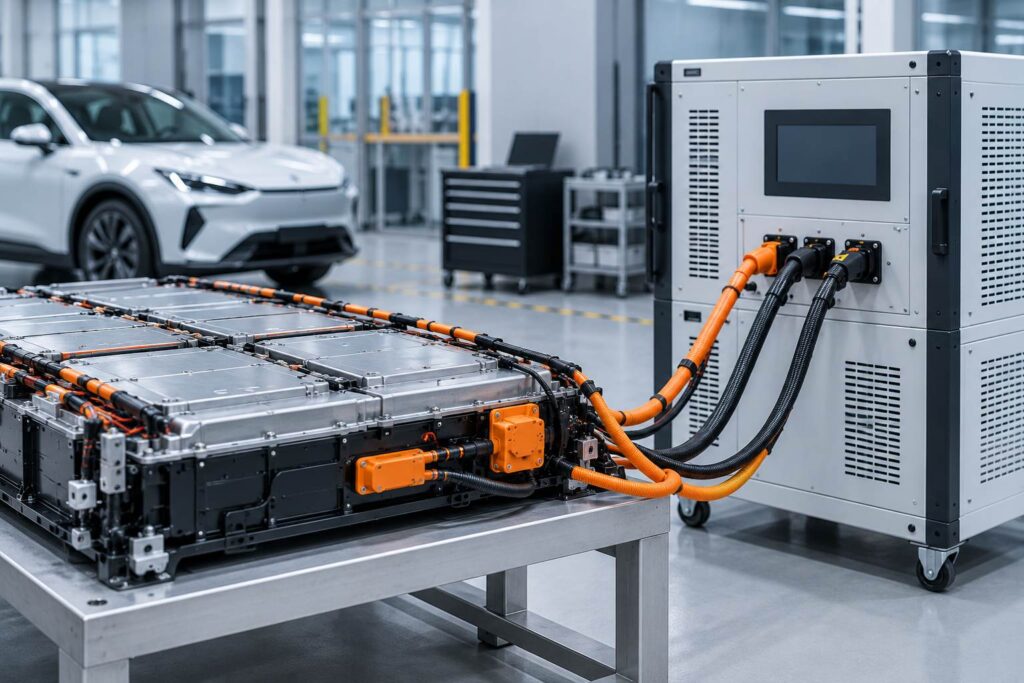
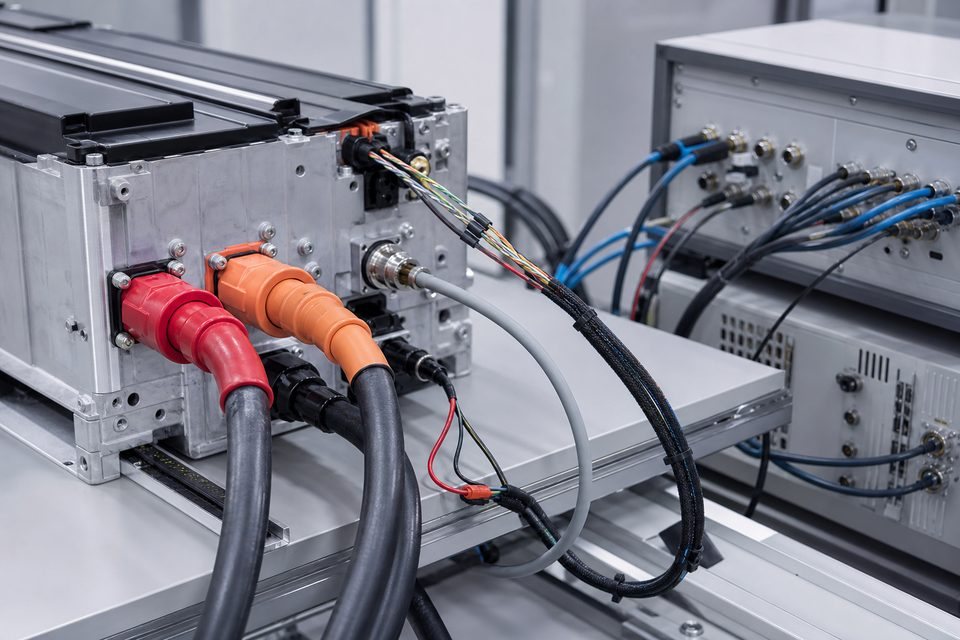
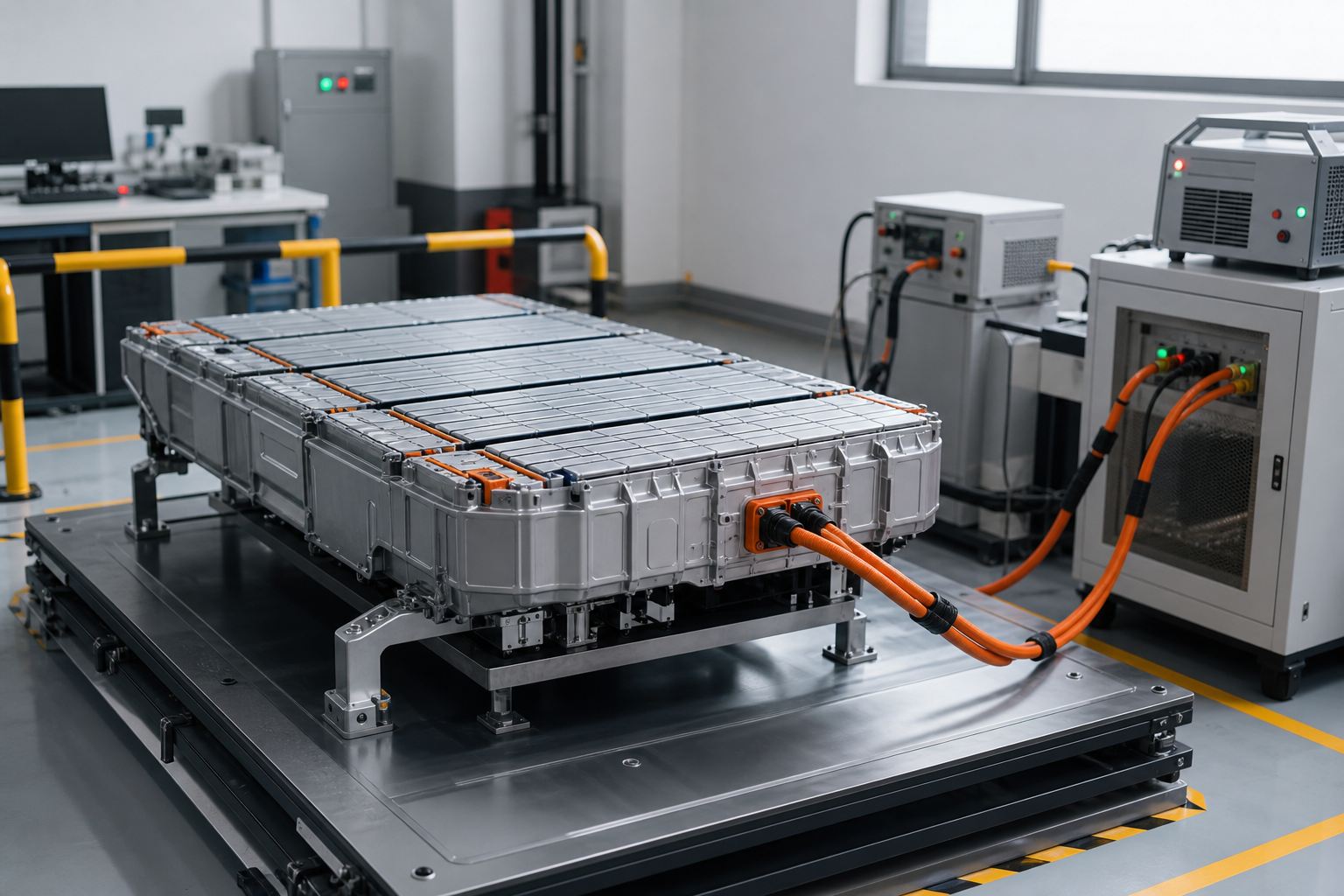
The battery pack charge/discharge testing equipment consists of a main control module, a power unit, and test channels. The main control module is responsible for data acquisition, control logic, and communication interfaces; the power unit supports constant current, constant voltage, and pulse charge/discharge modes; and the test channels can independently control multiple groups of cells to achieve parallel testing. This design enables the equipment to perform diverse tests efficiently.
Working principle and testing process
This device simulates vehicle operating conditions by precisely controlling the charging and discharging process, and monitors the changing trends of parameters such as voltage, current, and temperature in real time. The data analysis module can automatically identify abnormal fluctuations and generate diagnostic reports, providing strong support for troubleshooting.
The Application Value of Battery Pack Charge and Discharge Testing Equipment in Fault Diagnosis
Quantitative assessment of capacity decay
By calculating the actual capacity change rate using cyclic charge-discharge curves, it is possible to compare it with the design capacity to determine whether performance degradation issues exist. This quantitative assessment method can effectively identify battery cells that require maintenance or replacement.
Analysis of changes in internal resistance and health status
The internal resistance of a single cell can be determined by using the AC impedance method or the DC internal resistance method. An abnormal increase in internal resistance can indicate electrode aging or interface film damage, thereby helping to determine the health status of the cell.
Imbalanced State Identification and Equilibrium Strategy Optimization
By detecting voltage differences between individual units, imbalanced units can be identified, and proactive balancing strategy recommendations can be provided to extend the overall lifespan. This strategy optimization is of great significance for improving the stability of the entire power system.
The Role of Battery Pack Charge/Discharge Maintenance Device in System Maintenance
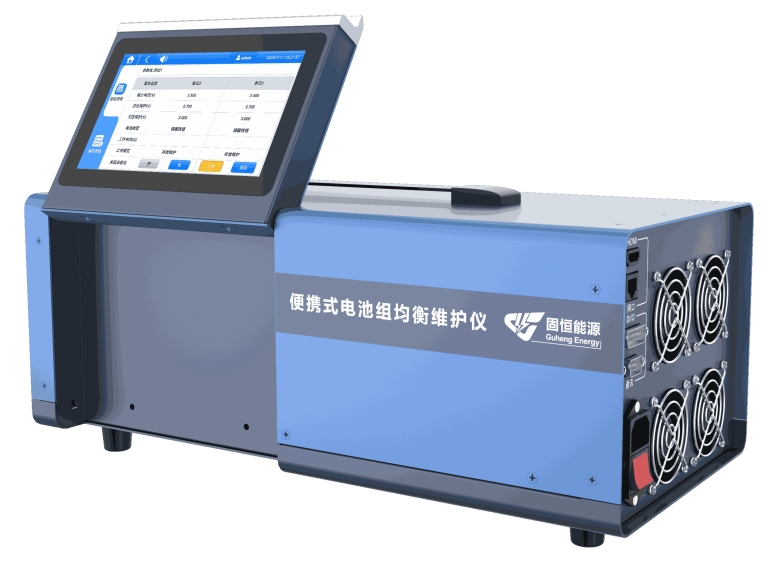
Routine maintenance and preventative testing application scenarios
During vehicle maintenance, periodic capacity testing can quickly identify potential problems and allow for preventative replacement or repair. This not only improves vehicle operating efficiency but also reduces maintenance costs.
Collaboration mechanism with BMS system
By acquiring real-time BMS data through the communication interface for cross-validation, the SOC/SOH estimation model can be optimized, improving diagnostic accuracy. This collaborative mechanism makes the entire system more intelligent and efficient.
Key Technical Points and Precautions in Application Practice
Testing environment and safety control requirements
To reduce the interference of external factors on test results, it is necessary to maintain constant temperature conditions and set up overcurrent and overvoltage protection mechanisms to prevent equipment damage or safety accidents.
Data acquisition accuracy and calibration methods
The sensor is calibrated regularly to ensure the stability of measurement accuracy, while a high-resolution sampling system is used to capture transient response characteristic signals to ensure accurate data acquisition.
Development Trends of Diagnostic Technology for Power Batteries in New Energy Vehicles
The development direction of intelligent testing platforms
The future development direction is to introduce AI algorithms to realize data-driven health prediction models, while simultaneously enabling remote monitoring and cloud-based analysis to improve operational efficiency. This will greatly promote the development and application of new energy.
Construction Ideas for a Multidimensional Integrated Diagnostic System
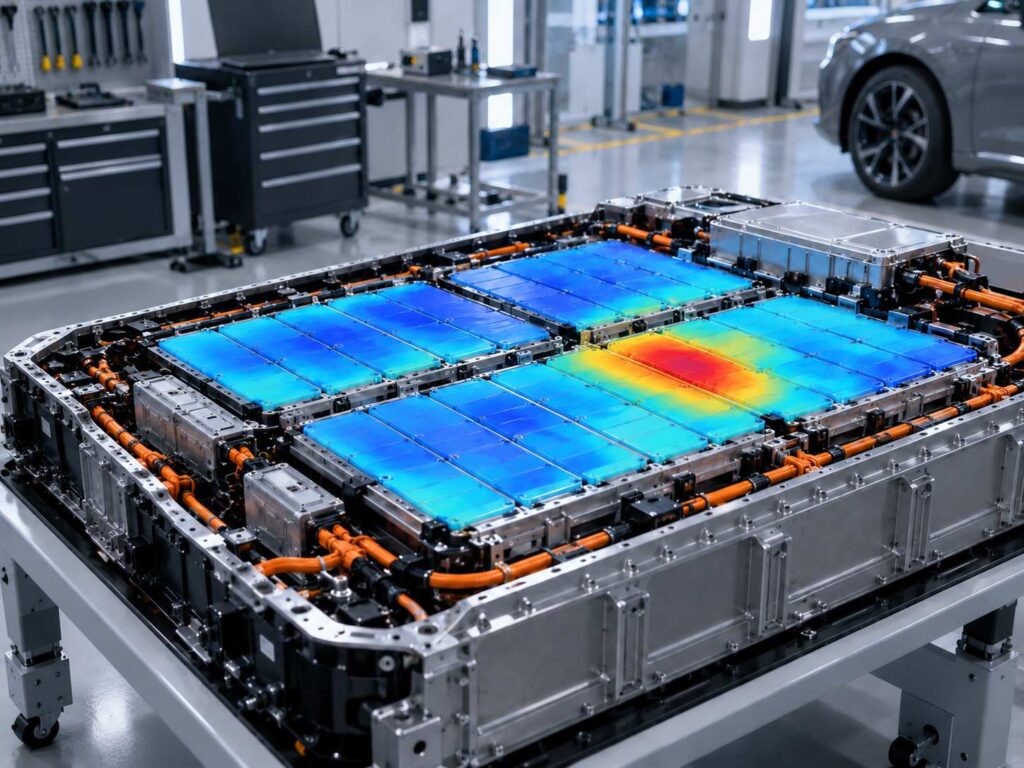
By combining charge and discharge test results with thermal imaging, electrochemical analysis, and other methods, a comprehensive diagnostic model can be built to accurately locate and predict complex faults, providing new energy vehicle owners with a more reliable and convenient service experience.
In summary, the advanced equipment provided by Guheng Energy, such as the portable battery pack charge/discharge maintenance device, not only improves the accuracy of fault diagnosis for new energy vehicle power batteries but also provides strong support for routine maintenance. Through continuous innovation and technological upgrades, these products will play an even more important role in the future, safeguarding the development of the new energy vehicle industry.
If you are looking for professional equipment for testing, fault diagnosis, and maintenance of power batteries for new energy vehicles, please contact Guheng Energy. We will provide you with selection advice and supporting solutions for battery pack charge and discharge testing equipment based on vehicle model, battery parameters, and actual application scenarios .
FAQ
Q: How to choose the battery pack charge and discharge testing equipment from Guheng Energy?
A: First, clarify the voltage platform, capacity range, charge/discharge requirements, usage scenarios, and data management requirements of the device under test, then verify the specific model’s technical parameters and configuration. It is recommended to provide Guheng Energy with vehicle model, battery information, and testing targets, and have professionals assist with model selection; the final selection should be based on the product manual and technical agreement.
Q: What kind of support can Guheng Energy provide?
A: According to its official website, Guheng Energy provides equipment and professional solutions for the diagnosis, testing, and maintenance of new energy vehicles, and has established a research and development, quality management, and after-sales service system. Specific product functions, delivery scope, training, and service content should be subject to the plan or contract confirmed by both parties.
Q: Do Guheng Energy products support remote monitoring?
A: Yes, some models support extended networking capabilities, enabling remote monitoring and cloud data storage, thus improving management efficiency.
Q: How do I store and export data from the device?
A: Data can be stored via a USB flash drive interface, historical data is automatically saved at fixed intervals, and can be easily exported for subsequent analysis.