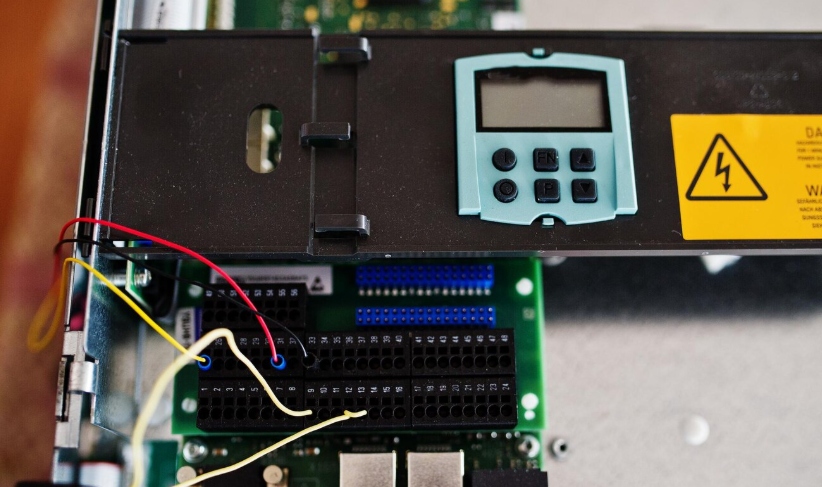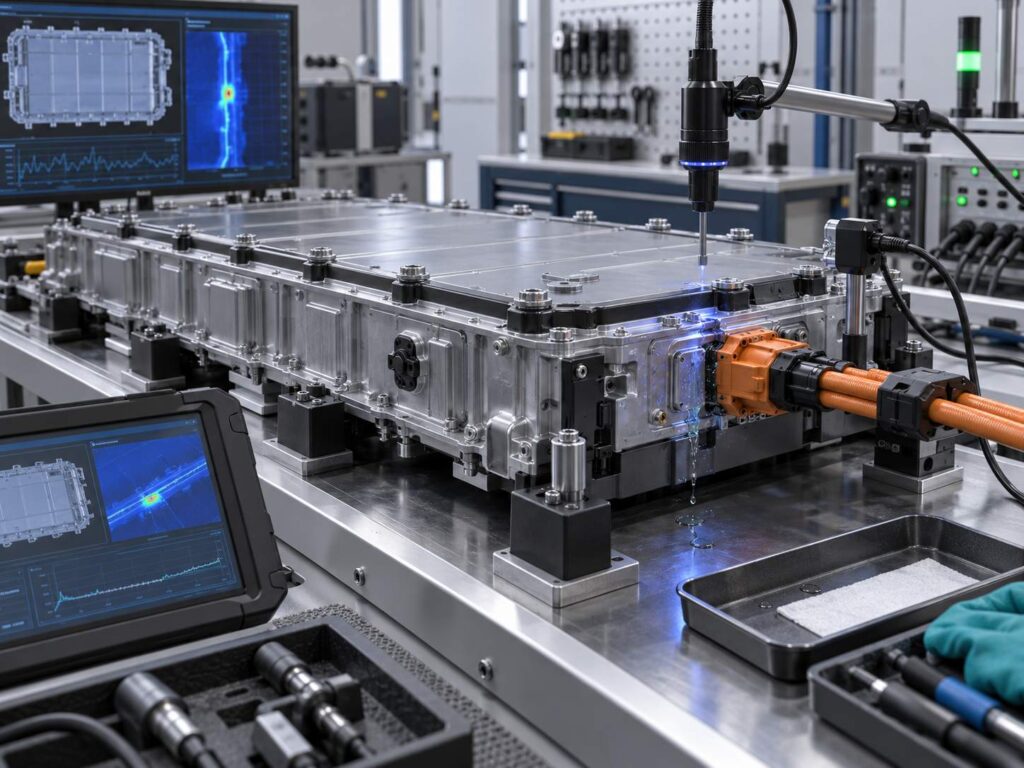

With the large-scale commercialization of new energy vehicles and energy storage systems, the safety and lifespan of battery packs have become core concerns for operators. However, whether it’s an electric heavy-duty truck fleet or a large energy storage container, excessive pressure differential in the battery pack remains the primary cause of exacerbated “weakest link” effects, drastic range reduction, and even thermal runaway. How to fundamentally manage pressure differentials and ensure high consistency throughout the battery pack’s entire lifecycle is a crucial challenge for every B2B operations and maintenance manager.
Pain Point Uncovering: The “Hidden Killer” Behind Pressure Differential
In practical B2B applications, such as bus companies or battery swapping stations, there is often a dilemma of vehicle mileage decreasing sharply year by year. We once encountered a case: a logistics fleet that had been in operation for two years experienced multiple vehicles “shutting down” when charging to 70%. Upon testing, the voltage difference between individual cells in the battery pack was as high as 180mV (the industry standard for a healthy battery is usually less than 30mV).
This imbalance is not accidental. As charge-discharge cycles increase, the inconsistency in the capacity decay rate of the battery cells and the inconsistency in the increase of DC internal resistance will gradually accumulate. If left unaddressed, it may result in “having power but not being able to discharge,” or even more serious safety accidents caused by overcharging and over-discharging.
Solution: From “Fuzzy Management” to “Precise Termination”
Solving differential pressure problems cannot rely solely on the passive balancing of the BMS; it requires the introduction of professional maintenance and testing instruments. Guheng Energy, as an equipment manufacturer deeply rooted in the new energy aftermarket maintenance field, provides a complete set of practical tools, from battery capacity testing to high-precision voltage acquisition. Through a closed-loop process of “diagnosis-intervention-verification,” it completely eliminates the hidden dangers of differential pressure.
Precise Diagnosis: High-Precision Battery Voltage Detection and Acquisition
To solve the differential pressure problem, accurate measurement is paramount. For battery packs connected in series and parallel, traditional multimeters are extremely inefficient and prone to errors when measuring each string individually. We must introduce a professional-grade battery voltage acquisition instrument.
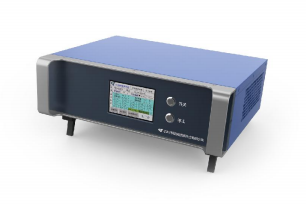
In real-world operation and maintenance scenarios, such as quarterly inspections of energy storage stations, technicians use Guheng Energy’s BWT series battery voltage acquisition instrument . This device features multi-channel parallel acquisition capabilities, instantly capturing the static and dynamic voltages of each individual battery cell. Through a 2.8-inch high-definition LCD screen, maintenance personnel can directly perform battery voltage testing on-site within the battery cluster, quickly locating cells with abnormal voltage. Its high-precision sensors ensure the absolute reliability of the battery voltage acquisition instrument’s data, effectively eliminating misjudgments caused by differential voltage in the wiring harness or loose connections. This data forms the foundation for subsequent balancing operations.

Capacity verification: Eliminating “pseudo-normal” batteries
Voltage data alone can sometimes be deceptive. Some batteries may have normal voltage under static conditions, but their voltage will drop sharply when under load, which is a sign of severe capacity degradation.
Therefore, battery capacity testing is an essential part of differential pressure maintenance. For example, when handling battery packs returned to the factory for a certain brand of vehicle due to large differential pressure, the maintenance station uses our equipment to conduct independent charge-discharge tests on suspected faulty cells. Through battery capacity testing, those outdated batteries that have “normal voltage but significantly reduced capacity” are accurately identified. Only by combining capacity testing with voltage detection can ineffective equalization be avoided, ensuring that every maintenance service is accurate and effective.
Active intervention: Efficient repair of portable maintenance devices
After diagnosing the problem, how can it be repaired efficiently? Guheng Energy’s portable 48V micro-hybrid battery pack maintenance device provides a B2B solution. This device is specifically designed for on-site maintenance and employs active balancing technology, achieving energy transfer efficiency far exceeding that of passive balancing.
During a batch maintenance operation at a car-sharing operation center, technicians used a portable 48V mild hybrid battery pack maintenance device to perform offline maintenance on dozens of chassis battery packs. This device not only monitors the dynamic changes in battery voltage during testing in real time, but also uses battery capacity testing logic to perform “re-matching after removing faulty batteries” for the entire battery pack. Through several cycles of maintenance, the overall voltage difference of this batch of battery packs decreased from over 80mV initially to below 15mV, and the vehicle’s range was restored to over 90%.
Technological Highlights: Solid Energy’s Technological Moat
Choosing Solid Energy as our supplier means choosing stability and data accuracy. Our equipment boasts the following technological highlights:
- High-precision underlying architecture: The BWT series battery voltage data acquisition instrument has a measurement accuracy of up to ±1mV, far exceeding the industry standard, ensuring that the battery voltage test results have auditable and calibration-level validity.
- Intelligent Algorithm: The device has a built-in SOC (State of Charge) and SOH (State of Health) correction algorithm, which makes battery capacity testing no longer limited to complex manual calculations, and the report can be exported with one click.
- Military-grade durability: Designed for high-frequency B-end use scenarios, all interfaces and housings are reinforced to ensure stable operation even in the harsh electromagnetic environment of a repair shop.
Application value: Reduce TCO and increase return on assets
For brand owners, operators, and maintenance chain organizations, introducing Guheng Energy’s testing and maintenance system means a direct reduction in the TCO (Total Cost of Ownership) of battery assets.
Extended lifespan: Through regular voltage monitoring and active balancing, the battery pack lifespan can be extended by 20%-40%.
Reduce after-sales costs: During the out-of-warranty phase, accurately locate the “root cause of lagging cells and pressure difference” and repair them on-site with a portable 48V micro-hybrid battery pack maintenance instrument to avoid the huge expense of scrapping the entire pack.
Safety safeguards: Eliminate the risk of thermal runaway caused by pressure differentials and establish a brand safety image.
In the new energy battery aftermarket, repair should not be a “black box operation,” but rather a data-driven precision medicine. Guheng Energy is not only an equipment supplier, but also your practical partner in solving battery differential pressure problems.
Contact Us
Want to make your battery maintenance business more professional? Contact Guheng Energy now for a customized solution.
FAQ
Q : What voltage difference in a battery pack is considered excessive?
A: For lithium iron phosphate or ternary lithium battery packs, it is recommended to keep the static voltage difference below 30mV; if it exceeds 50mV, the vehicle’s range will be noticeably reduced, and it is recommended to perform equalization maintenance immediately.
Q: What types of batteries does Guheng Energy’s battery voltage acquisition instrument support?
A: The BWT series battery voltage acquisition instrument from Guheng Energy is fully compatible with lithium iron phosphate, ternary lithium and lead-acid batteries, and supports automatic voltage level recognition for 2V, 6V and 12V cells.
Q: How much longer can a portable battery life be extended by using a portable battery maintenance device?
A: Based on feedback from numerous B-end customer application cases, regularly using the SolidEnergy equalization maintenance instrument for capacity testing and differential pressure maintenance can typically extend the effective lifespan of battery packs by 20% to 40%.