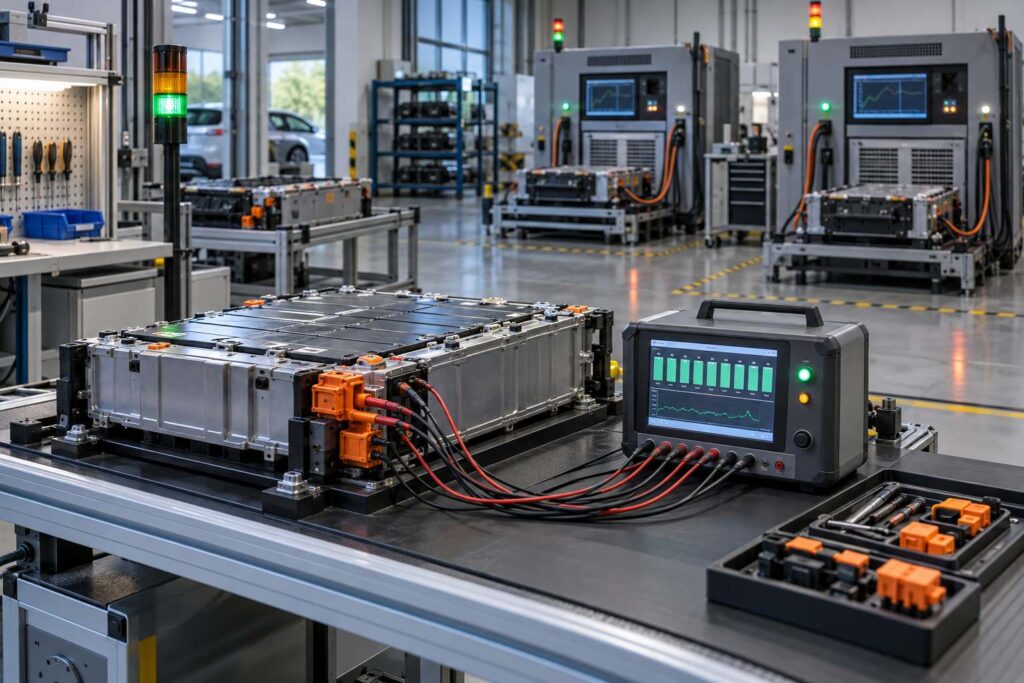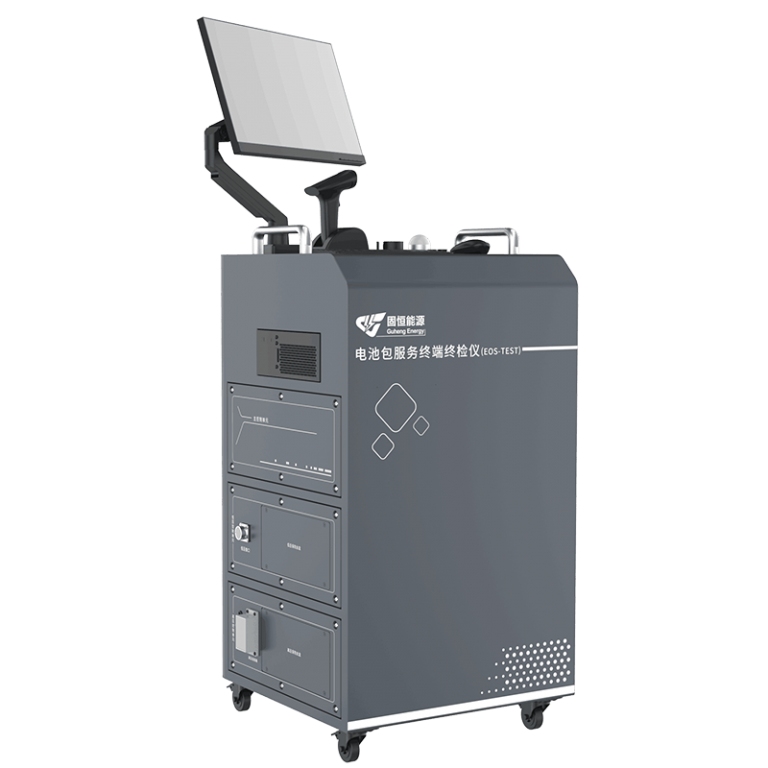

A battery voltage acquisition instrument helps service and production teams find module wiring errors, unusual cell-voltage spread, and unreliable temperature sensing before those issues confuse later diagnostics. The practical sequence is simple: confirm wiring and consistency first, then move to deeper charge-discharge testing or fault analysis with data that can be trusted.
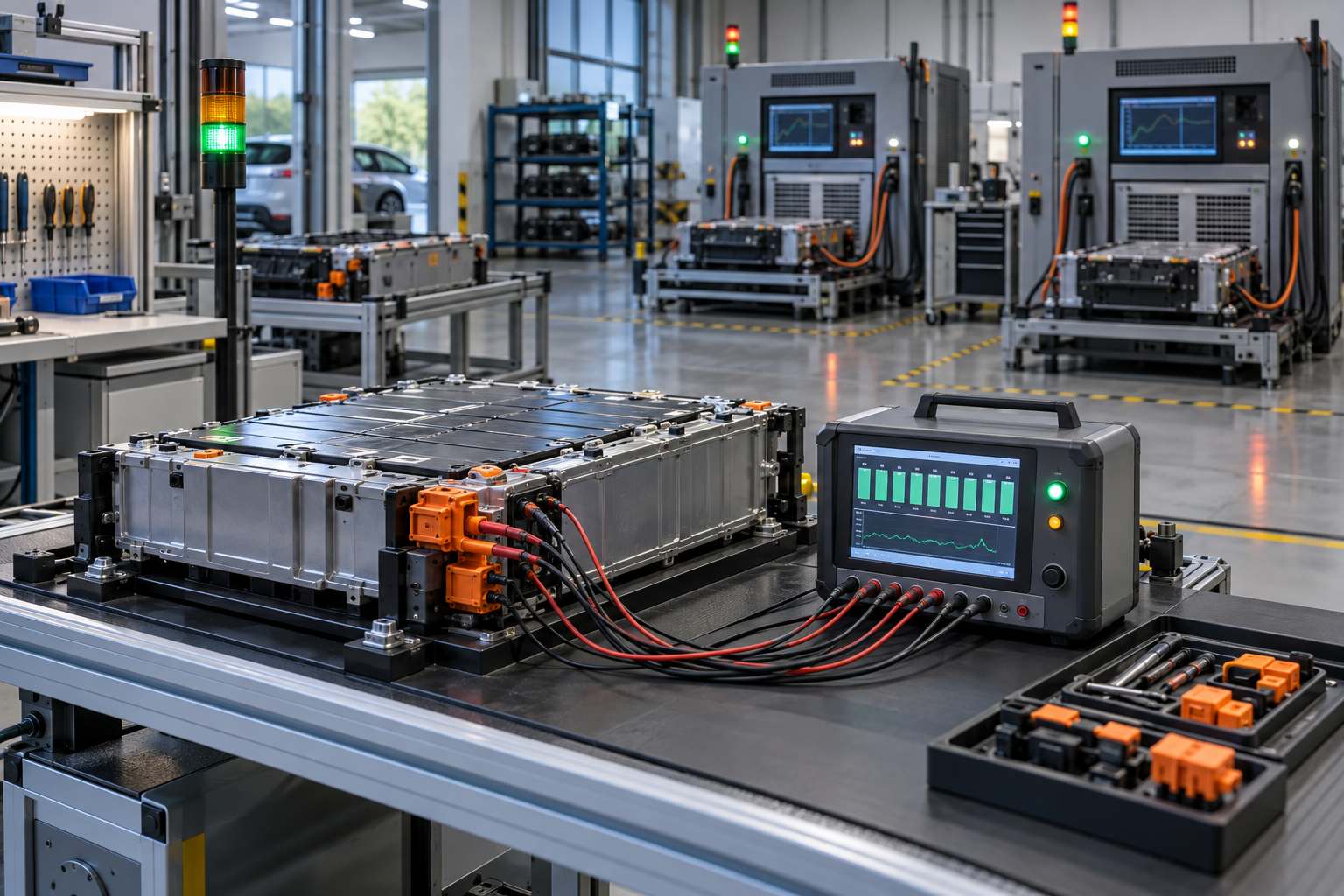
What a Battery Voltage Acquisition Instrument Solves
A sensing harness carries cell-voltage and temperature signals from a module. When terminal positions, series order, or connector relationships are wrong, readings may still appear on screen but no longer represent the intended cells, making alarms and repair decisions unreliable.
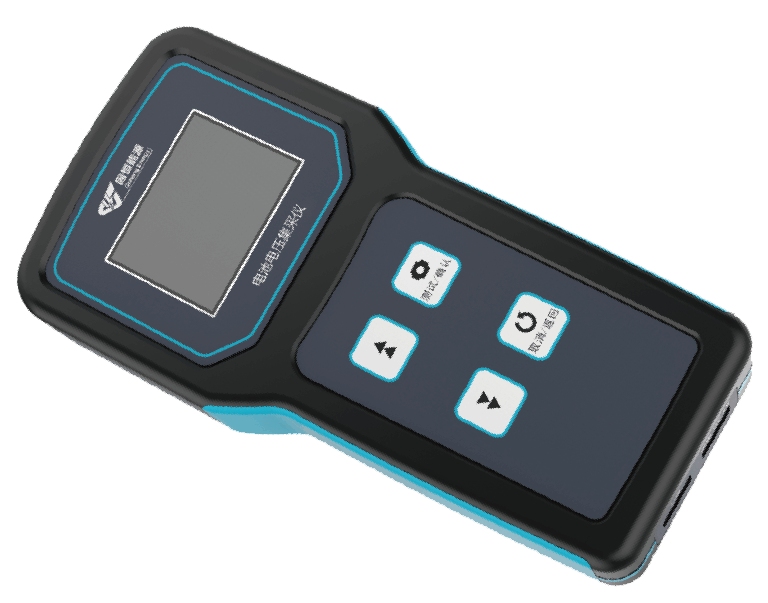
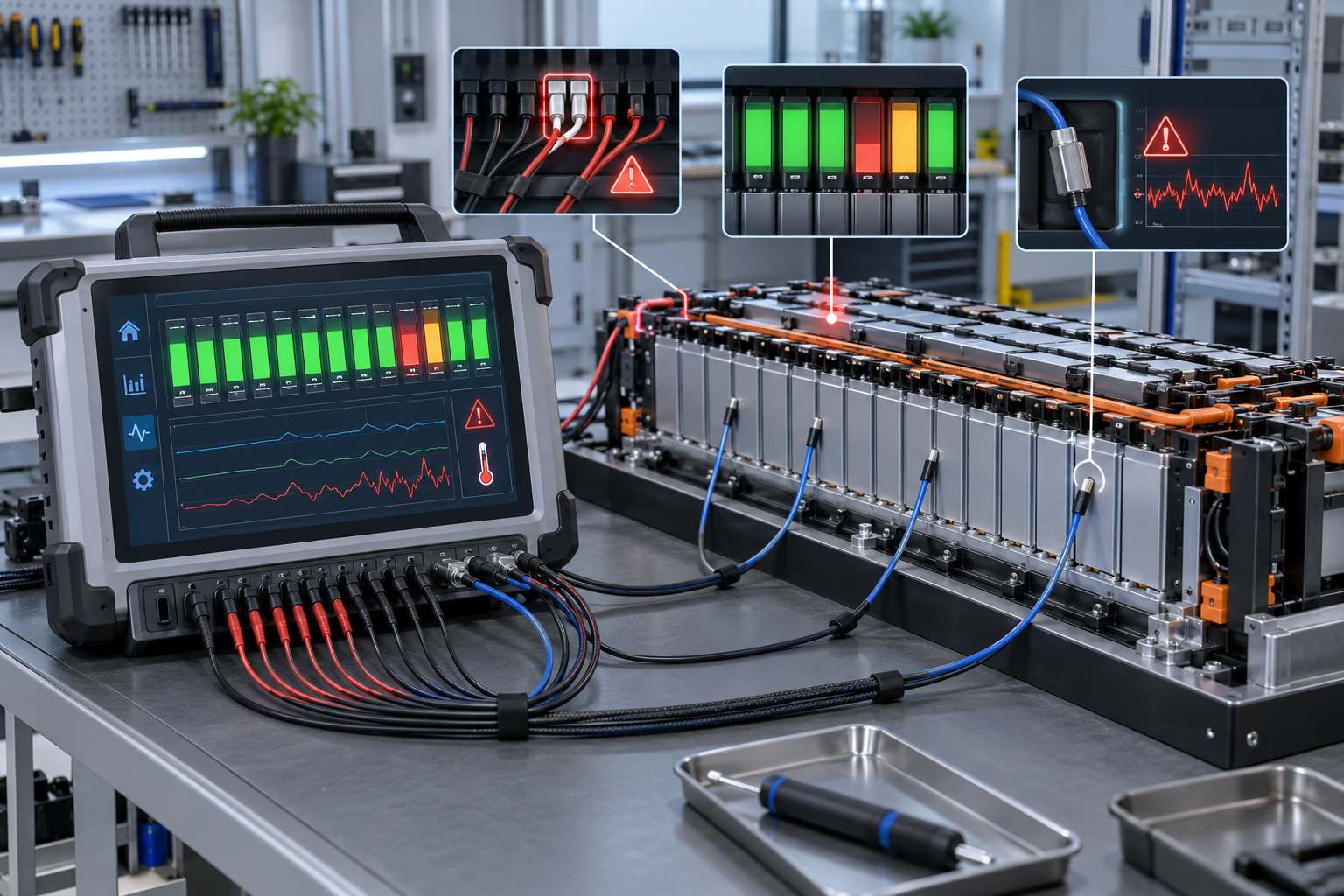
A battery voltage acquisition instrument does not replace every test. It brings wiring order, cell-voltage difference, temperature difference, and temperature-probe condition into one field check. Guheng Energy’s BWT series supports module harness sequence inspection together with configurable thresholds and audible warnings for abnormal results.
Why Module Wiring Cannot Be Confirmed by Pack Voltage
A Normal Pack Voltage Can Hide a Wrong Channel
Pack voltage is an aggregate value; it cannot prove that each sensing channel is connected to its intended cell. When adjacent channels are crossed, the displayed values may still look plausible, while balancing, warning logic, and later repair work are pointed to the wrong location.
For that reason, a module wiring check belongs after reassembly, harness replacement, BMS interface work, and fault rechecks. The BWT sequence-test function can be used as a connection-confirmation step before the module is connected to higher-power equipment.
Read Voltage Consistency Together with Temperature
Use Spread, Not Isolated Readings
A voltage difference inside one module does not automatically mean that a cell has failed, but it should be recorded and compared over time. Voltage-range and voltage-uniformity thresholds help technicians identify channels that need review instead of searching through many readings by intuition.
Temperature should also be interpreted as a distribution. A difference can be related to operating conditions, heat paths, probe location, harness condition, or probe performance; pairing temperature-range and uniformity thresholds reduces the risk of interpreting one reading in isolation.
Bring NTC Probe Checks into the Same Workflow
Temperature probes are critical inputs for battery-management decisions. If the NTC resistance specification, K value, or B value does not match the installed probe, or if the probe and harness have a fault, displayed temperature can lose its value as a protection reference.
The Guheng Energy BWT supports NTC temperature-probe performance testing and settings for string count, NTC quantity, multiple NTC resistance specifications, and K and B values. That flexibility is better used to create clear test templates for each module type than to force one setting onto every battery.
The Guheng Energy detection product category provides a useful entry point for battery inspection applications. When the job also involves high- and low-voltage connections or communications, the tooling and harness category helps frame the supporting test-harness requirements.
Make Field Screening More Repeatable
Confirm the Object and Connections First
Before testing, confirm module string count, NTC quantity, harness interface, and the condition of the object. For repaired modules, treat replaced harnesses, terminals, and probes as priority check points so that a new connection issue is not overlooked after the original fault is addressed.
Compare Spread and Preserve the Result
Keep the wiring result, maximum voltage difference, maximum temperature difference, and warning status in one record. BWT supports USB data storage, making it easier to compare repeated inspections instead of leaving the outcome as a verbal conclusion from a single visit.
What to Confirm When Selecting Equipment
Selection starts with module string count, temperature channels, NTC specification, harness interface, and available field power. It should also address data export, audible warning needs, and threshold management. The Guheng Energy approach is relevant where teams want wiring and consistency checks to become a defined part of standard work.
For sites that service several module types, first organize each object’s wiring definition and acceptance logic, then configure the test parameters. Linking detection, maintenance, and harness activities in one workflow helps prevent interface gaps.
Conclusion
A battery voltage acquisition instrument moves hidden wiring, voltage-spread, and temperature-sensing issues to the beginning of the inspection process. When a Guheng Energy BWT is used with clear harness rules, thresholds, and result records, module checks become easier to repeat and explain. Explore Guheng Energy battery detection applications to strengthen the wiring and consistency checkpoint in your module workflow.
FAQ
Q: Can a battery voltage acquisition instrument replace a multimeter
A: A multimeter remains useful for point-by-point verification, but it is not as efficient for a structured review of wiring order, spread, and temperature-probe condition across a multi-string module. A battery voltage acquisition instrument supports reusable test workflows and retained results, while the two tools can work together.
Q: Why can pack voltage look normal when wiring is wrong
A: Pack voltage summarizes the potential of many cells and cannot verify channel-to-cell correspondence. Crossed adjacent channels may still produce readings that change in a plausible order. A wiring check and the relationship among individual readings are needed to confirm that the sensing chain matches the intended design.
Q: Why are NTC K and B values important
A: Temperature conversion depends on the characteristics of the NTC probe. If resistance, K value, or B value differs from the installed probe, displayed temperature can be inaccurate and weaken threshold decisions. Set parameters from the probe documentation and recheck them after probe or harness replacement.
Q: Does a voltage-consistency exception prove cell failure
A: No. Spread can also be influenced by sensing harness condition, connection quality, SOC difference, rest time, and temperature. Confirm wiring, connections, and temperature sensing first, then use history and applicable follow-up tests before deciding whether a cell or module requires intervention.