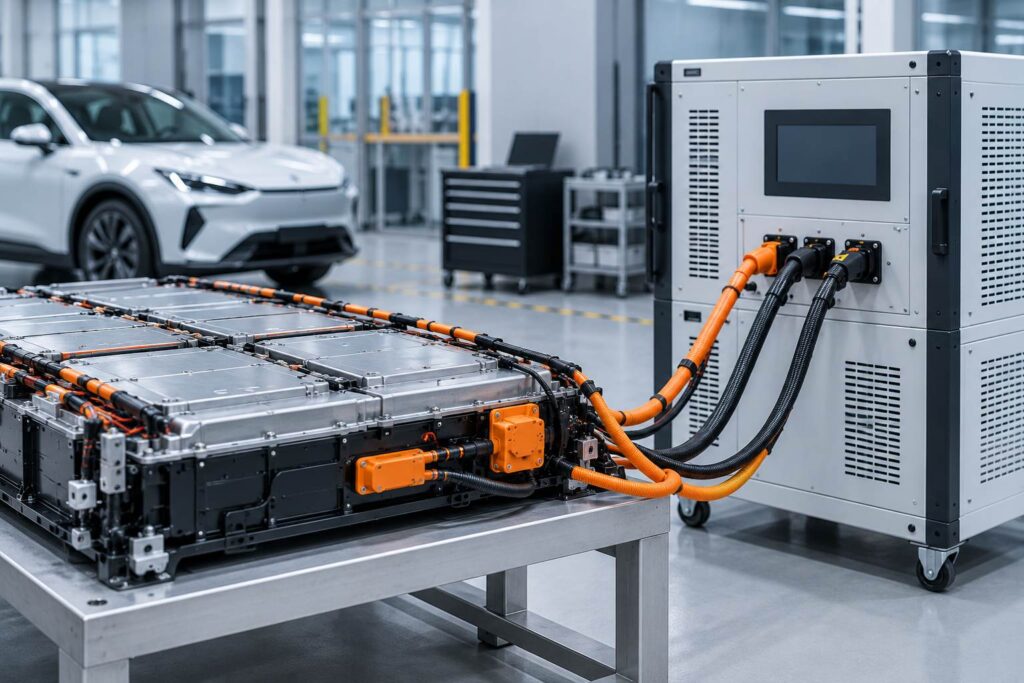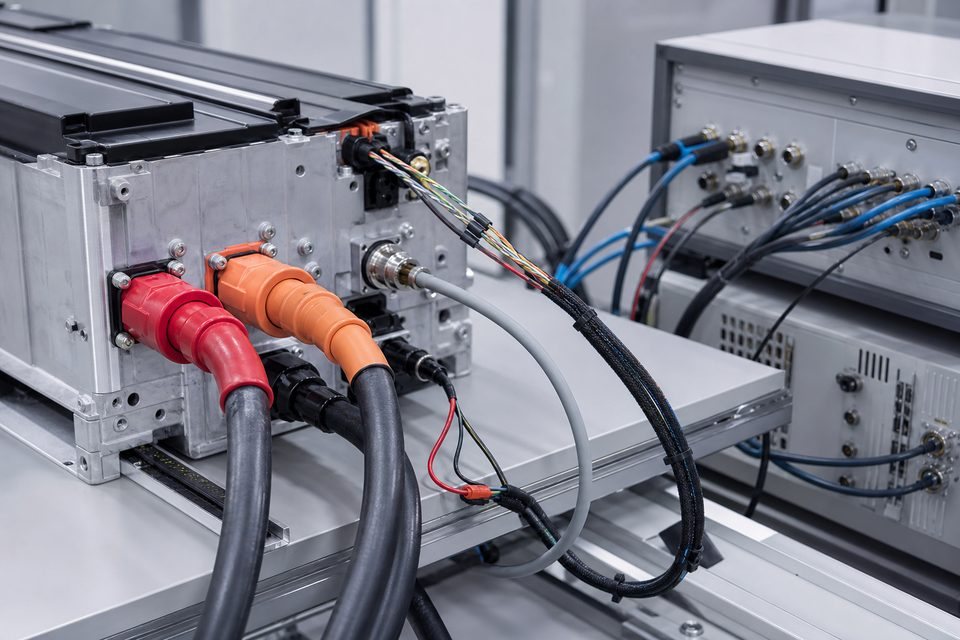

Extending EV battery life depends on identifying voltage imbalance, abnormal temperature rise, and capacity degradation as early as possible. By combining high-precision voltage acquisition, temperature monitoring, and performance verification with a battery charge and discharge tester, vehicle manufacturers, battery producers, and energy storage operators can evaluate battery condition more accurately and take timely actions such as balancing, SOC adjustment, or controlled charge-discharge maintenance.
Why Do Voltage and Temperature Affect EV Battery Life?
Why Should Voltage Imbalance Be Detected Early?
A traction battery pack contains many individual cells connected in series and parallel. As cycle count increases, differences in capacity and voltage may gradually develop between cells. Once certain cells reach their charge or discharge limits earlier than others, the usable capacity of the entire pack may be restricted even when total pack voltage still appears normal.
Persistent voltage imbalance may lead to:
- Reduced SOC consistency
- Individual cells reaching cut-off limits earlier
- Lower usable pack capacity
- Accelerated performance divergence between cells
For this reason, EV battery health assessment should not rely only on total pack voltage. Long-term changes in cell-to-cell voltage difference should also be monitored.
Why Should Abnormal Temperature Not Be Ignored?
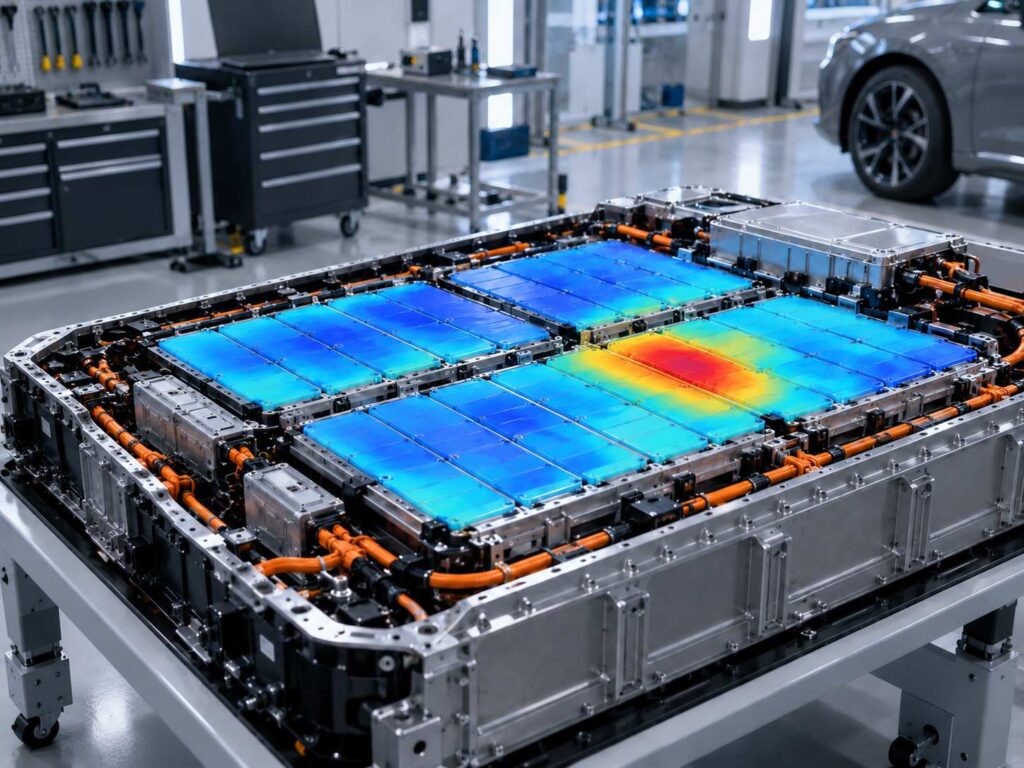
Lithium battery performance is also strongly affected by temperature. Excessively high temperatures may accelerate internal chemical reactions and capacity degradation, while low temperatures can reduce charging and discharging performance.
In maintenance and energy storage applications, temperature monitoring is not only used to identify overheating. It can also reveal persistent temperature differences between different areas of a battery pack. When combined with voltage, SOC, and capacity data, temperature information helps provide a more complete picture of battery condition.
How Can Voltage Monitoring Detect Problems Earlier?
How Does the BWT Series Identify Battery Voltage Differences?
The BWT Series from Guheng Energy is designed for centralized battery voltage acquisition and voltage-difference inspection. It supports high-precision, multi-channel voltage collection, data storage, and abnormal-condition alarms.
During inspection, technicians can focus on:
- Maximum and minimum cell voltage
- Voltage difference between cells
- Long-term voltage trends of the same cell
- Voltage changes before and after charge-discharge testing
- Whether abnormalities repeatedly occur at the same location
Compared with one-time manual checks, continuous or batch data acquisition makes it easier to identify gradually developing consistency problems.
Why Should Voltage Monitoring Be Combined with Temperature Data?
Voltage represents only one dimension of battery condition. If a cell shows abnormal voltage together with elevated temperature, the diagnostic significance is much greater than that of an isolated voltage deviation.
Some PBM Series maintenance systems from Guheng Energy support expanded battery voltage and temperature acquisition and can also communicate with the BMS through CAN. Combining BWT Series voltage inspection with temperature data and a lithium battery charge and discharge tester creates a more complete basis for battery condition evaluation.
How Can Monitoring Data Support Battery Life Management?
How Should Warning Thresholds Be Set?
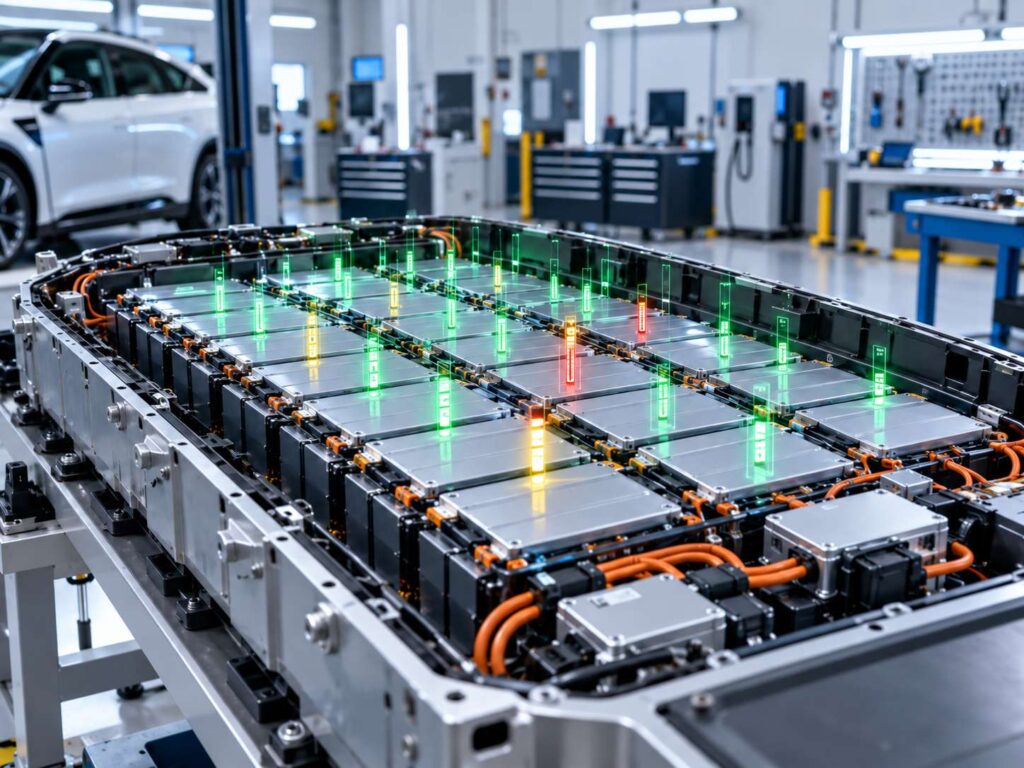
Different battery chemistries, capacities, and BMS strategies require different operating limits. A single threshold should not be applied to every battery system.
A more practical approach is to establish several management levels based on technical documentation and historical data:
- Normal: continue trend monitoring
- Warning: shorten the inspection interval
- Maintenance: arrange capacity testing or balancing
- Abnormal: stop normal operation and perform further diagnosis
This approach shifts maintenance from failure response to early intervention.
How Can a Battery Charge and Discharge Tester Verify Capacity?
A voltage difference alone does not prove that a cell has failed. A battery charge and discharge tester is still needed to evaluate capacity, voltage behavior, and SOC change under controlled conditions.
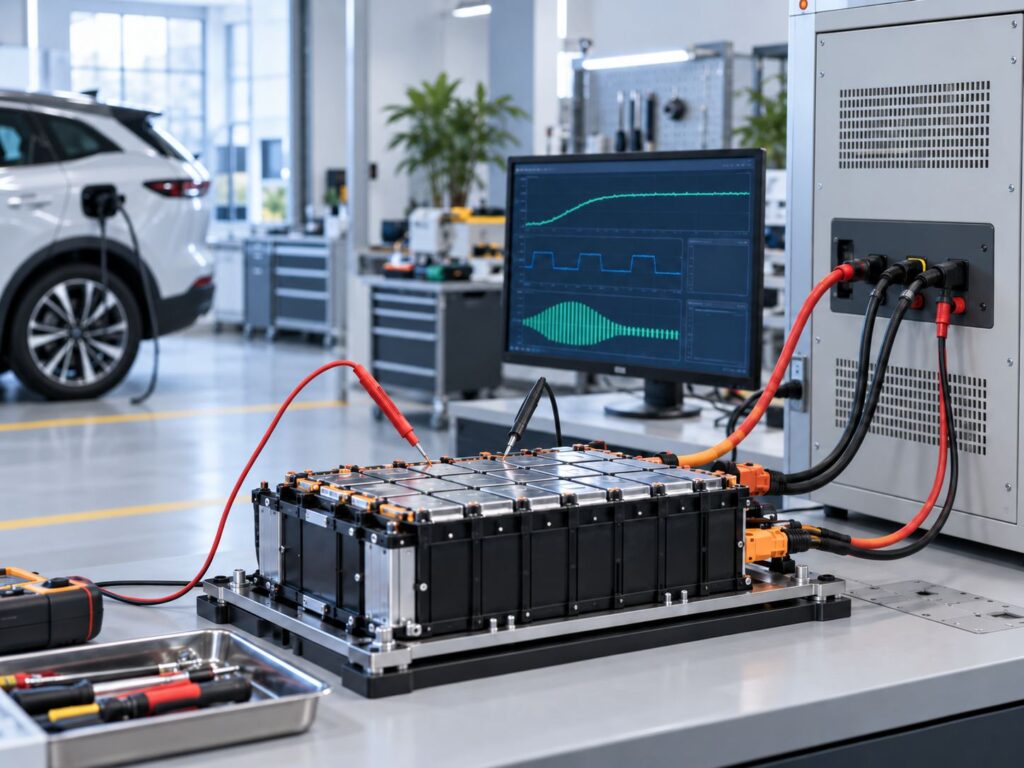
The PBM-MW Series from Guheng Energy can be used for charging, discharging, and SOC adjustment of traction battery modules and small battery packs. It also supports voltage, capacity, and time-based cut-off conditions, individual cell voltage acquisition, and BMS CAN communication.
Therefore, a battery pack charge and discharge tester is not simply used to move energy into or out of a battery. Its more important role is to verify whether an abnormal battery can still deliver stable performance under a controlled test process.
How Can Voltage Consistency Management Improve Battery Condition?
What Should Be Done After a Voltage Difference Is Found?
A practical workflow can include:
- Use the BWT Series to inspect battery voltage
- Identify abnormal cells or battery packs
- Compare the results with temperature and historical data
- Perform targeted balancing maintenance
- Retest capacity with a battery pack charge and discharge tester
- Save before-and-after maintenance data
The PBM-P Series from Guheng Energy can adjust individual cell voltage and SOC through controlled charging and discharging, helping improve battery consistency.
In one published energy storage application, the BWT Series was used to inspect 1,960 battery packs, identifying 327 packs with excessive voltage differences and providing data for subsequent balancing work. In another case, several cells showed voltage differences above 80 mV. After fault location and balancing maintenance, the overall cluster voltage difference was reduced to within 5 mV, while discharge capacity recovered to more than 95% of the initial level.
Conclusion
EV battery life management depends on identifying consistency deterioration before it becomes a serious performance problem. High-precision voltage monitoring helps detect abnormal voltage differences, temperature data adds thermal-state information, and a lithium battery charge and discharge tester provides further verification of capacity and SOC performance.
By building a closed loop of monitoring, warning, testing, maintenance, and retesting, vehicle manufacturers, battery producers, and energy storage operators can improve battery condition assessment and reduce the impact of long-term abnormal operation.
Explore Guheng Energy battery testing and maintenance solutions to build a more accurate and traceable battery health management process.
FAQ
Q: Can a battery charge and discharge tester determine EV battery life?
A: A battery charge and discharge tester can help evaluate battery health through capacity, voltage, SOC, and charge-discharge performance. However, remaining battery life should not be judged from one parameter alone. Cell voltage, temperature, historical capacity, and operating conditions should also be considered.
Q: Why does a lithium battery charge and discharge tester need individual cell voltage monitoring?
A: Normal pack voltage does not mean every cell is operating consistently. Individual cell monitoring can identify weak cells that reach charging or discharging limits earlier, making battery consistency evaluation more accurate.
Q: How can a battery pack charge and discharge tester improve battery consistency?
A: A battery pack charge and discharge tester can perform controlled charging, discharging, SOC adjustment, and capacity verification. Combined with balancing maintenance, it can help compare battery performance before and after corrective treatment.
Q: What is the main function of the Guheng Energy BWT Series?
A: The Guheng Energy BWT Series is mainly used for centralized battery voltage acquisition and voltage-difference inspection. It helps locate abnormal cells or battery packs and provides data for subsequent balancing, capacity testing, and fault analysis.
Q: How does Guheng Energy combine voltage and temperature data for battery health evaluation?
A: The BWT Series can be used for high-precision voltage inspection, while maintenance equipment with temperature acquisition and BMS communication can provide additional status information. Capacity, SOC, voltage, and temperature data can then be evaluated together.