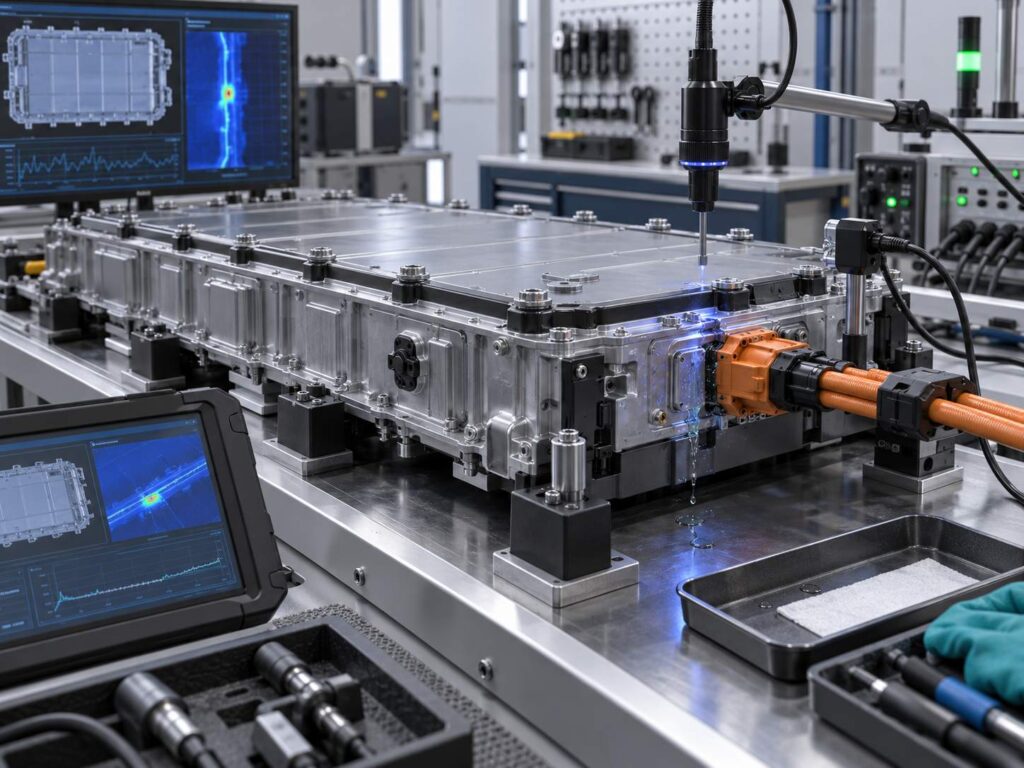

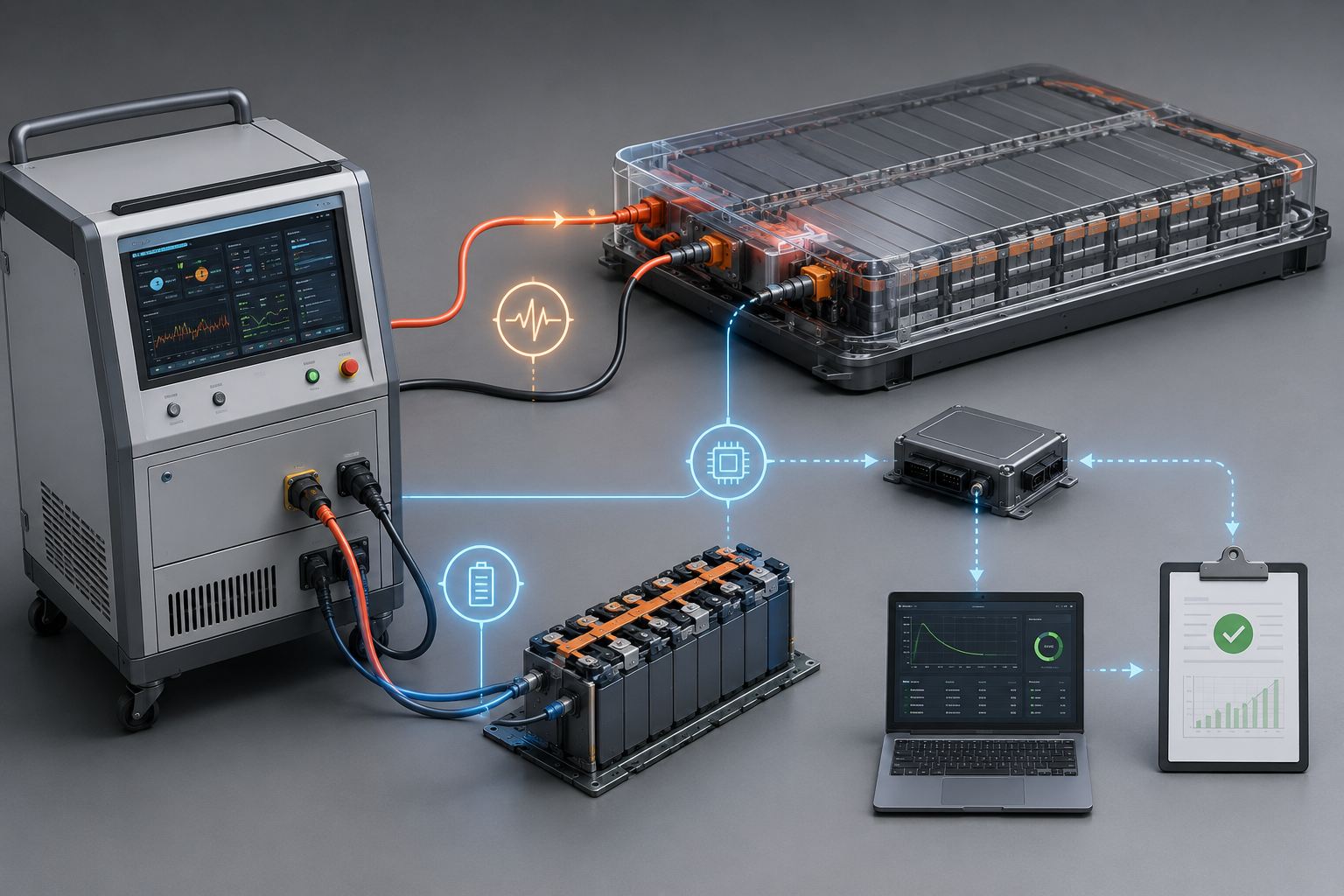
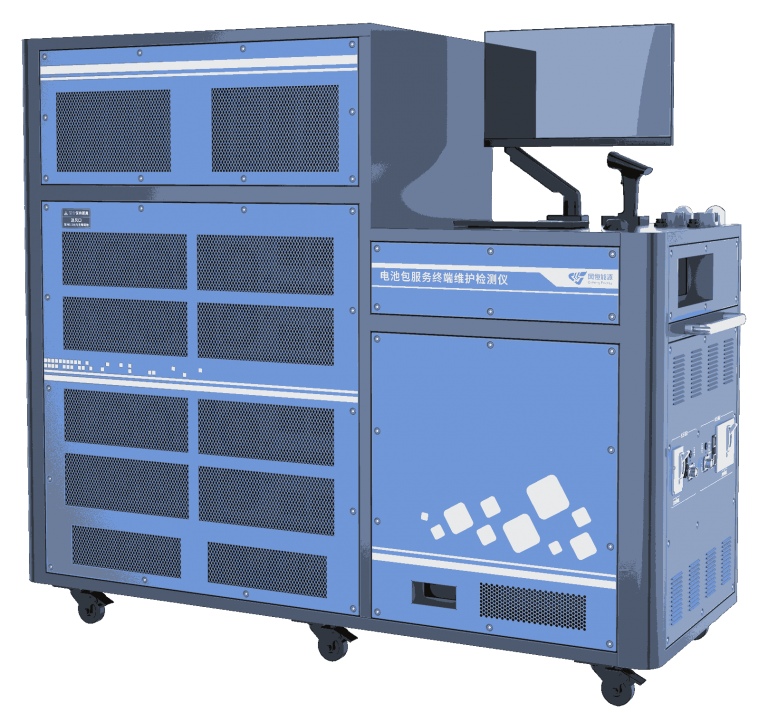
A battery pack service terminal maintenance tester verifies capacity and adjusts SOC by combining constant-current pack testing on a high-voltage channel with module-level work on a low-voltage channel. The Guheng Energy BST-DW series brings test-plan matching, BMS data, protection limits, interrupted-test recovery, and reporting into one repeatable EV battery service workflow.
What a Battery Pack Service Terminal Maintenance Tester Solves
Capacity Verification and SOC Adjustment Serve Different Goals
Capacity verification measures how much energy a battery can deliver or accept under defined charge and discharge conditions. SOC adjustment prepares a pack or module for assembly, further testing, or return to service, so both tasks require clear voltage, current, temperature, capacity, and time limits.
How the High-Voltage and Low-Voltage Channels Work
The High-Voltage Channel Handles Pack-Level Testing
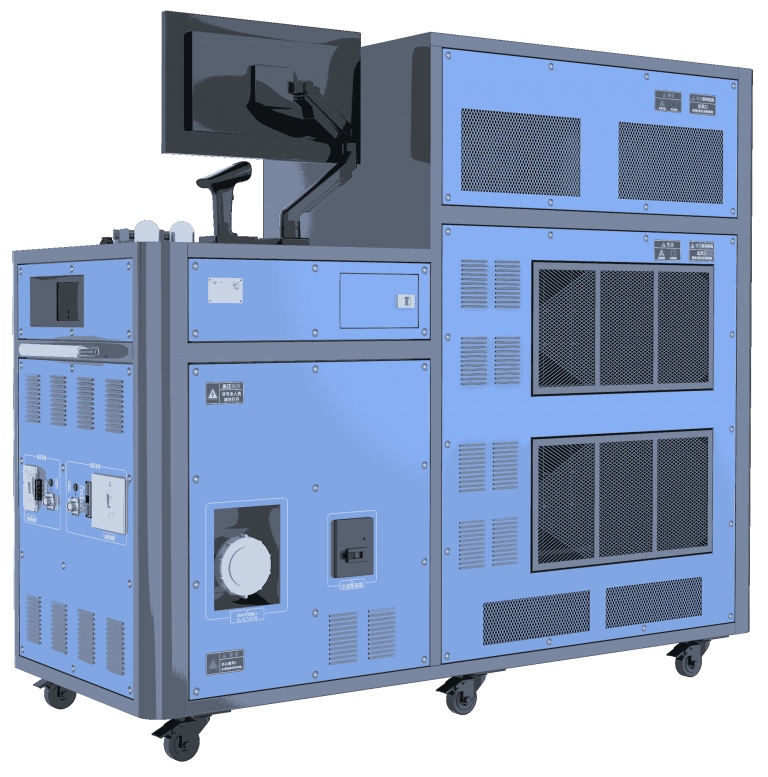
The BST-DW260 high-voltage channel covers 150 to 1000 V, 2 to 120 A for charging and discharging, and 60 kW. These ratings help match the tester to an appropriate pack platform, but every test step must still follow the battery’s approved operating limits rather than the tester’s maximum values.
The Low-Voltage Channel Supports Module Maintenance
The low-voltage channel covers 5 to 200 V, with 2 to 60 A charging, 2 to 100 A discharging, and 6 kW charge-discharge power. It enables module-level follow-up after pack diagnosis, helping capacity checks, SOC adjustment, and post-repair verification remain within one service process.
Review the BST-DW260 channel specifications to check voltage, current, power, and the required 380 Vac site supply.
How Plan Matching Improves Test Consistency
Wireless SN Scanning Links the Pack to Its Test Plan
The tester supports wireless battery-pack SN scanning and automatic plan matching. In a workshop that services several vehicle or battery platforms, the SN rules, plan revisions, and pack-to-plan mapping should be controlled before technicians rely on automatic selection.
How Multi-Level Protection Controls Test Risk
Cutoff Conditions Cover Several Battery States
Step-level and global protection can use total voltage, SOC, capacity, elapsed time, cell voltage, and battery temperature as cutoff conditions. Each threshold should follow the battery documentation, and both BMS communication and tester measurements should be checked before power flow begins.
How Data Records Support Service Decisions
Interrupted Tests Retain Process Information
After an abnormal AC power loss, the tester can save data and shut down, and it supports resuming an interrupted project step. Before resuming, the operator should recheck the battery, connections, alarms, and reason for interruption, then follow the site’s recovery procedure.
Reports Make Results Easier to Review
Historical operating data can be queried, exported, and converted into test reports. When configuring the Guheng Energy BST-DW series, users should also define report fields, file names, retention periods, access permissions, and how revised test plans are identified.
Browse the Guheng Energy product center to compare equipment for pack-, module-, and cell-level maintenance tasks.
How to Select a Service-Terminal Configuration
Start With the Battery and Its Typical Test Steps
Selection begins with rated voltage, operating limits, target current, continuous power, BMS communication, harness interfaces, and representative test steps. Workshops that handle both packs and modules should also define how the two channels will be scheduled and how repaired units will be retested.
Conclusion
A battery pack service terminal maintenance tester is most valuable when capacity verification, SOC adjustment, module maintenance, process protection, and reporting operate as one controlled workflow. The Guheng Energy BST-DW series assigns pack and module tasks to separate channels, helping service teams build a clearer and more reviewable maintenance process.
Contact Guheng Energy to discuss system fit based on your battery platform, test steps, and site conditions.
FAQ
Q: What tasks can a battery pack service terminal maintenance tester perform?
A: It can support EV battery-pack capacity verification, SOC adjustment, charge-discharge maintenance, fault-information review, and post-repair testing. The BST-DW series also offers plan matching, configurable protection limits, historical-data queries, exports, and reports, while the actual procedure must follow the battery manufacturer’s service requirements.
Q: Can the high-voltage and low-voltage channels be used on the same pack?
A: The channels operate independently: the high-voltage channel serves the battery pack, while the low-voltage channel serves battery modules. Whether they belong in one repair workflow depends on pack disassembly, electrical isolation, BMS requirements, connectors, and the approved site safety procedure.
Q: Is one cutoff condition enough for SOC adjustment?
A: Relying on one condition is generally inadequate. Total voltage, cell voltage, SOC, capacity, time, and temperature indicate different operating limits. A validated procedure should combine appropriate step-level and global conditions and confirm that BMS data and tester measurements are normal before charging or discharging.
Q: What should happen after a power failure during testing?
A: The BST-DW series can save data and stop after abnormal AC power loss, and it can resume an interrupted step. Before recovery, technicians should inspect the harnesses, battery state, alarms, and cause of interruption, then decide whether to resume or restart under the site’s approved procedure.