
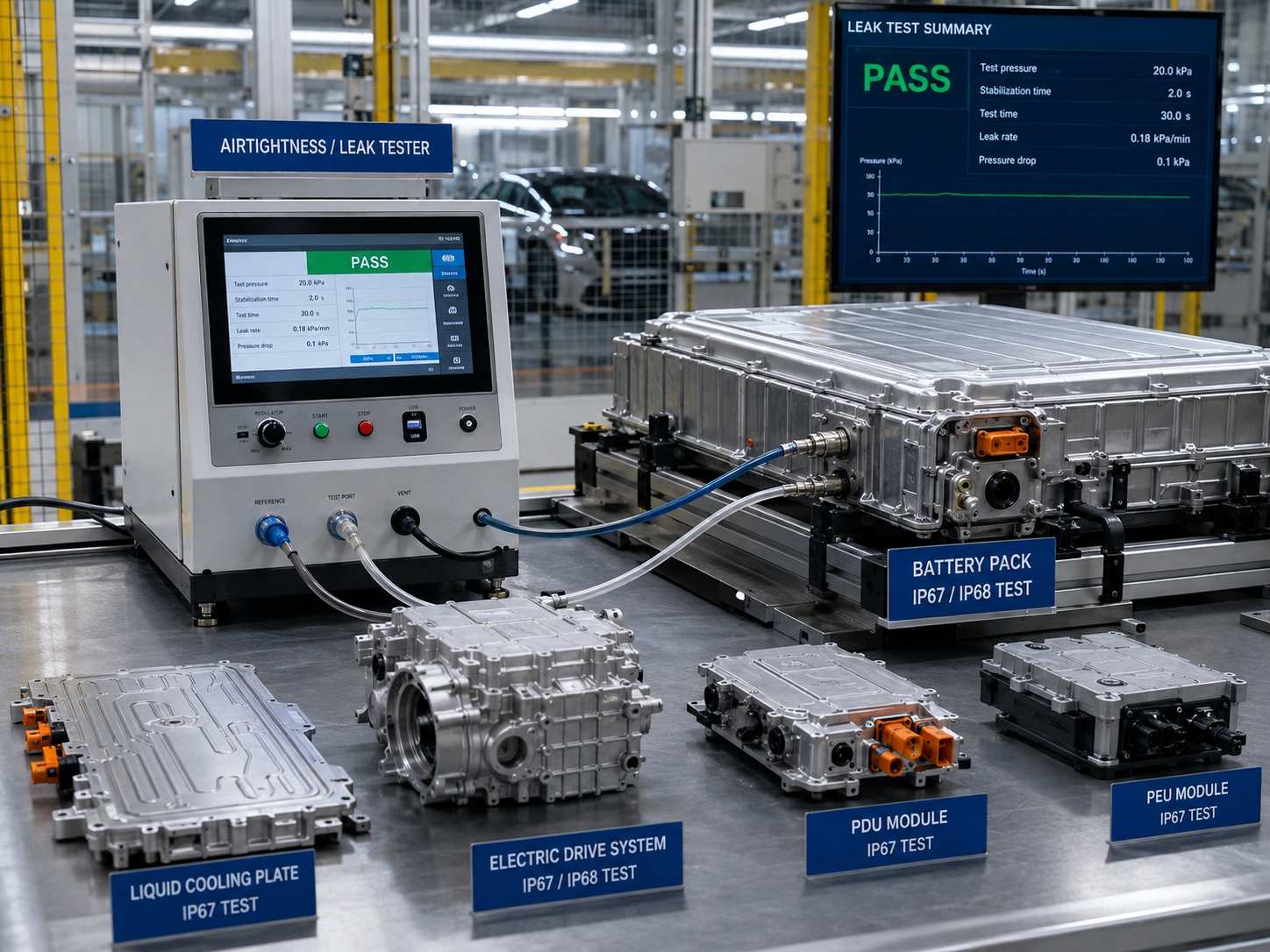
An EV battery pack air tightness tester helps confirm whether a battery pack, liquid cooling plate, electric drive system, PDU, or PEU can maintain sealing performance before it moves into assembly, delivery, repair, or reuse. For components designed around IP67-level or higher protection, leak testing is not a formality; it is a practical way to reduce water ingress, air leakage, insulation degradation, and hidden safety risks. Guheng Energy‘s QMM series portable air tightness leak tester is built around pressure control, fast pressure balancing, high-precision sampling, reporting, and MES connectivity for production and service environments.
Why Air Tightness Testing Matters for EV Battery Packs
Battery packs operate around vibration, road splash, temperature swings, car washing, and repeated service handling. A small sealing defect around a connector, weld, cooling plate, or venting interface may not trigger an immediate alarm, but it can gradually lead to moisture exposure and electrical reliability problems.
Liquid cooling plates add another layer of risk. Even a minor leak path can affect cooling system integrity, making temperature control less stable and raising maintenance complexity over time.
What Defines a Reliable EV Battery Pack Air Tightness Tester
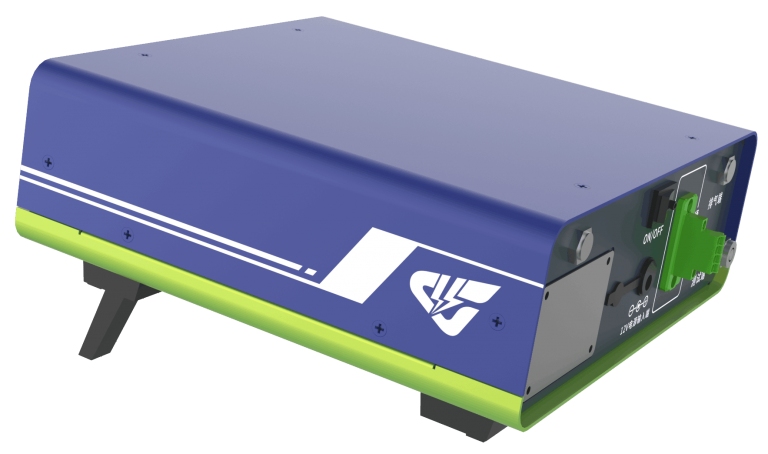
Stable Test Pressure and Sampling
The first requirement is controlled pressure. The QMM series uses dedicated air pressure control technology to support automatic test pressure adjustment, rapid pressure balancing, and high-precision pressure sampling.
This matters when testing large pack housings, irregular cavities, or components with different internal volumes. If pressure fluctuates during the test, the result can be influenced by operator handling or environmental change rather than the actual leak condition.
Direct Pressure, Differential Pressure, and Leak Data Conversion
Available information shows that the QMM series supports direct pressure, differential pressure, and combined direct/differential pressure approaches, with 1 Pa sensor sensitivity and 0.1% sensor accuracy. This gives quality teams room to adapt the method to battery boxes, PDU and PEU assemblies, and liquid cooling plates.
The ability to convert leakage pressure and leakage flow values is also useful. It helps engineering and quality teams compare results across internal standards, customer requirements, and long-term process records.
Liquid Protection and Field Reliability
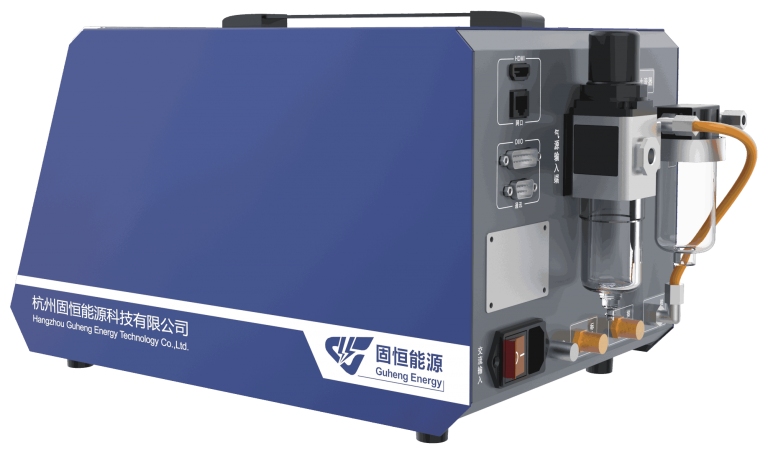
Battery and cooling system leak testing is not always performed in a clean laboratory. The QMM series uses a liquid stop device and an independent exhaust path to reduce the risk of liquid backflow damaging the instrument.
A CNC aluminum integrated air circuit base, redundant high-precision sensors, and a compact portable structure make the instrument suitable for line-side checks, repair bays, and energy storage service sites. In real operations, portability, editable test processes, and report retention are just as important as the sensor specification.
Where the Tester Fits in Production and Service Workflows
In battery and vehicle manufacturing, leak testing often sits near end-of-line inspection or component verification. The test object may be a complete battery pack, a liquid cooling plate, an electric drive component, a PDU, or a PEU, but the goal is the same: find sealing risks before the next process step.
In service environments, the test becomes a practical repair check. After pack removal, cooling system maintenance, enclosure repair, or connector work, a portable air tightness leak tester helps technicians verify whether the sealing structure has returned to an acceptable condition.
How Guheng Energy Supports Traceable Leak Testing
Battery quality management is moving from one-time inspection toward traceable process data. The QMM series supports I/O, RS485, and CAN communication options, MES connection, barcode scanning, and automatic test report generation.
Conclusion
Choosing an EV battery pack air tightness tester means choosing a repeatable, traceable, and practical sealing verification method. Guheng Energy’s QMM series combines pressure control, redundant sensing, liquid protection, reporting, and communication interfaces for battery production, quality inspection, repair, and energy storage service work.
For battery packs, liquid cooling plates, and electric drive assemblies, a disciplined leak testing process helps turn sealing quality into measurable operating confidence.
FAQ
Q: What does an EV battery pack air tightness tester measure?
A: It checks whether a battery pack, liquid cooling plate, electric drive system, PDU, or PEU has a sealing leak. The focus is not simply filling the part with air, but controlling pressure and reading pressure change accurately enough to identify hidden ingress risks.
Q: What applications fit the QMM series?
A: The QMM series is suitable for high-precision air tightness testing of EV battery packs, liquid cooling plates, electric drive systems, PDU, and PEU components requiring IP67-level or higher protection. It can support manufacturing quality checks as well as repair and service verification.
Q: Why is MES connectivity useful in leak testing?
A: MES connectivity links the test result with the tested part, process stage, and production record. This makes it easier to trace quality issues, compare batches, and review whether a sealing problem comes from a component, a fixture, or an assembly step.
Q: How should direct pressure and differential pressure testing be selected?
A: The right method depends on component volume, leak threshold, cycle time, and internal quality rules. Direct pressure testing is intuitive, while differential pressure testing can help detect smaller changes by comparison. A flexible tester supports different process needs.